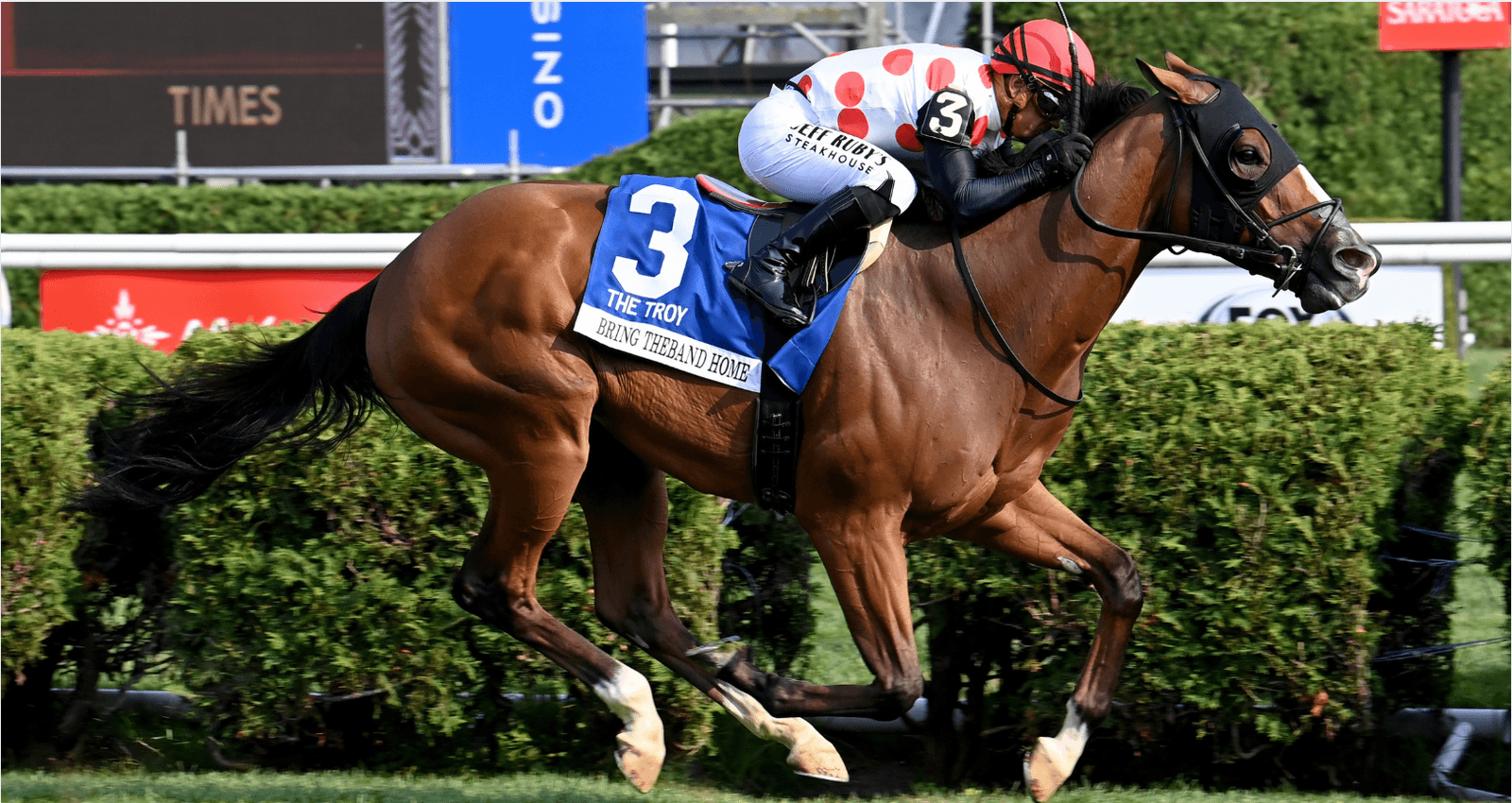
Kentucky Derby Contender South Bend Finds New Purpose as Sport Horse
South Bend ran the 2020 Kentucky Derby for Hall of Famer Bill Mott; now, just months after retiring, he's clearing two-foot jumps at his debut show under retrainer Emily Castrenze.
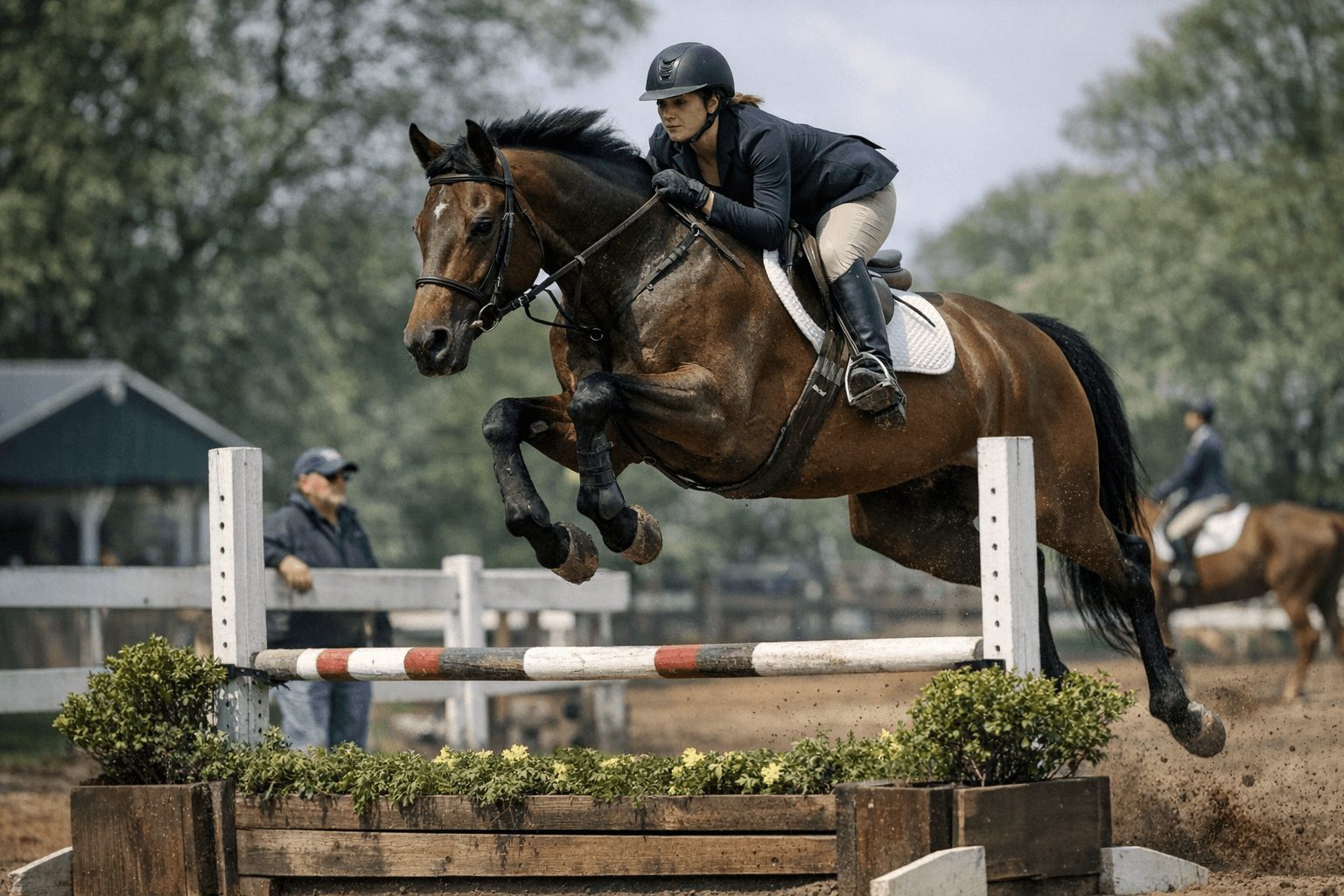
Few horses can claim a résumé that stretches from a $70,000 auction ring to the Kentucky Derby starting gate, but South Bend carried exactly that kind of biography when he walked off the track and into Emily Castrenze's program at Oakmont Thoroughbreds. What happened next, documented in a Paulick Report aftercare feature by Jen Roytz, is a case study in how the right people, the right patience, and the right retraining philosophy can give a graded-stakes horse a second act worth watching.
A Career Built on Early Brilliance
South Bend's on-track story began in Kentucky, where breeder Highclere, Inc. put him through the OBS March 2-Year-Olds in Training Sale. He hammered for $70,000, landing in the barn of trainer Stanley Hough for owner Sagamore Farm. The early returns were electric: three wins, including a stakes victory, in his first three starts. Those results put him squarely on the graded-stakes map as a 2- and 3-year-old and made him attractive enough that in July 2020, a partnership led by Gary Barber stepped in to purchase him.
The Barber partnership pointed South Bend at the very top of the sport. Under Hall of Fame trainer Bill Mott, he entered the gate for the 146th Kentucky Derby, a race run not on the first Saturday in May but the first Saturday in September, its schedule and atmosphere reshaped entirely by COVID-19 restrictions that emptied Churchill Downs of the crowds that define the event. He also contested the Travers Stakes that season before moving to the Mark Casse stable for his final year of competition. By the time racing was finished with him, South Bend had seen more of the sport's biggest stages than most horses ever do.
The Person Who Knew Him Best
Emily Castrenze occupies a rare position in the Thoroughbred industry. Each morning she rides out at Mark Casse's Ocala training center, getting on horses coming off layups or short freshening periods. Each afternoon she returns to Oakmont Thoroughbreds, her own farm, where an ever-rotating string of recently retired racehorses is learning a new set of skills. That dual existence puts her in the precise spot where racing ends and sport-horse life begins.
It was her morning work for Casse that introduced her to South Bend. "At the track I rode him pretty regularly, and he was definitely one of my favorites," she told the Paulick Report. The connection wasn't just sentimental. Castrenze recognized in him the specific physical qualities that make the transition from oval to arena viable: "He was a very classy horse, but most stakes horses tend to have that way about them. More times than not, they're balanced, adjustable and just using their bodies properly and fluidly." That body awareness, she argued, is precisely what separates a promising retraining candidate from a difficult one.
The Retraining Blueprint, Step by Step
Castrenze's program for South Bend was deliberate rather than aggressive. The core philosophy: short, consistent sessions that prioritize suppleness over speed, and physical reconditioning that respects both the horse's competitive history and his need to decompress from it. The specific tools she used included:
- Basic gymnastics to rebuild balance without the forward drive that racing demands
- Pole work on the ground and under saddle to teach cadence and rhythm, replacing the single gear of a racehorse with the more adjustable tempo a show horse needs
- Gradual reintroduction to collection and lateral movement, disciplines that require the horse to carry himself differently than he has for his entire career
The mental component mattered as much as the physical one. South Bend's temperament, described throughout the Paulick feature as curious and engaged rather than anxious, meant he absorbed new information quickly rather than resisting it. That disposition accelerated a timeline that often takes months to unfold. After approximately one month of formal off-track training, Castrenze determined he was ready to be tested in public.
One Month to the Show Ring
The Florida Thoroughbred Transformation Expo, produced by the organization Run for the Ribbons at the Florida Horse Park, served as South Bend's debut venue in December 2025. The event is designed specifically as a showcase for off-track Thoroughbreds, but a debut is still a debut. For a former racehorse, the atmosphere of a show grounds, announcer over the loudspeaker, dozens of horses, bustling warmup areas, can snap a horse back into competitive mode faster than any amount of arena work prepares them for.
South Bend handled it. "We did the two-foot division there and he was so brave about it," Castrenze said, "navigating his way around the course confidently and smoothly." A two-foot jumping division is not a Grand Prix oxer, but clearing it calmly, correctly, and without incident one month after stepping off the track is a meaningful benchmark. It established that the work done at Oakmont Thoroughbreds had transferred to a competitive environment, which is the only test that ultimately matters for a retraining program.
Why This Pipeline Works
South Bend's story is not an accident; it is the output of a deliberate system. The Mark Casse barn regularly channels its retiring horses toward retrainers like Castrenze who have the credentialed experience and facility infrastructure to develop them properly. That kind of institutional relationship, a trainer who trusts a specific retrainer with horses of real value, is what separates organized aftercare from ad hoc outcomes.
The broader industry numbers underscore how much that infrastructure matters. New Vocations, the nation's oldest and largest racehorse adoption program, serves more than 600 retired racehorses every year and has placed over 9,000 Thoroughbreds and Standardbreds in new homes since its founding in 1992. The Thoroughbred Aftercare Alliance now accredits 86 organizations operating 175 facilities across the United States, Canada, and Puerto Rico. South Bend's smooth transition reflects an ideal version of what those organizations make possible when trainers, riders, and retrainers treat placement as a professional responsibility rather than an afterthought.
For Castrenze, the argument reduces to something simpler: the traits that produce a Derby starter are not wasted at retirement. They are redirected. A horse that learned to read terrain at speed, adjust stride through traffic, and respond to a rider's cues under pressure has already developed the physical vocabulary a sport horse needs. The retraining program's job is translation, not reinvention.
How to Support Thoroughbred Aftercare
South Bend's second career is funded in part by the collaborative network that connects racing insiders to aftercare professionals. If his story moves you to act, several avenues are available:
- Oakmont Thoroughbreds accepts horses directly from trainers and owners seeking responsible retirement placements; retraining inquiries can be directed through the farm's networks in the Ocala, Florida area.
- Run for the Ribbons (runfortheribbons.org) runs the Florida Thoroughbred Transformation Expo and accepts donations that fund retraining and rehoming for off-track Thoroughbreds across the state.
- New Vocations (newvocations.org) operates adoption facilities in six states and welcomes both adopters and financial supporters; adoption fees help offset the cost of rehabilitation for the roughly three-quarters of intake horses that arrive with some form of injury.
- The Thoroughbred Aftercare Alliance (thoroughbredaftercare.org) awards grants to its 86 accredited member organizations and accepts tax-deductible donations that are distributed across the network.
South Bend cleared his first course at a Florida show in December and, by every measure Castrenze has applied, is trending toward a full show-jumping career. Somewhere between the OBS ring and Churchill Downs, and now in a warmup arena in Ocala, he became proof that the arc from stakes horse to sport horse is less a long shot than the industry once assumed, provided the right people are waiting on the other side of the rail.
This article was produced by Prism’s automated news system from verified source data, official records, and press releases, then run through automated quality and moderation checks before publishing. The system is built and supervised by the people who set the standards it runs under. Read our full AI policy.
Did this article answer your question?