Kisber’s 150th anniversary revives Hungary’s Derby pride at Epsom
Kisber’s Derby win still cuts deep in Hungary because it remains one of racing’s rarest claims: a single, unmatched national triumph that still pays off today.
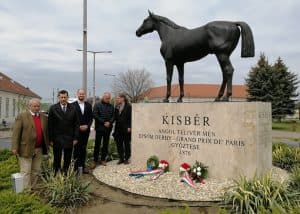
Kisber’s one Derby still means everything
The old win is still doing work. One Hungarian-bred horse, one Derby, and 150 years later Kisber is still enough to send fans, officials and racing memory back to Epsom with a sense that this sport can hold a nation together.

That is the force behind the commemoration this weekend. Two special guests, Andras Krebs, the deputy director of Kincsem Park in Budapest, and his wife Linda, are making the pilgrimage to Epsom carrying commemorative coins honoring Kisber’s 1876 victory. Those coins are not sitting in a display case. They will also be used as prizes in this year’s Hungarian Derby, which turns an anniversary into something immediate, tactile and current.
Why Kisber still matters
Kisber was foaled in 1873 and won the Epsom Derby in 1876, and the reason the story has not faded is simple: he remains the only Hungarian-bred horse ever to win the Derby. In a sport built on lineage, that kind of singularity matters more than nostalgia. It gives Hungary a claim that cannot be diluted, matched or repeated.
He was also the second foreign-bred horse to win the Derby, after Gladiateur, and later added the Grand Prix de Paris to his record. That detail matters because it shows this was not a one-race fluke wrapped in sentiment. Kisber’s Derby was the start of a resume that traveled beyond England and gave his name real international weight.
The horse was bred at the Imperial-Royal Kisber Stud, described as a large state breeding operation in Austria-Hungary. That connection turns the story from a racing anecdote into a national one. Kisber was not just a horse with a place name attached; he came out of an era when breeding, state identity and sporting prestige were all braided together.
Epsom is still the right stage
The pilgrimage back to Epsom matters because the race itself still carries enormous symbolic force. The Jockey Club describes the Derby as the race that “defined what a Derby means” and calls it the “greatest flat race in the world.” That language is not decorative. It is exactly why a Hungarian-bred winner from 1876 can still command attention on a modern Derby weekend.
Epsom is where the sport measures its own mythology, and Kisber’s place in that mythology is unusually sharp. Plenty of old winners have history. Very few can still speak to national identity the way Kisber does in Hungary. When a horse’s victory survives for a century and a half, it stops being a footnote and becomes part of a country’s sporting memory.
How Hungary keeps the memory alive
Hungary has not let the story drift into museum territory. Kincsem Park in Budapest keeps the line alive by making the Hungarian Derby the highlight of its calendar, run over 2,400 metres for 3-year-old colts and fillies. That is the practical bridge between the past and the present: the same sport, the same age group, the same prestige, and now Kisber’s anniversary folded directly into the racing season.
The 2026 Derby-and-style festival is scheduled for July 4-5 in Budapest, and that timing matters. The anniversary celebration at Epsom does not stand apart from the domestic season. It feeds right back into it, with the commemorative coins tied to prizes for the Hungarian Derby. In other words, history is not just being remembered. It is being redistributed through the current racing calendar.
That is why the Kisber story lands differently from a standard anniversary piece. This is not a flat exercise in looking back. It is a living loop between Epsom and Budapest, between a British Classic and Hungarian racing identity, between one horse’s victory and a modern festival that still has something to sell, celebrate and defend.
Kincsem gives the memory a second pillar
Hungary’s racing identity does not rest on Kisber alone. Kincsem Park’s heritage is anchored by Kincsem, the country’s other great racing icon, who was born in 1874 and won all 54 of her races. Put those two names together and you understand why Hungarian racing history carries unusual emotional power. One horse gave the country an unmatched champion. The other gave it an unmatched Derby winner.
That pairing matters because it explains the depth of the commemoration. Hungary is not leaning on a single romantic tale because it has nothing else. It is drawing from a real sporting tradition, one that still has a home at Kincsem Park and still has enough public meaning to justify a celebration 150 years after Kisber’s Epsom win.
What the anniversary says about racing now
There is a reason this story feels bigger than a heritage item. Racing is always looking for proof that its past still matters to the next generation of fans, and Kisber is a clean example of how that works. A one-off victory becomes a national marker. A commemorative coin becomes a prize. A Derby from 1876 becomes part of the argument for why the sport still deserves attention now.
That is the real power here. Kisber is not remembered because he was merely old. He is remembered because he remains unique, because he connects Epsom to Budapest, and because Hungary still treats that Derby win like part of its own identity. One horse, one race, 150 years, and the memory still has enough force to move the calendar.
This article was produced by Prism’s automated news system from verified source data, official records, and press releases, then run through automated quality and moderation checks before publishing. The system is built and supervised by the people who set the standards it runs under. Read our full AI policy.
Did this article answer your question?