Late CHRB Memo Sparks Confusion Among Trainers Over Santa Anita Medication Rules
A CHRB text telling trainers that "horses entered to race shall only be given water, hay, and grain until post time" landed Thursday and left Santa Anita trainers scrambling Friday.

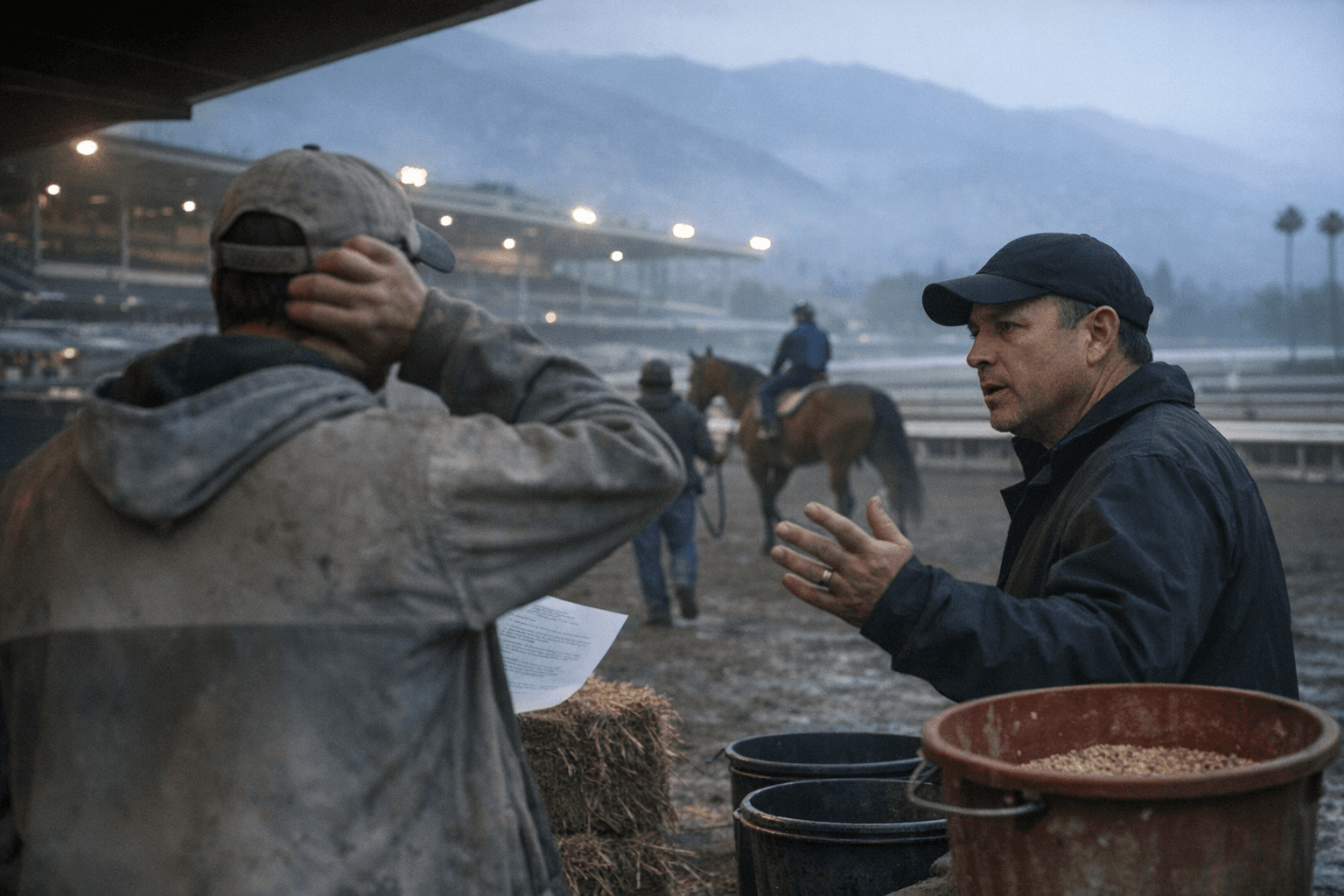
A late-night text from the California Horse Racing Board to trainers Thursday evening that said, “Horses entered to race shall only be given water, hay, and grain until post time,” and that “no drugs, medications, or substances shall be administered to a horse after it is deemed entered to race,” prompted confusion at Santa Anita the following morning, trainers and officials reported. The message included a link to a CHRB letter dated Feb. 27 that the board said pointed to amendments it says were approved by the Office of Administrative Law and became effective February 26, 2020.
The CHRB letter language cited by the memo read: “The following amendments to the CHRB Rules and Regulations were approved by the Office of Administrative Law and became effective February 26, 2020.” The board defended the regulatory process in a statement that said, “The texts of these emergency and permanent regulations were posted on the CHRB website and contained in meeting packages throughout the months-long regulatory processes. The CHRB received no communications regarding 1843.5 during the public notice periods for both the emergency and permanent rules, and there were no comments during public hearings prior to approvals,” the statement read.
Trainers at Santa Anita pushed back on the operational impact, pointing to the memo’s list of prohibited substances that included the NSAIDs phenylbutazone, flunixin, and ketoprofen and even electrolyte solutions. California Thoroughbred Trainers president Eoin Harty warned the change was impractical, saying, “Entry dates fluctuate so rapidly, it's just not a workable solution,” and “We need to take a deep breath and come up with something better.” Trainers noted entries at some California tracks can be as many as six or seven days out from a race, while current practice already prohibits phenylbutazone within 48 hours of a race.
Questions about enforcement capacity and track notification compounded the dispute. Blea said, “[Thursday] there were 551 horses that were cleared for workouts,” and added, “It’s just a matter of not having the resources to monitor all of this. There were more than 400 this last weekend at Santa Anita.” The Los Angeles Times reported the track was not made aware of a CHRB investigation until it was posted on the CHRB website Tuesday, some 32 days after the complaint was issued, and that Butler learned Wednesday while Blacker had not told him in advance. The reporting also raised the stark observation that “a system that would allow someone to rack up 527 violations without being caught also points to something that is broken,” and asked whether the CHRB has infrastructure to enforce the rule in real time.
The episode echoed recent enforcement history at Santa Anita. The track barred trainer Richard Baltas from entering horses after a staffer was caught on video administering an oral supplement by syringe into the mouths of 23 horses. The Stronach Group’s racing division, 1/ST Racing, banned Baltas from all its tracks six weeks before the complaint was issued, and the CHRB later suspended Baltas’ license until early December of this year, according to reporting.
Regulators and trainers now face a narrow docket of technical clarifications: how the board defines “entered to race” under rule 1843.5, whether electrolyte solutions are treated as prohibited substances, and how enforcement will work across hundreds of workouts and long travel hauls to tracks such as Golden Gate Fields. The CHRB insists the rule text was posted and noticed; trainers say the timing and logistics make immediate compliance unworkable. Until the board issues clear operational guidance on 1843.5, Santa Anita trainers will be left balancing established medication and travel routines against a rule that, as written, could create multi-day medication blackouts.
This article was produced by Prism’s automated news system from verified source data, official records, and press releases, then run through automated quality and moderation checks before publishing. The system is built and supervised by the people who set the standards it runs under. Read our full AI policy.
Did this article answer your question?