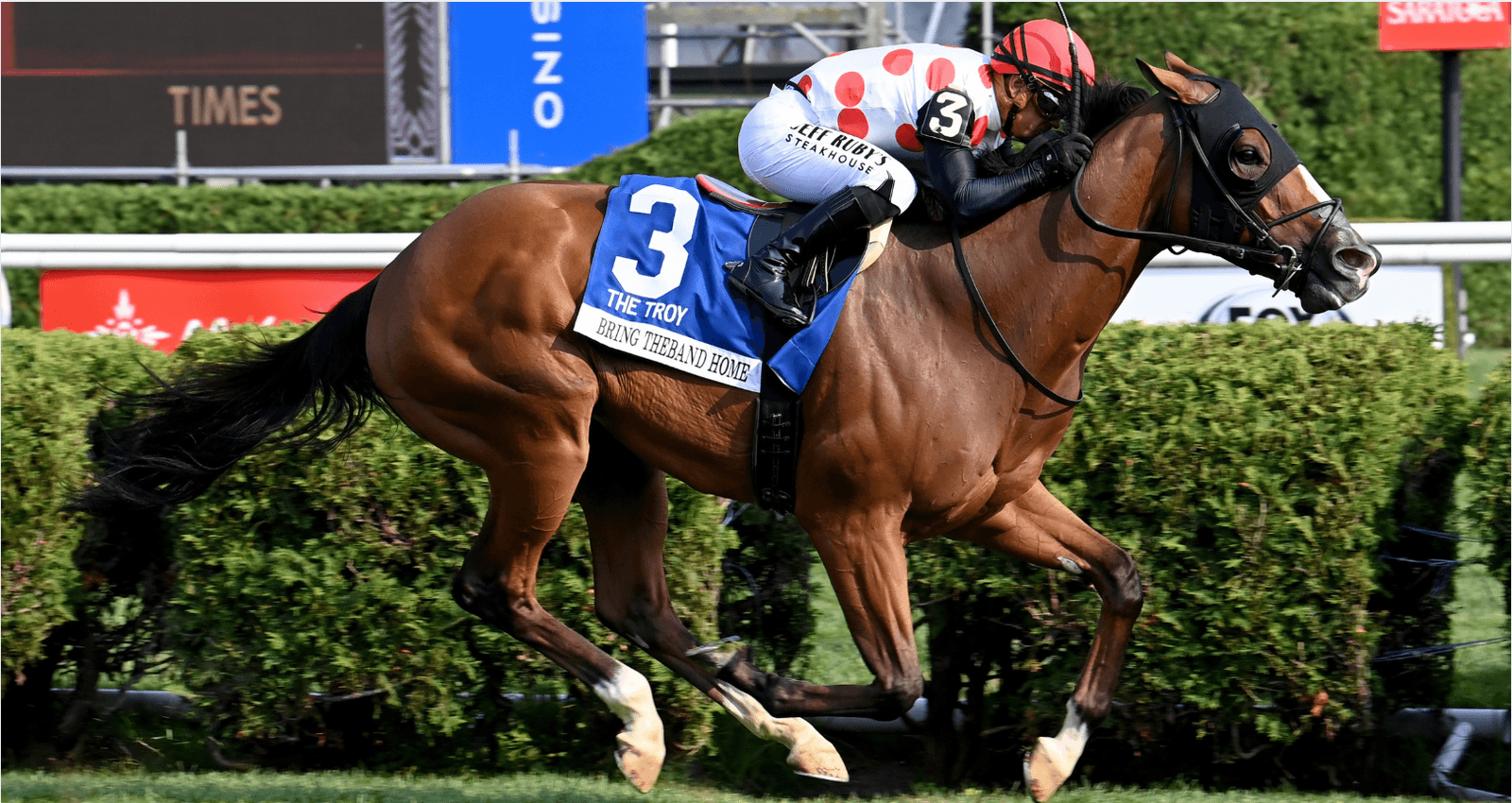
Lucky Vega filly Cortina d’Amprezzo boosts European sires in North America
Cortina d’Amprezzo turned a Santa Anita maiden into a bigger European-sire story, and Majaz, Darya and Kentucky Gal kept the pressure on at Woodbine and beyond.

Cortina d’Amprezzo did more than win a maiden race at Santa Anita. The Lucky Vega filly turned a one-mile turf breakthrough into a live argument that European sires are starting to shape North American results in real time, not just in sales-ring theory. With Joel Rosario riding for Philip D’Amato, she gave the barn another sharp turf filly and gave Lucky Vega a second North American winner from two American runners.
Cortina d’Amprezzo gives Santa Anita the opening statement
The Santa Anita score came on June 11 in a one-mile turf maiden special weight worth $65,000, with $39,000 going to the winner. Cortina d’Amprezzo, bred by Mountarmstrong Stud and foaled on April 8, 2023, is by Lucky Vega out of Reflect Alexander, by Kodiac. Equibase lists her current ownership group as Hopeless Stables, Little Red Feather Racing, Medallion Racing, McNulty Thoroughbreds, Veranda Stables and Omar Aldabbagh.
The win also completed a long-familiar pattern that matters in this corner of the game: a well-bred filly with room to improve, not a headline star yet, finally converting repeated promise into a result. Cortina d’Amprezzo had made five career starts before the Santa Anita race and had already collected one second and three thirds, so this was not a sudden flash. It was the kind of forward move that often changes how a barn maps out the rest of a summer campaign.
Her commercial back story sharpens the point. Equibase shows her most recent sale came as a Goffs Autumn yearling, when Sean Grassick Bloodstock bought her from the Mountarmstrong Stud consignment for €26,000. That price, paired with what she is now doing in California, is exactly the sort of bloodstock story that gets attention beyond the turf course: a modest purchase, an Irish pedigree, and a North American win that can raise the profile of the sire and the page at the same time.
Lucky Vega’s North American start is the bigger signal
Cortina d’Amprezzo matters because she is not isolated good news. Lucky Vega is standing at the Irish National Stud in Kildare, Ireland, at a listed 2026 fee of €12,500, and his early numbers are already giving breeders something concrete to weigh. BloodHorse reported in late 2025 that he was operating at a 42% winners-to-runners strike rate and ranked second among first-season sires, a profile that suggests his offspring are not waiting around to find their feet.
That is the key angle for North American buyers and trainers: Lucky Vega is still at a fee that sits well below the top of the market, but his runners are already delivering on fast return. The Santa Anita result gives him two winners from two American runners, which is exactly the kind of statistic that changes a stallion from an interesting name into an active one for the next sales and covering seasons.
His own race record helps explain the appeal. The Irish National Stud highlights Lucky Vega as a Group 1 Phoenix Stakes winner who beat St. Mark’s Basilica and Laws Of Indices by more than three lengths. That kind of class on the page, paired with early strike in the United States, is how a sire starts to look less like a concept and more like a practical source of turf speed and stamina for North American circuits.
Majaz turns near-misses into Woodbine momentum
Woodbine supplied a very different version of the same story on June 13. Majaz, a Dubawi filly, had been knocking on the door for weeks, and Woodbine’s track note says she finally climbed out of the second-place trap after five runner-up finishes in seven starts. That kind of record can wear on a horse and a team, but it can also set up a breakthrough if the right race comes along.
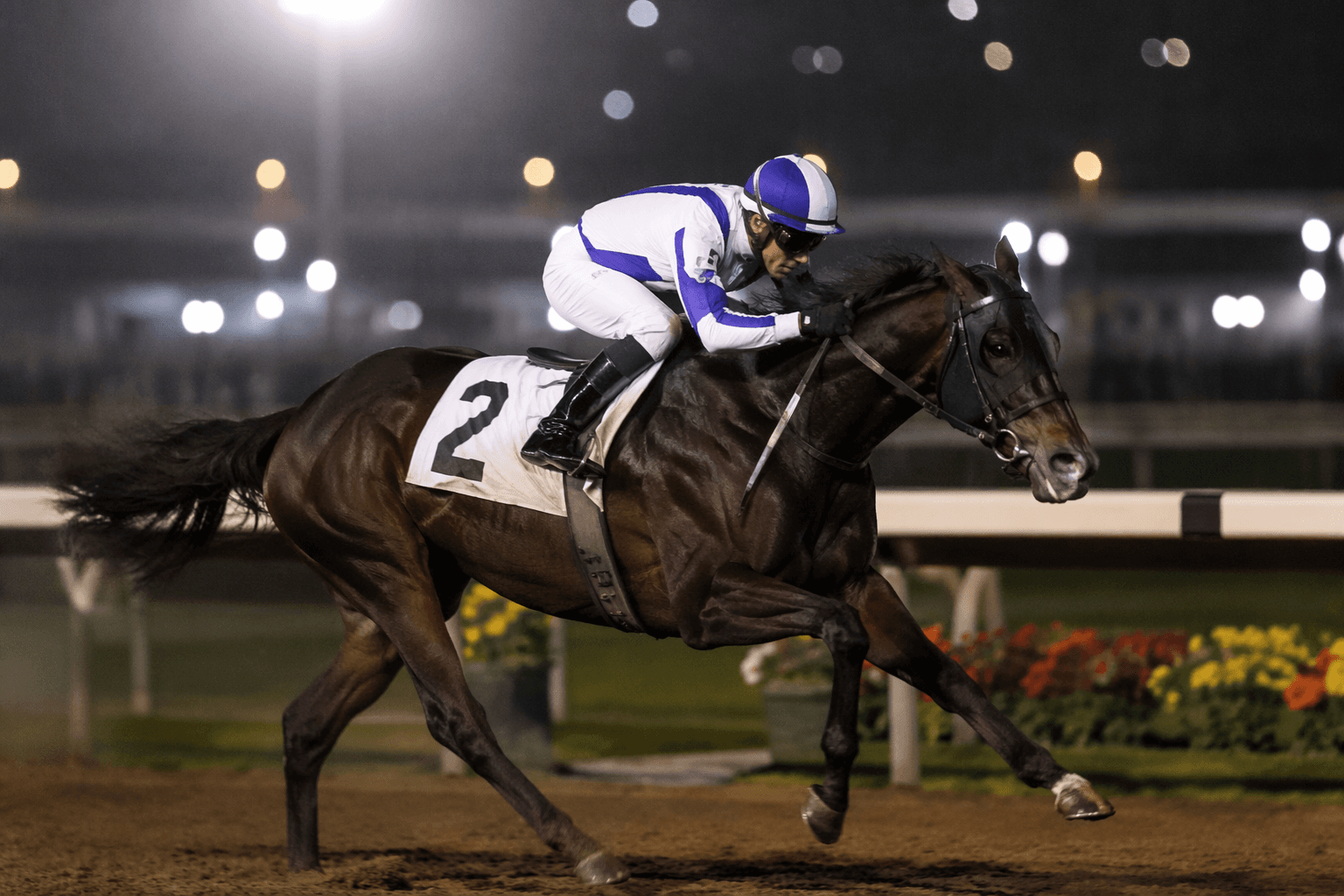
It did at Woodbine Racetrack, where Majaz won a maiden special weight over 1 1/16 miles on the inner turf in 1:43.12. She is trained by Mark Casse, owned by D.J. Stable LLC, and was ridden by Rafael Hernandez. The result was a tidy reminder that the transatlantic bloodstock pipeline does not end with shipping talent into one region or another; sometimes the same horse just needs a different stage, a different surface setup or a little more time to turn the page.
For Mark Casse, the win fit neatly into a broader summer picture built around patient development. For D.J. Stable LLC, it was another sign that high-end European breeding can still pay off after a horse crosses jurisdictions and changes surroundings. Majaz’s breakthrough did not just end a streak of placings. It added another data point to the idea that well-bred fillies can find new life in North America when the conditions finally match the pedigree.
Darya and Kentucky Gal keep the stakes thread alive
The stakes races at Santa Anita extended the same theme. Darya, a Persian King filly, won the $100,000 Honeymoon Stakes on June 6 by a nose, and the result gave trainer Philip D’Amato a one-two finish with stablemate Inbox, another filly imported from Ireland and co-owned by Little Red Feather Racing. BloodHorse listed the Honeymoon as a one-mile turf race for 3-year-old fillies, and the last-stride finish underlined how fine the margins are once these European-bred fillies move into stakes company.
Darya’s win was especially useful as a guide to the current shape of the barn. This was not just one imported filly holding form. It was a stable line that produced two fillies from Ireland, both connected to Little Red Feather Racing, both ready to run at a stakes level on turf, and both good enough to make the race shape matter right to the wire. That is the kind of consistency breeders and owners notice, because it suggests a system rather than a one-off.
Kentucky Gal added another Santa Anita result to the same file on June 12, when she won the $100,000 Possibly Perfect Stakes over 1 1/4 miles on turf. Antonio Fresu was aboard, and she finished ahead of Innovative and The Mizen Queen. On a week when European bloodlines were already looking lively, Kentucky Gal’s win reinforced the point that these horses are not only showing up in maiden and allowance company. They are carrying that form into stakes races at a variety of distances.
The broader read for North American racing
The thread through all of it is simple: European sires are not merely exporting pedigree names, they are exporting immediate performance. Cortina d’Amprezzo gave Santa Anita a maiden winner with upside, Majaz turned repeated seconds into a Woodbine breakthrough, and Darya and Kentucky Gal made the stakes picture look even stronger for imported turf fillies.
That matters because the next race card is where the market resets. When a filly by Lucky Vega wins on Santa Anita turf, when a Dubawi filly finally breaks through at Woodbine, and when D’Amato keeps landing imported fillies in stakes company, the breeding note stops being background noise. It becomes a live trend, one that can shape entries, betting pools and the next round of bloodstock decisions across both sides of the Atlantic.
This article was produced by Prism’s automated news system from verified source data, official records, and press releases, then run through automated quality and moderation checks before publishing. The system is built and supervised by the people who set the standards it runs under. Read our full AI policy.
Did this article answer your question?