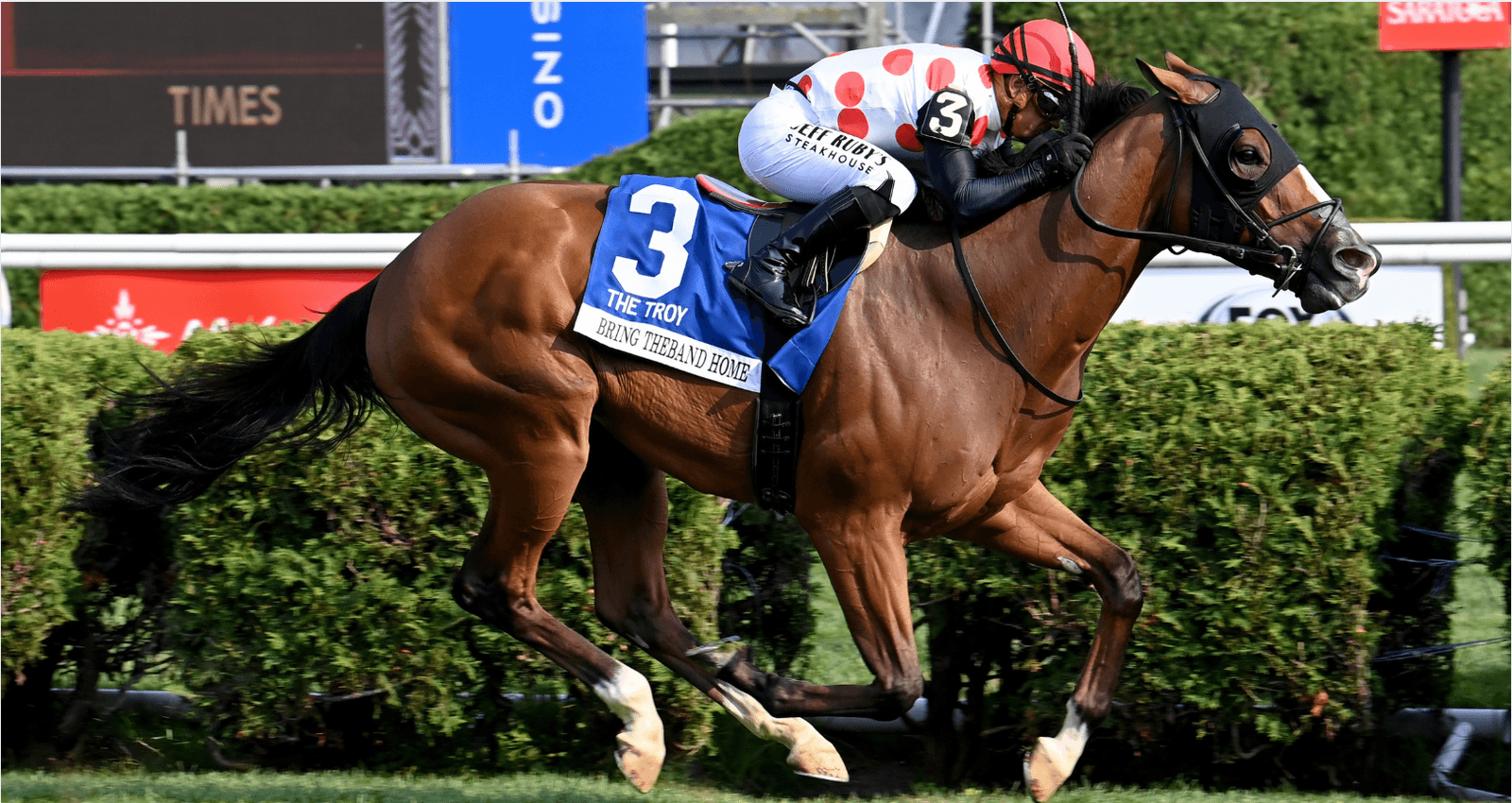
Notable Speech leads deep, tactical Queen Anne at Royal Ascot
Notable Speech heads a nine-runner Queen Anne where Ascot form, Group 1 class and ground shape the verdict. Docklands, More Thunder and Cicero’s Gift are the key tactical forks.

Notable Speech brings the most obvious top-level class into a Queen Anne that looks far more tactical than a simple star-vs-field test. The straight-mile opener at Royal Ascot has nine declared runners, and with the meeting running from Tuesday, June 16, to Saturday, June 20, 2026, the first Group 1 on the card immediately sets the tone for five days of racing that feature 35 contests, including eight at the highest level.
A race that asks sharper questions than it answers
The Queen Anne is never just an opening act, and this renewal feels especially loaded with angles. The winner is set to collect advertised prize money of £453,680, but the real value lies in what the race says about the mile division, because Ascot’s straight track can expose a horse that is merely good from one that is truly elite. Royal Ascot itself is steeped in that same sense of scale, with Ascot Racecourse founded in 1711 by Queen Anne after she identified the heath as a place ideal for horses to “gallop at full stretch.”
This race also has history baked into its name. It began in 1840 as the Trial Stakes and was renamed in honour of Queen Anne in 1930, which gives the opener a long memory and a clear identity. Run over Ascot’s straight mile, it tends to reward horses with a mix of class, balance and the ability to hold a position when the tempo lifts.
The three questions that will decide the race
The first question is whether proven Group 1 class will simply rise above the rest. That case is strong, because 16 of the last 23 Queen Anne winners had already won at Group 1 level, and the Lockinge Stakes has been the biggest single guide, producing 25 Queen Anne winners since 1980. In a race like this, that trend matters, because it tends to separate true top-level milers from horses still trying to become them.
The second question is whether the race becomes a position contest, which is where Docklands enters the picture. His record at Ascot is already a major asset, with three wins and five placings from eight starts at the track, and last year he proved how well the course suits him by stalking and then running down Rosallion in a Queen Anne thriller. If the pace is honest and the field strings out down the straight, his course affinity makes him a natural player.
The third question is whether ground and timing bring others into the frame. Cicero’s Gift is the most obvious example: the 100-1 shock winner of the Queen Elizabeth II Stakes on Champions Day in October 2025 has not fully backed up that performance, and his next two defeats made that form look weaker. He still has a route back into contention, but it probably depends on the ground riding softer than ideal for the more straightforward speed horses.
Notable Speech sets the benchmark
Notable Speech is the horse everyone has to beat. His two-length win in the 2026 Lockinge Stakes over More Thunder gave him the strongest recent Group 1 form in the field, and that alone makes him the logical headline act. The question is not whether he is good enough to belong in this race, but whether the shape of the Queen Anne lets him stamp that class on a very different kind of test.
That distinction matters at Ascot, where a straight mile can make the race feel less like a procession of names and more like a series of decisions. Notable Speech has the polished profile, but the Queen Anne often rewards horses that can sustain pressure while also handling the course’s demands. If he settles early and finds a clean lane, he is the one most likely to translate pure ability into a decisive finishing kick.
Docklands and More Thunder are the tactical threats
Docklands is the course specialist with the most obvious rhythm for this race. He is the defending champion, he beat Rosallion by a nose in 2025, and his Ascot record suggests he knows exactly how to work this stage. Mark Zahra’s ride in that 10-runner renewal was about timing and track craft, and that same combination could matter again if Docklands is allowed to travel close enough to the pace without being forced into a desperate late chase.
More Thunder may be the horse who benefits most if the race becomes a sustained test rather than a raw class duel. He improved sharply when dropped in trip last season and then ran a strong second in the Lockinge, staying on eye-catchingly behind Notable Speech. That run suggested the stiff mile at Ascot could suit him better than it does some of the flashier names, and it is not hard to see him playing the role of the finishing danger if the front end does not get away.
The wildcards: ground, upside and class limits
Cicero’s Gift is the one to keep on a soft-ground watch list. His 100-1 Champions Day win was a proper surprise, but the subsequent defeats have put him in a much narrower lane, and that lane probably opens only if conditions ease enough to help him reproduce that burst. In a field this deep, he is less a bankable proposition than a possible chaos factor.
Damysus brings upside, but also unfinished business. He has already won the Group 3 Darley Stakes and the Group 3 Earl of Sefton Stakes, yet his sixth in the Lockinge showed the leap to elite mile company is still real, not theoretical. He remains interesting because he has ability, but the Queen Anne asks for more than promise.
First Conquest, the third Appleby runner highlighted in the guide, looks the most exposed of that stable’s trio and may still be short of the class level needed to win a race like this. That in itself is informative, because it sharpens the picture around the stronger claims of Notable Speech, Docklands and More Thunder. In a nine-runner field with so many different resumes, the race is likely to be won not by the horse with the neatest story, but by the one that best solves the straight-mile problem in front of it.
That is what makes the Queen Anne such an important opening statement for Royal Ascot. The meeting’s heritage, the Group 1 depth and the straight-course demands all converge here, and the result should tell you as much about the state of the mile division as about the opener itself.
This article was produced by Prism’s automated news system from verified source data, official records, and press releases, then run through automated quality and moderation checks before publishing. The system is built and supervised by the people who set the standards it runs under. Read our full AI policy.
Did this article answer your question?