Study says horse racing could reach 200 million more fans globally
Racing’s next big audience may be hiding in plain sight: a study says up to 200 million sports and event fans could be converted if the sport goes digital-first.

Horse racing’s growth problem is not that nobody is watching. It is that too few people are being pulled far enough inside the sport to care about the horses, the stories, and the next race. A new study says the fix could be enormous: racing could reach as many as 200 million more people worldwide if it modernizes how it presents itself.
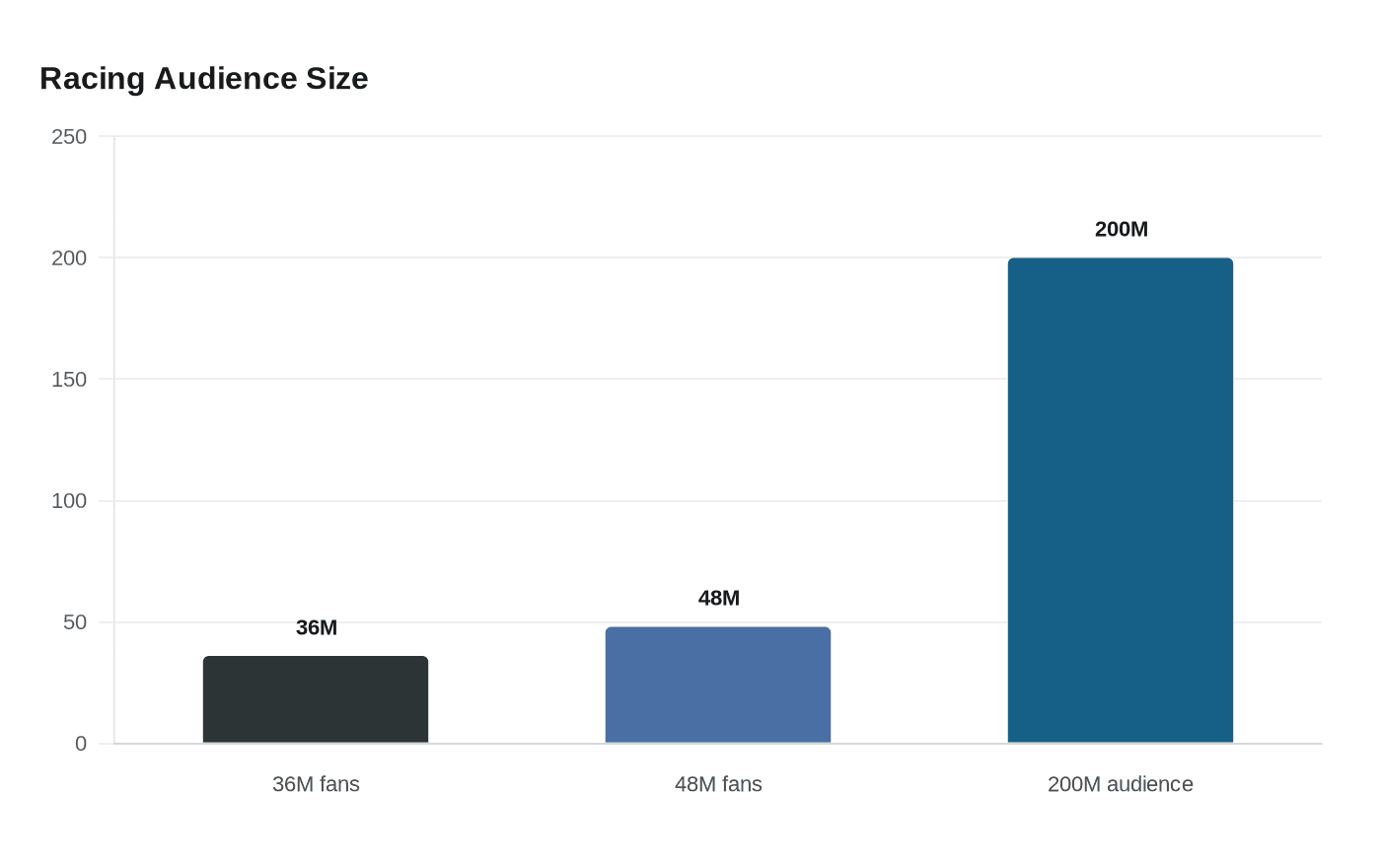
The report, The Horse Racing Audience Opportunity, put racing’s current global fanbase at just 36 million to 48 million, then identified an addressable audience of up to 200 million people with little or no engagement. That gap is the real headline. Racing is not trying to squeeze a few more clicks out of a saturated base. It is trying to convert passive sports consumers into actual fans, and then into bettors, a sequence the industry has too often reversed.
Spotlight Sports Group, the parent company of Racing Post, compiled the study with consumer research from GWI, PwC, Two Circles and Project Beacon, plus input from Hong Kong Jockey Club, Ascot Racecourse, Horse Racing Ireland, the Japan Racing Association, the Victoria Racing Club, the Jockey Club of Saudi Arabia and 1/ST Racing. Its five focus areas read like a diagnosis of racing’s modern failings: the horse racing product, the digital ecosystem, the live experience, the betting experience and the structural framework.
The sharpest conclusion may be the least glamorous. Racing’s digital ecosystem still does not match how people discover sports now, through mobile, social and creator-led content. Racing Post’s summary said engagement peaks between 6 p.m. and 11 p.m., a useful detail because it points to when casual fans are actually reachable. The report also said fans aged 25-44 are the main casual-conversion opportunity, while 16-24-year-olds are the most accessible Gen Z segment. That is the audience racehorse racing has been losing for years.
The betting angle matters, but not in the old way. Sport Industry Group’s summary said roughly 70% of new fans later engage with betting organically when racing is presented as a sport first. That is the argument Hong Kong Jockey Club chief executive Winfried Engelbrecht-Bresges has been making for months. At the 41st Asian Racing Conference in Riyadh on February 10, he said global foal production had fallen 35% since 2005, racing’s share of the sports-betting market was about 14% in 2025, and World Pool turnover was expected to be around HK$12 billion in 2025/26. His prescription was blunt: “If we want to create global events and we want to create champions ... we collaborate globally, so that we have a chance to turn the tide.”
The comparison to Formula 1 is not accidental. F1’s 2025 Global Fan Survey drew more than 100,000 responses from fans in 186 countries, and the sport said its audience was getting younger and more female, especially in the United States and other markets. Racing wants that kind of unified, digital-first growth. The harder question is whether a fragmented sport can finally act like one.
This article was produced by Prism’s automated news system from verified source data, official records, and press releases, then run through automated quality and moderation checks before publishing. The system is built and supervised by the people who set the standards it runs under. Read our full AI policy.
Know something we missed? Have a correction or additional information?
Submit a Tip