Talliyah Timentwa rises from Indian Relay to Thoroughbred racing
Talliyah Timentwa’s Indian Relay background is already paying off on Thoroughbreds, and her first Emerald Downs win showed how that balance and nerve can translate.

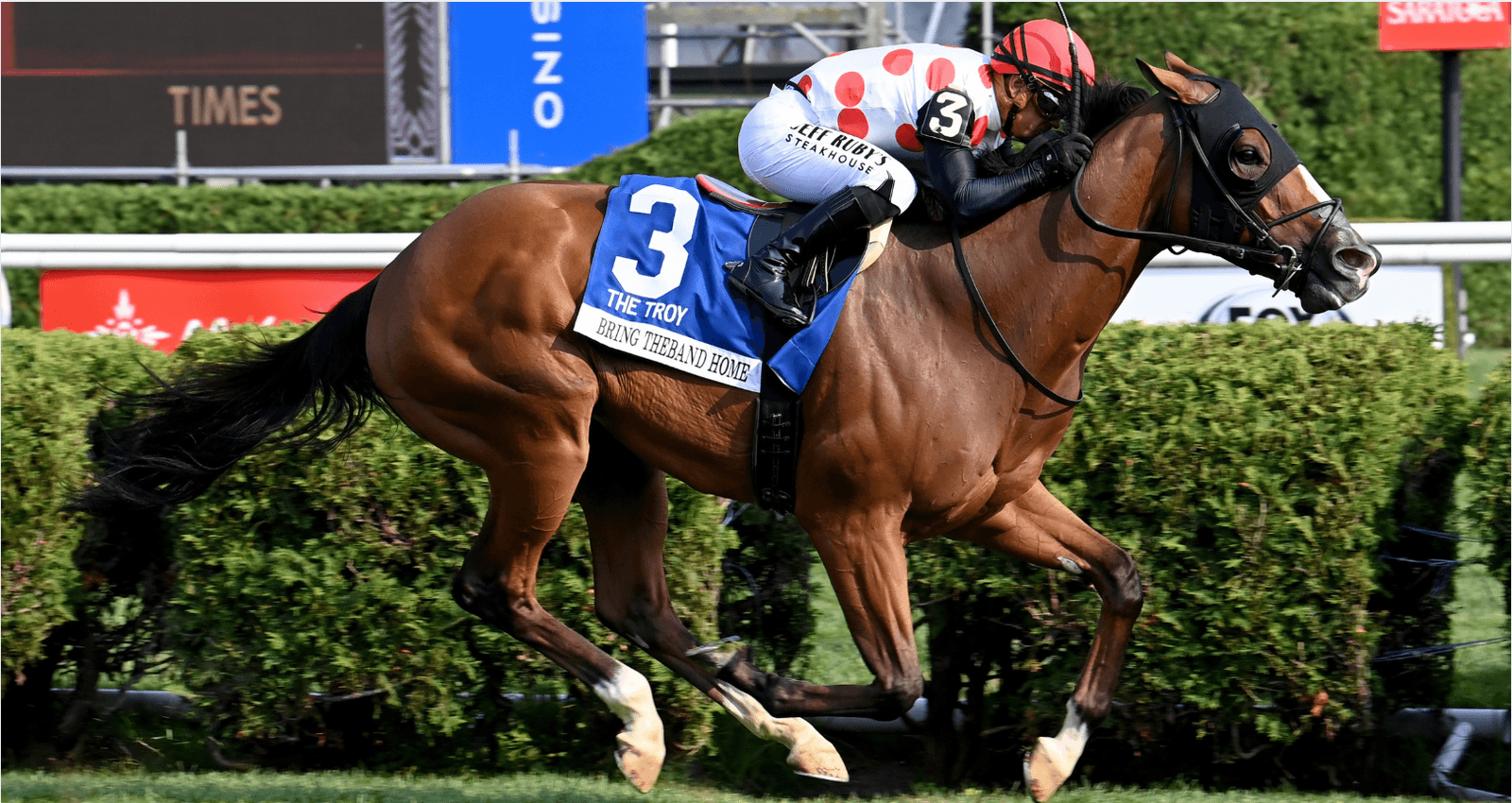
Talliyah Timentwa arrived at Thoroughbred racing with the kind of foundation most riders spend years trying to build. Raised around horses on the Colville Reservation, she turned Indian Relay instincts into a real edge on the track, and her first Emerald Downs victory aboard Made to Impact made that crossover impossible to miss. The win came in Race 1, a five-furlong maiden special weight for 2-year-old fillies worth $23,000, and Made to Impact got it done in 59.33 seconds while paying $29.44 to win.
A rider shaped before she ever reached the gate
Timentwa is an enrolled member of the Confederated Tribes of the Colville Reservation in eastern Washington, and her family’s horse culture defined her before she could even remember it. Her father, Ernest Rocky Timentwa, was a former jockey in Canada, and her mother, Trisha, has traced Talliyah’s earliest days to the Okanogan racetrack, where the family trained horses for Indian Relay. By the time most children are learning how to sit still, Timentwa had already been placed on a horse at two weeks old.
That background matters because it explains more than ancestry. Horses were part of the family’s daily work and identity, not a hobby set aside for weekends, and that kind of immersion creates a rider who understands movement, temperament, and risk as lived realities. Timentwa began Indian Relay at age 12, stepping into a sport that demands bareback balance, fast decisions, and the nerve to jump on and off moving horses without protective equipment.
Her results came quickly. At 13, she won the first Ladies National Championship at the Indian Relay Champion of Champions in Walla Walla in 2019, then repeated the feat four years later in Wyoming. Those wins were not just age-group milestones; they were proof that she could handle pressure in a sport where a rider’s body position, timing, and trust in the horse are tested every second.
What Indian Relay teaches that Thoroughbreds reward
Indian Relay is an unforgiving school for a race rider because it punishes hesitation. Riders are exposed, moving at speed, and forced to make violent transitions with no saddle security to fall back on, so the sport rewards balance first, then timing, then courage. Timentwa’s path shows how those habits can become transferable racecraft when the surface changes from relay ground to a Thoroughbred track.

The practical lessons run deeper than fearlessness. She has spent time swimming horses, riding trails, getting horses broke, and learning each animal’s quirks before the horse ever reaches the track. That kind of groundwork builds confidence from the horse’s perspective as much as the rider’s, and it creates a cleaner read on what a horse will do when asked to break from a gate, settle into rhythm, or respond under pressure.
That is why her move into gate racing feels less like a detour than an extension. Indian Relay gave her a body-based understanding of motion, while the day-to-day horse work taught her how to prepare a horse before competition starts. On a Thoroughbred oval, that combination shows up in the small things that separate competent riders from effective ones: when to ask, how to sit, how to keep a horse comfortable before the decisive move.
The Emerald Downs breakthrough is not symbolic, it is statistical
The first Emerald Downs victory gave the story a concrete marker. Timentwa won aboard Made to Impact on June 21, 2026, and the result now sits inside a broader body of work that looks increasingly substantive rather than anecdotal. Equibase lists her with 204 career Thoroughbred starts, 13 wins, 19 seconds, 24 thirds, and $183,803 in earnings.
The 2026 line is especially strong. Equibase shows 110 starts, 6 wins, 5 seconds, 12 thirds, and $98,779 in earnings this year, a volume that confirms she is not merely making cameo appearances but stacking race opportunities across the circuit. The Emerald Downs win, then, functions as a landmark inside an already busy campaign: it marks the moment her relay background produced a visible payoff at a mainstream Thoroughbred venue.
The specifics of the race sharpen the picture. Made to Impact won a sprint for 2-year-old fillies at five furlongs, a distance that rewards clean departure, efficient positioning, and a rider who can keep a young horse organized under pressure. A 59.33-second winning time and a $29.44 mutuel are the kind of details that tell you this was a proper race result, not a ceremonial nod.

Emerald Downs has already become a major Indian Relay stage
Timentwa’s ascent also lands inside a track that knows Indian Relay well. Emerald Downs’ 2024 coverage of the seventh annual Muckleshoot Gold Cup described a three-day event with 21 teams from five states and two provinces, spread across nine total races and ending with a $10,000 championship. That scale matters because it shows Indian Relay at Auburn, Washington, is not a side attraction; it is a significant summer draw with competitive depth.
The year before, the championship heat carried a $75,000 purse, and Two Medicine, ridden by Cody Carlson, rallied late to win for the Blackfeet Nation from Browning, Montana. Those numbers make the progression clear: Emerald Downs has given Indian Relay a prominent stage, and that exposure helps explain why a rider like Timentwa can move between racing cultures without losing the edge that made her effective in the first place.
Why Timentwa’s crossover matters to the sport
Timentwa’s value to horse racing is bigger than a single victory and broader than one cultural narrative. She is proving that Indian Relay does not sit outside the Thoroughbred game, it can produce riders with the balance, timing, and risk tolerance to compete inside it. Her career already carries measurable success, and her emergence at Emerald Downs gives mainstream racing a rider whose skills were forged in one of the most demanding horse sports in North America.
That is what makes her rise compelling in performance terms. She brings Indigenous horsemanship into Thoroughbred racing without softening the athletic challenge, and she does it with results that can be counted in starts, wins, and dollars. The crossover is no longer theoretical, because Talliyah Timentwa is already winning on both sides of the line.
This article was produced by Prism’s automated news system from verified source data, official records, and press releases, then run through automated quality and moderation checks before publishing. The system is built and supervised by the people who set the standards it runs under. Read our full AI policy.
Did this article answer your question?