Tom Durkin memoir revisits the voice behind racing's biggest moments
Tom Durkin’s memoir turns Belmont week into a reminder that racing’s biggest moments live through the voice that called them.
Tom Durkin and the sound of Belmont week
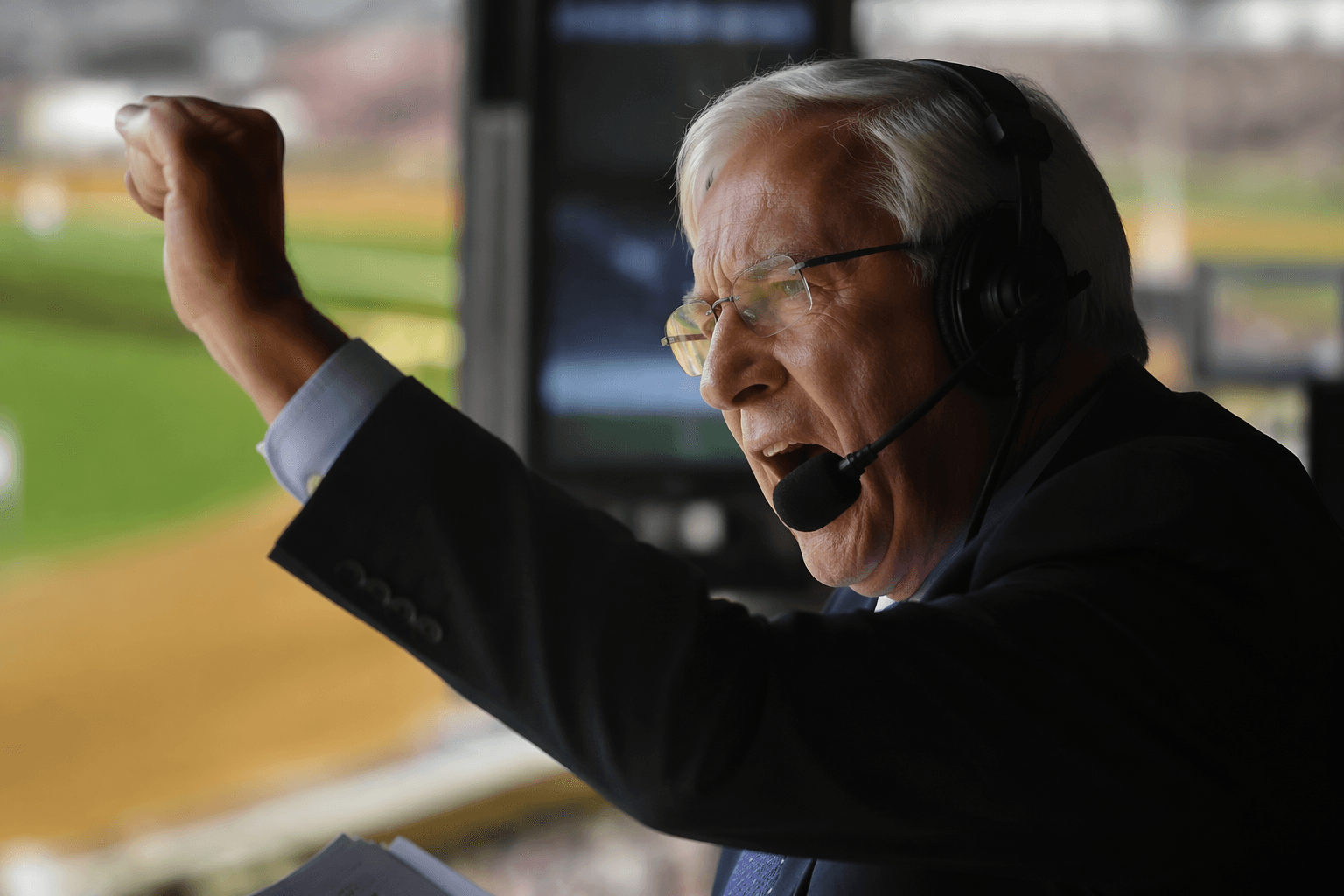
Tom Durkin’s memoir lands with the force of a familiar call in the stretch, because for a generation of racing fans, his voice is part of the sport’s memory bank. He was NYRA’s announcer from 1990 to 2014, he spent nine years on NBC’s Triple Crown calls, and he signed off from a career that stretched across more than 80,000 races. That reach is why the new book feels bigger than autobiography: it is a tour through the moments when racing became theater, and when the announcer became inseparable from the scene.
A microphone that could make a race bigger
Durkin’s gift was not just precision, but personality. He could be playful when the race called for it, slipping into a pirate voice for a claiming horse named Arrrrr or singing out the quirky maiden winner Doremifasollatido. Those touches mattered because they gave fans a way to remember the card long after the result was official, and they showed a caller who understood that racing is as much about atmosphere as it is about order and finish times.
Yet Durkin’s work also carried real weight, especially when the day on the track overlapped with the wider world. His book, *A Life’s Calling: The Voice Behind the World’s Greatest Horse Races*, written with Paul Volponi and Lenny Shulman, treats the booth as more than a perch. It is a pressure chamber, a place where stress, identity, and public expectation all build around a voice that has to stay steady no matter what the moment brings.
The race that made his voice part of history
If one call explains why Durkin remains so closely tied to modern American racing, it is the 2001 Breeders’ Cup Classic at Belmont Park. That event came 46 days after the September 11 attacks, at a time when New York was still carrying the shock of the losses. Belmont Park is about 12 miles from Ground Zero, and the Breeders’ Cup says the race was the first major international sporting event in the New York metropolitan area after 9/11.
Tiznow’s win that day was already loaded with meaning because the colt had won the 2000 Breeders’ Cup Classic and the Horse of the Year title. Durkin’s call, “Tiznow wins it for America!”, gave the moment its most enduring line. That is the kind of phrase that survives beyond the chart, because it captures how a race can become a civic moment as well as a sporting one.
From Wisconsin county fairs to the biggest stages
Durkin did not arrive at those moments by accident. His career began at Wisconsin county fairs in the summer of 1971, and the scale of what followed is staggering: a 43-year run behind the microphone, with FOX later noting that he retired in 2014 after calling some 80,000 races. NYRA has said he was its voice from 1990 to 2014, and it previously described his final call as coming in August 2014 at Saratoga Race Course.
That span tells you something important about his place in the sport. Durkin covered enough racing to become a fixture, not just a broadcaster, and his work bridged the old local circuit and the national television era. He was there for the everyday cards and the marquee days, which is why his memoir resonates as a record of how racing was heard as much as how it was seen.
Why the memoir matters now
The book also arrives with a sense of timing that fits Belmont week nostalgia. Durkin says the project came together unexpectedly, after repeated encouragement from friends and after years of telling stories informally. That makes the memoir feel less like a polished legacy statement and more like a long-suppressed archive finally finding its form.
Its publication on May 28, 2026, keeps Durkin in the center of the sport’s current conversation, and a June 11 lecture at Keeneland Library adds another stop for the fans and industry figures who still treat him as a living connection to racing’s biggest days. The interest is easy to understand: his career spans the Triple Crown, Breeders’ Cup, Saratoga, Belmont, and the NBC and FOX eras, which means his voice helped frame the modern presentation of the sport itself.
Belmont, broadcast eras, and the return of a familiar voice
Durkin stepped away from NBC’s Triple Crown duties in 2010 after a nine-year stint, but his retirement did not keep him off the biggest stages for long. He later came out of retirement to call the 155th Belmont Stakes in 2023 for FOX Sports, a reminder that certain voices still carry enough authority to be summoned back when the event demands it. FOX Sports’ Belmont Stakes Festival agreement runs through 2030, which only extends the era in which the network will shape how the race is presented to viewers.
That matters because callers do more than narrate what is obvious. They create rhythm, urgency, and emotional memory. In Durkin’s case, the recollection of Belmont and Breeders’ Cup moments is now fused with the recollection of the man who gave them language, whether he was building drama with a comic flourish or landing one of the most patriotic lines in the sport’s modern history.
A legacy written in calls, not just pages
The memoir’s real value is that it restores the announcer to the center of racing history. Horses like Tiznow, venues like Belmont Park and Saratoga Race Course, and events like the 2001 Breeders’ Cup Classic matter on their own, but they live differently when filtered through a voice fans can still hear in their heads. Durkin’s story is a reminder that the sport’s defining days are not only won by horses and trainers; they are also remembered through the cadence that frames the finish.
That is why his book feels so at home during Belmont week. It is not simply a look back at a career. It is a return to the soundtrack of modern American racing, and a reminder that some of the sport’s most durable images began as sound.
This article was produced by Prism’s automated news system from verified source data, official records, and press releases, then run through automated quality and moderation checks before publishing. The system is built and supervised by the people who set the standards it runs under. Read our full AI policy.
Know something we missed? Have a correction or additional information?
Submit a Tip