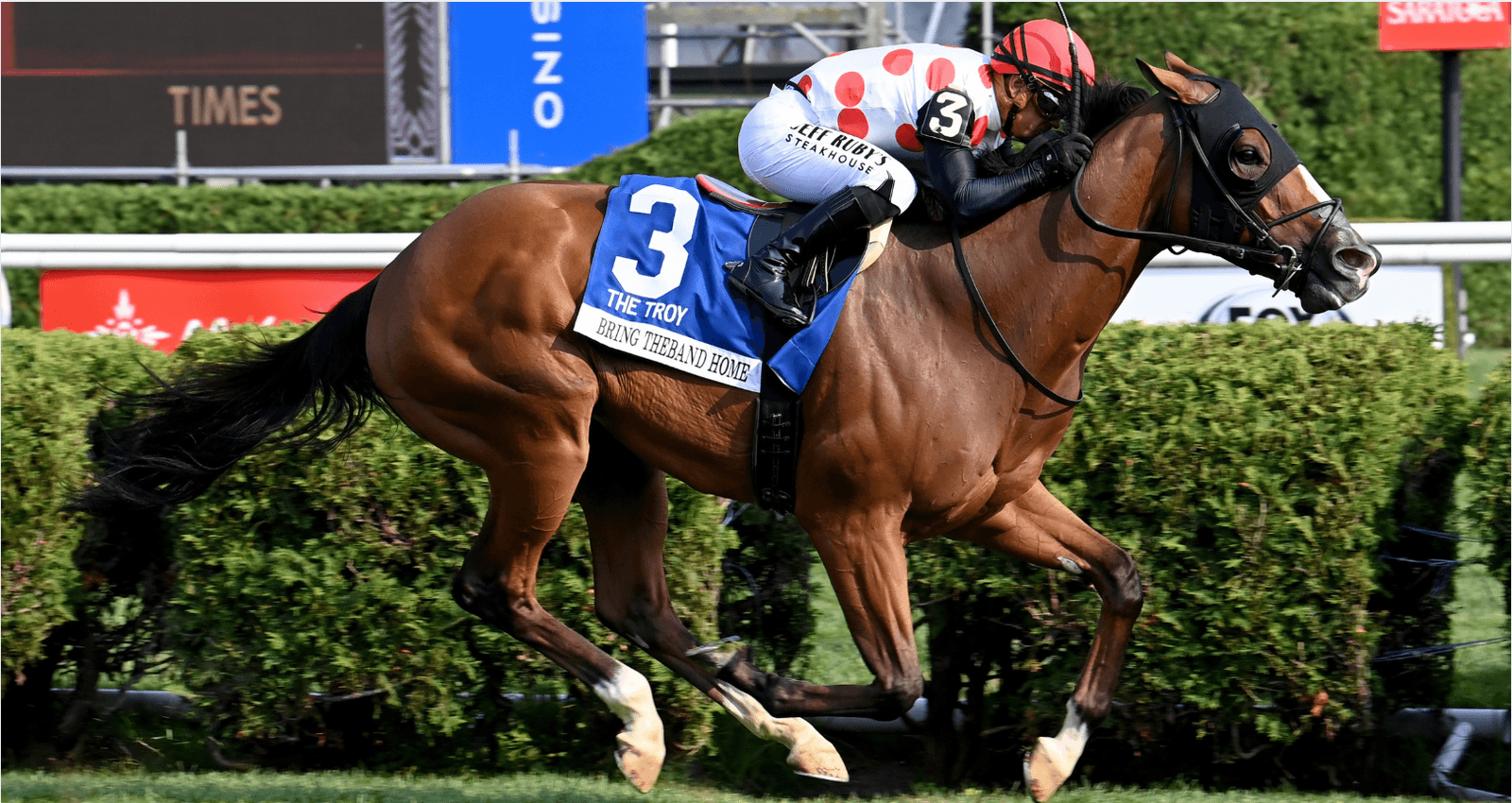
West Paces Racing’s Ascot gamble pays off with Euston Hall
West Paces Racing turned a Tattersalls visit into a Royal Ascot test, and Euston Hall now has a real shot at making the Britannia. The colt is the clearest proof yet that the group’s transatlantic model can produce a horse that matters.

West Paces Racing did not come to Royal Ascot simply to be seen. It came to prove that an American ownership group can build a European pipeline, find value in the English bloodstock market, and turn one smart purchase into a horse with a live chance on one of racing’s biggest stages. Euston Hall is the horse carrying that argument now, and the Britannia Stakes is the race that will tell the market how far the idea has already traveled.
The appeal of the project is bigger than one entry box. Larry Connolly and co-founder Keith Mason started West Paces Racing in 2019 with a name taken from West Paces Ferry Road in Buckhead, Atlanta, but the operation has evolved into something far less local in ambition. Connolly’s first trip to Ascot in 2018 fed a long-standing admiration for British racing culture, and a later 2024 visit to Tattersalls helped put the wheels in motion for a UK expansion that now includes horses, a stable, and a Royal Ascot presence.

The Ascot test is the real business case
That context matters because Royal Ascot is not a vanity target. It is a brutal filter for any ownership model, especially one built on cross-border buying and selective investment. If West Paces can keep identifying horses at the right price and place them in races that suit them, the group is not just owning runners, it is building an international racing structure with staying power.
Euston Hall is the best current evidence for that pitch. The colt, by Dark Angel out of Create A Dream, was bought for 130,000 guineas and is now trained by Edward Walker for West Paces Racing UK 2024 LLC. He arrives with two wins from two starts as a 3-year-old, which is the kind of profile that makes a purchase look less like a gamble and more like a statement of method.
Why Euston Hall fits the model
West Paces has described its approach to the English market in almost Moneyball terms, not expecting to win every bid but aiming to spot horses the wider market underprices. Euston Hall fits that philosophy neatly. He was not bought as a headline act, yet he has already become the horse around which a much larger transatlantic plan can be measured.
That is the key performance point: value buying only matters if the horse can move up a level. Two wins from two starts is a strong start, but Royal Ascot is where the ceiling is tested in public. If Euston Hall translates his early promise into a run that changes his trajectory, West Paces will have more than a useful horse. It will have proof that its sourcing model can produce runners that belong in the sport’s biggest conversations.
Britannia Stakes pressure sharpens the picture
The Britannia Stakes is exactly the kind of race that reveals whether a horse is still a project or already a player. Run over the straight mile at Ascot for three-year-old colts and geldings, it carried £120,000 in prize money in 2025 and drew 30 runners that year, a reminder of how crowded and unforgiving the race can be. That field size alone makes placement critical, because the wrong spot can flatten even a talented horse before the finish straight begins.
Euston Hall is right on the cusp of making the Britannia field, with the alternative of being rerouted to the Jersey Stakes or even Goodwood depending on how entries shake out. That uncertainty is part of the attraction and the risk of Ascot week. One horse, one form cycle, and one entry decision can determine whether a horse is aimed at a heritage handicap, a different Royal meeting target, or a summer campaign elsewhere.
What the alternatives tell us
The possibility of the Jersey Stakes or Goodwood shows how quickly a single horse can become a multi-country project when the ability is there. It also shows why West Paces’ model is more sophisticated than a simple buying exercise. The point is not only to purchase horses, but to place them where their attributes can be converted into results, reputation, and future value.
That is especially important in a market where American owners often focus on domestic prestige races. West Paces has already demonstrated a wider reach, most notably by becoming the only ownership group with two starters in the 2024 Kentucky Derby, Dornoch and Society Man. That double presence at Churchill Downs marked the group as unusual among U.S. syndicates, and the Royal Ascot move suggests that the expansion is structural rather than one-off.
The culture is part of the strategy
Connolly’s affection for British racing is not just color around the edges. His references to Ascot, Cheltenham, the Cotswolds, and the social side of the sport point to a different kind of ownership ambition, one that treats racing as both competition and culture. For some investors, the appeal is entirely transactional; for Connolly, the experience appears to be part of the return.
That matters in a sport increasingly shaped by international ownership and horse movement. A group like West Paces is not merely crossing borders to chase prize money. It is learning how British racing operates, how bloodstock value is discovered, and how a horse can move from an auction ring to a Royal Ascot entry to a broader campaign across the summer.
The bigger signal for the industry
The wider significance is that this is what modern ownership often looks like when it is working. The best groups are no longer defined by one stable, one country, or one set of sales tactics. They are built to source in one market, race in another, and keep enough flexibility to respond when a horse improves faster than expected.
Euston Hall embodies that shift. Purchased for 130,000 guineas, trained by Edward Walker, and now sitting on the edge of a Royal Ascot target that drew 30 runners last year, he has become the clearest test case for West Paces Racing’s identity. If he lands in the Britannia and runs to his form, the horse will validate more than a campaign plan; he will validate the idea that an American ownership group can turn taste, timing, and selective buying into a genuine Ascot presence.
This article was produced by Prism’s automated news system from verified source data, official records, and press releases, then run through automated quality and moderation checks before publishing. The system is built and supervised by the people who set the standards it runs under. Read our full AI policy.
Did this article answer your question?