Parkour crews evolve from local groups into media brands
Parkour crews have become media brands, and that shift now shapes who gets seen, who gets paid, and how the sport looks online.
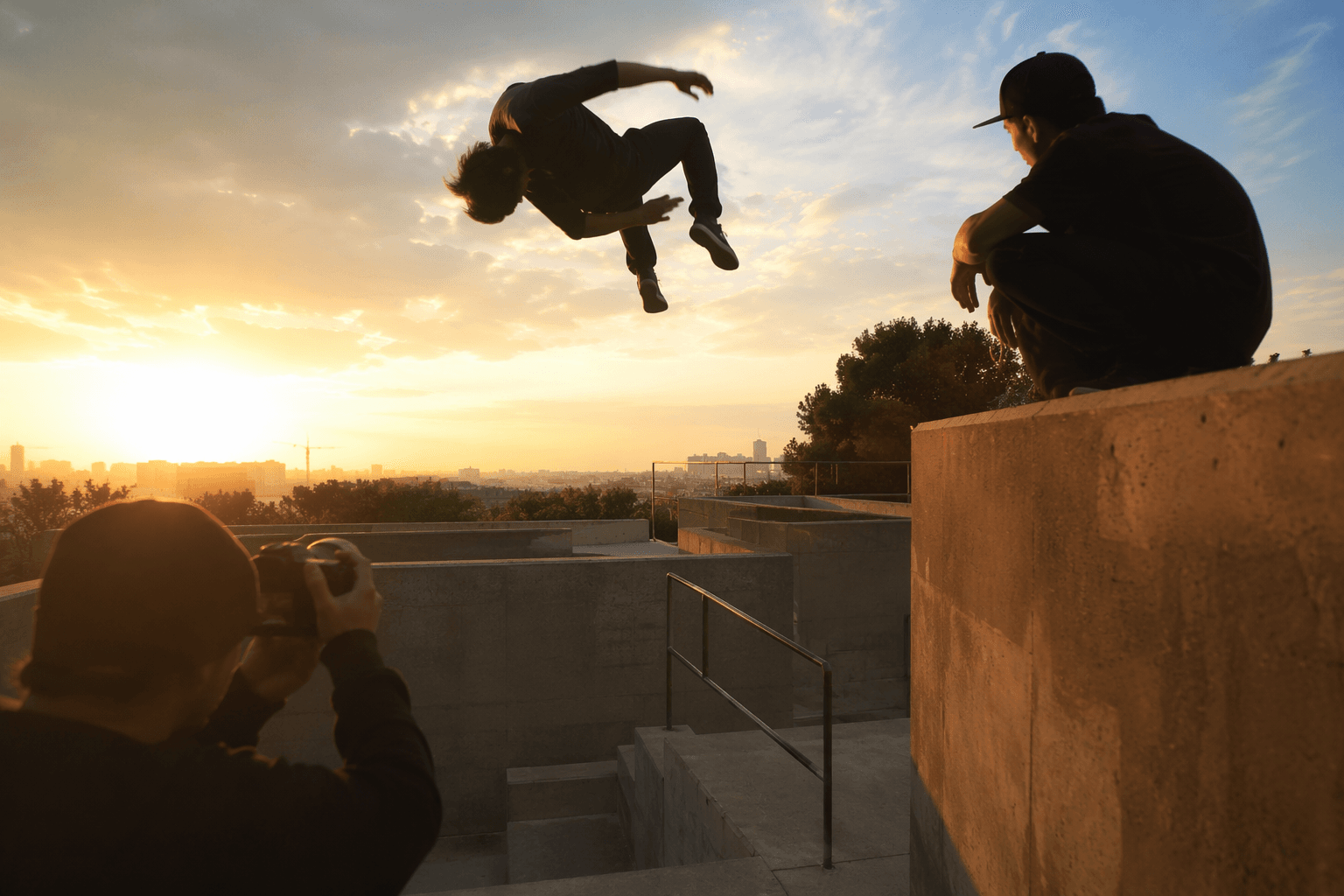
Parkour crews are no longer just the groups that meet at a local spot and train together. Parkour.com frames the change as a move from "old school to new school" and from "hobby to profession," and that shift now shapes visibility, sponsorship, and the very definition of success in the sport.
From local collectives to recognizable brands
Parkour’s roots are widely traced to France in the 1980s and 1990s, with David Belle commonly cited as its inventor. From the start, the discipline was built on movement, reputation, and demonstration, but its spread depended on media almost immediately: Reuters has described it as a city-based training method that spread through online video, and The New Yorker described its rise as driven mainly by videos on the internet.
That matters because parkour was never just a neighborhood practice that later discovered the camera. Britannica describes it as a discipline that moved into wider public awareness through internet-era media exposure, which means the sport’s public identity has long been tied to how it is filmed, shared, and consumed. By the time crews began building followings beyond their own cities, they were already operating in a sport where the audience often arrived through a screen first.
What changes when a crew becomes a brand
In the earlier parkour era, value came mostly from direct training, local jams, and standing inside the community. The new model layers on team logos, video channels, sponsorships, workshops, apparel, and a sharper philosophy about what the crew represents. That changes the economics of the sport: athletes can earn through content creation, coaching, live events, and merchandise, not only through performance itself.
STORROR shows how far that can go. The team built a YouTube business large enough to support a new venture, which makes the brand model more than a theory about modern sports marketing. Once a crew can turn consistent video output into real business momentum, its identity stops being just social and becomes commercial, with the team name carrying as much weight as the athlete list.
This is also where success starts to look different. A strong move still matters, but so do repeatable content, audience growth, and a recognizable style that fans can spot in a feed of clips. In the brand era, a crew is judged not only by what its athletes can do on concrete, but by whether the crew can hold attention long enough to turn that movement into a business.
Why visibility now shapes the sport’s aesthetics
The camera changed more than distribution. It changed the way parkour is packaged, because polished edits reward clean lines, memorable trick sequences, and a distinct visual identity that can travel across platforms. A team that knows how to present itself can reach newcomers before they ever step into a gym class or attend a community jam, which gives media-savvy crews a built-in advantage in shaping public taste.
That advantage also affects sponsorship. OpenSponsorship characterizes parkour athletes as creators with strong engagement on YouTube, Instagram, and TikTok, which captures how sponsors now evaluate the sport: not only by athletic ability, but by reach, repeat viewership, and the ability to convert movement into attention. In that environment, the crew becomes a media channel as much as a training group.
The tradeoff is easy to see. Performance for the camera can pull parkour toward spectacle, while the sport’s older logic still prizes efficient movement, self-improvement, and function over flourish. Crews that thrive in the brand era have to balance both, because the same clip that builds a following can also raise questions about whether the sport is being shaped for the feed instead of the street.
Events and institutions widened the stage
The brand era did not stay inside team pages and upload schedules. Red Bull says Red Bull Art of Motion dates back to 2007 in Vienna, Austria, showing how sponsored events helped turn parkour into a repeatable spectator product with an international profile. When a branded event lasts that long, it does more than host athletes. It helps define what parkour looks like in public.
Institutional competition pushed the same direction. The Olympics website noted in 2018 that the FIG Parkour World Cup made its debut as part of the FISE World Series, a sign that parkour was moving into more structured, visible, and marketable formats. Once federation-backed competition enters the picture, crews are no longer just training circles; they become part of a larger ecosystem that includes rules, stages, broadcasts, and more formal status.
That bigger stage helps explain why teams matter so much now. A crew with a clear identity can travel more easily between content, coaching, competition, and sponsorship, while also building trust with audiences who may discover the sport through a polished edit before they ever learn the local history behind it. The team brand becomes the bridge between underground roots and mainstream visibility.
What the shift means for parkour culture
The upside is obvious: professionalization has made parkour more visible and more accessible to newcomers, while creating paid pathways for athletes who can coach, perform, and produce content. The brand era gives crews a way to build stability around a sport that once relied mostly on reputation and informal community status. It also helps explain why parkour now appears so often through Instagram clips, YouTube edits, sponsor-backed events, and branded apparel.
The downside is just as real. When success is measured by audience growth and commercial partnerships, the sport can tilt toward the athletes and crews who are best at packaging themselves for the market. That changes who gets seen, who gets paid, and who gets treated as the face of parkour, even when the movement quality is only part of the story.
Parkour’s identity was always shaped by movement and media, but the crew-to-brand shift made that relationship impossible to ignore. The modern sport is not just built on what athletes can clear. It is built on how well a crew can turn that clearance into a recognizable, sustainable public identity.
This article was produced by Prism’s automated news system from verified source data, official records, and press releases, then run through automated quality and moderation checks before publishing. The system is built and supervised by the people who set the standards it runs under. Read our full AI policy.
Did this article answer your question?