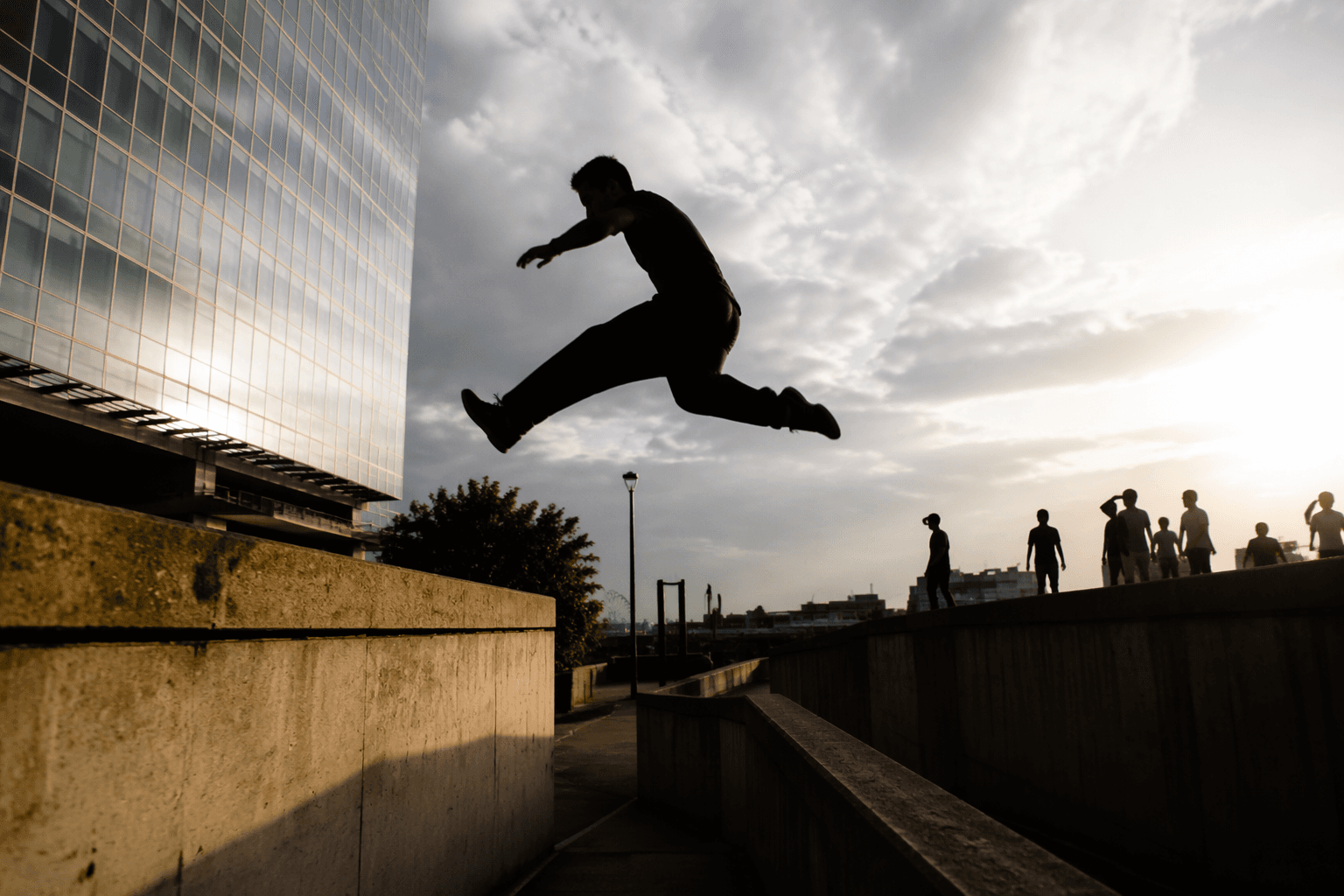
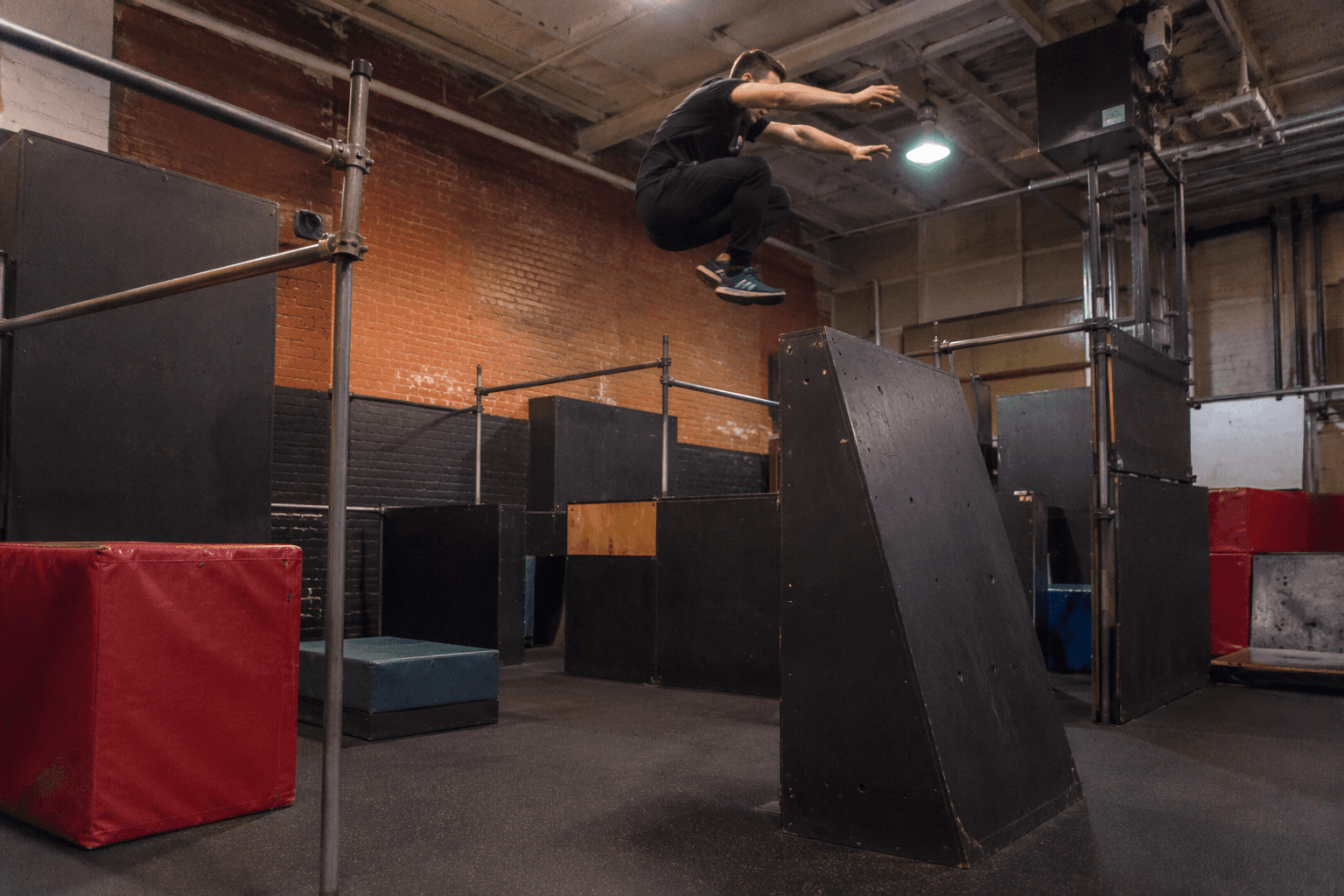
Parkour's appeal comes from freedom, control and accessible movement
Parkour keeps athletes hooked because it lets them set the challenge, master it in steps, and manage risk on their own terms.
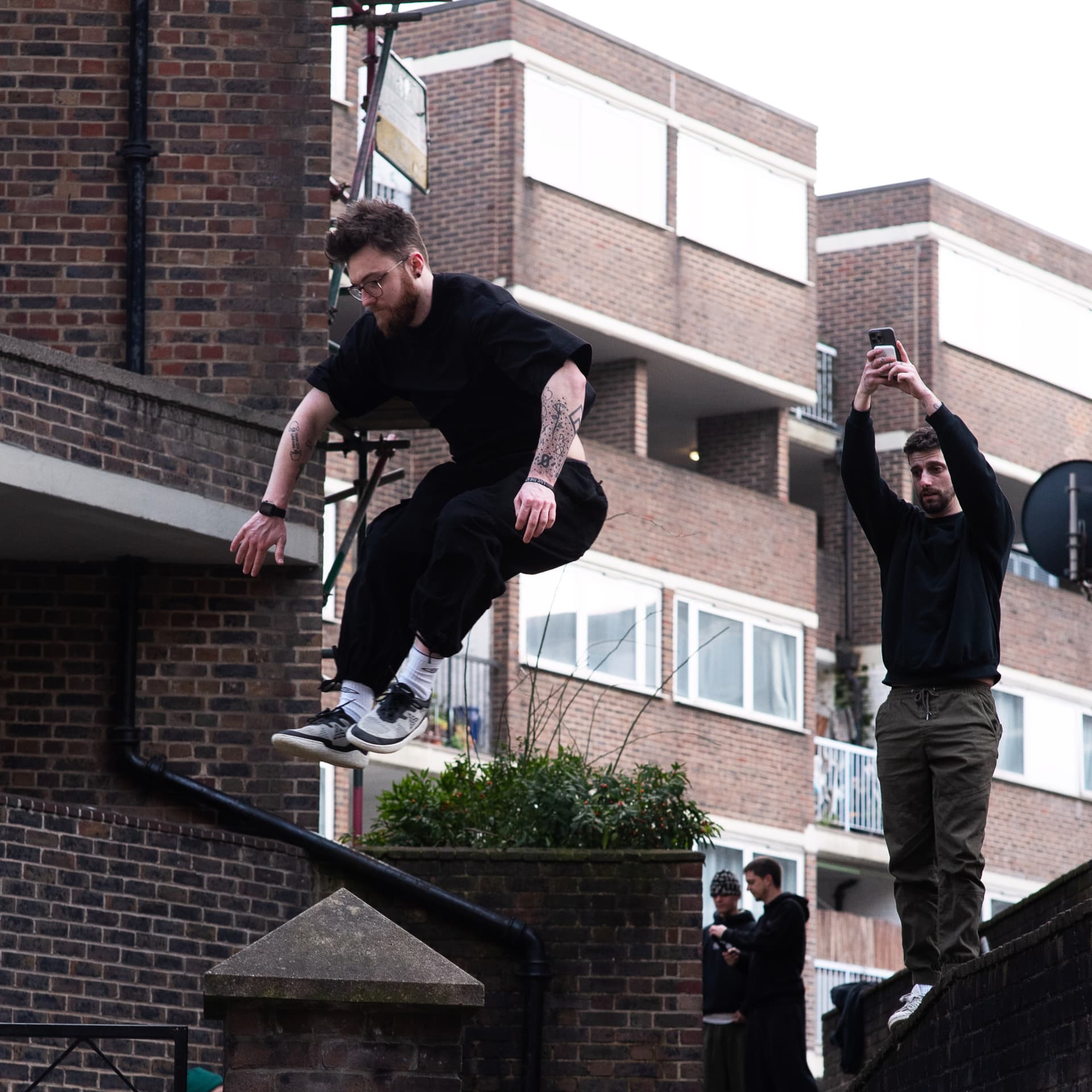
Parkour is not surviving on viral clips alone. Its real pull is simpler and sturdier: you choose the line, you choose the pace, and you choose when a move is ready. That mix of freedom, control and calibrated risk explains why people keep coming back after the spectacle fades, and why a discipline built on walls, rails and rooftops has become a serious training culture.
Freedom without a gatekeeper
Parkour UK defines the sport as an urban action discipline that uses the environment itself for movement, running, jumping, vaulting, climbing and rolling. The part that matters most for participation is what is missing: no additional equipment, no uniform and no fixed set-up. You can practice in a park, on a stair set, across a low wall or in an empty lot, which lowers the barrier in a way few organized sports can match.
That accessibility changes the psychology of the first session and the hundredth. In parkour, the athlete is not waiting for a roster spot, a court booking, a lane assignment or a ball to be fed in from somewhere else. The athlete creates the task, then solves it, and that repeated act of self-direction is the engine behind long-term attachment.
From French training method to global sport
The roots matter because parkour did not begin as stunt culture. Britannica places its development in France in the late 1980s, with Raymond Belle’s military training in Hébert methods feeding the family line that produced David Belle, the figure generally credited as the father of parkour. Sébastien Foucan helped carry the movement into Britain, where it was called freerunning, and the discipline spread further through internet videos, television commercials and films including Casino Royale in 2006.
That history is why the sport still carries two identities at once. On one side is the clean, efficient movement tradition: get from point A to point B as directly and intelligently as possible. On the other is the camera-ready version that made parkour famous, all flips and wall runs and impossible-looking gaps. The first version is what built the culture; the second is what made outsiders notice.
Why the risk is not the point
Parkour gets misunderstood because people see a jump and assume the thrill is reckless exposure. The better reading is more disciplined: athletes spend a lot of time reducing uncertainty before they ever increase difficulty. The sport’s appeal lies in a steady feedback loop between perception and action, where the body learns how a landing feels, how a takeoff reads and how much speed a surface can safely accept.
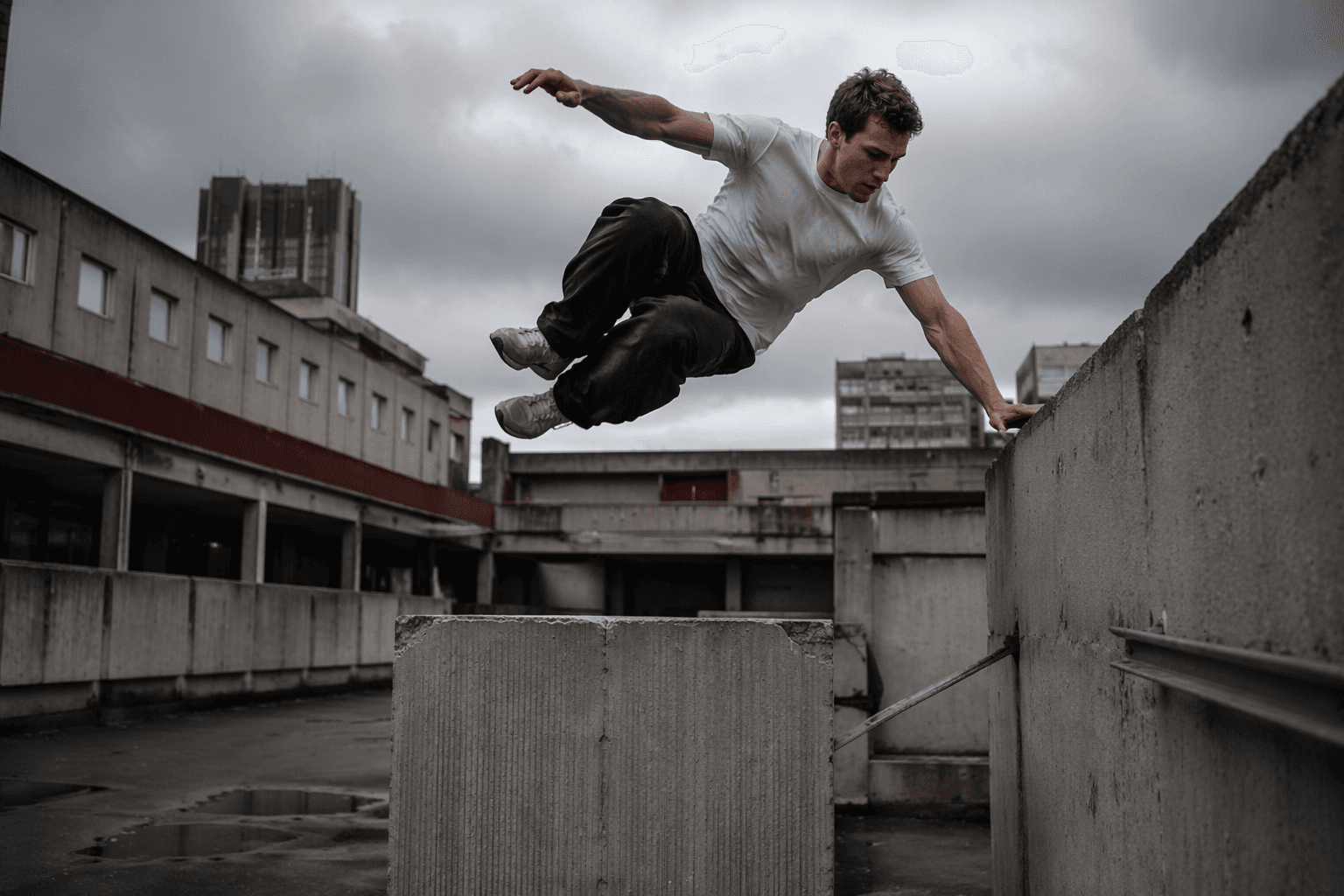
That matters because self-efficacy is not just a soft mindset term here. A 2013 survey of 277 parkour and free-running practitioners found that reckless risk-taking was associated with high neuroticism and low conscientiousness, and that self-efficacy significantly mediated the link between those traits and risk-taking. In plain terms, confidence was not an accessory to performance. It shaped how people judged obstacles and decided whether a movement belonged in their repertoire yet.
Progression is the product
Parkour keeps people engaged because it is built around progression systems that are visible and personal. A ledge that felt impossible last month becomes manageable after footwork drills, precision practice and repeated landing reps. The score is not public, but the evidence is obvious to the athlete: cleaner takeoffs, quieter landings and a line that once demanded hesitation now feels routine.
That is why the sport can feel more self-authored than many mainstream team sports. The athlete is not only executing a coach’s design or chasing a place on a depth chart. The athlete is learning to calibrate risk, measure readiness and decide when control is good enough to attempt the next step. That decision-making loop is the heart of parkour’s staying power.
Youth data backs up the motivation story
The strongest direct evidence for that internal pull comes from a 2025 study of 27 children and adolescents in parkour. On the Intrinsic Motivation Inventory, median interest and enjoyment scored 6.71 out of 7, while perceived choice scored 6.40 out of 7. On the PACE+ survey, the Pros subscale reached 4.25 out of 5 and Self-Efficacy reached 3.91 out of 5.
The interviews in that study matched the numbers. Autonomy, enjoyment, camaraderie, creativity and the urge to improve came up again and again. The sample was small and youth-focused, but the pattern is hard to miss: parkour works because participants feel they are choosing the challenge, not just surviving it.
The sport has gone official without losing its edge
Parkour’s rise from subculture to structured competition shows how much the scene has changed. The International Gymnastics Federation gave the green light in February 2017 to develop parkour as a new sport. The first FIG Parkour World Championships were planned for 2020, delayed by the COVID-19 pandemic, and held in Tokyo on October 14-16, 2022.
The calendar has kept moving. FIG staged a second world championship in Kitakyushu in 2024, and its official schedule lists a 2026 Parkour World Cup in Istanbul. That international framework matters because it gives the sport status, but it also risks flattening what made parkour compelling in the first place. The best versions of the sport still preserve judgment, adaptation and individuality inside the format.
FIG’s own description leans into that balance. It frames parkour as teaching self-confidence and emphasizes honesty, respect, humility, rigor, discipline and effort. Those values are not decorative. They describe how parkour athletes actually progress: with restraint before bravado, and with technical repetition before highlight-reel ambition.
Safety, coaching and the business of trust
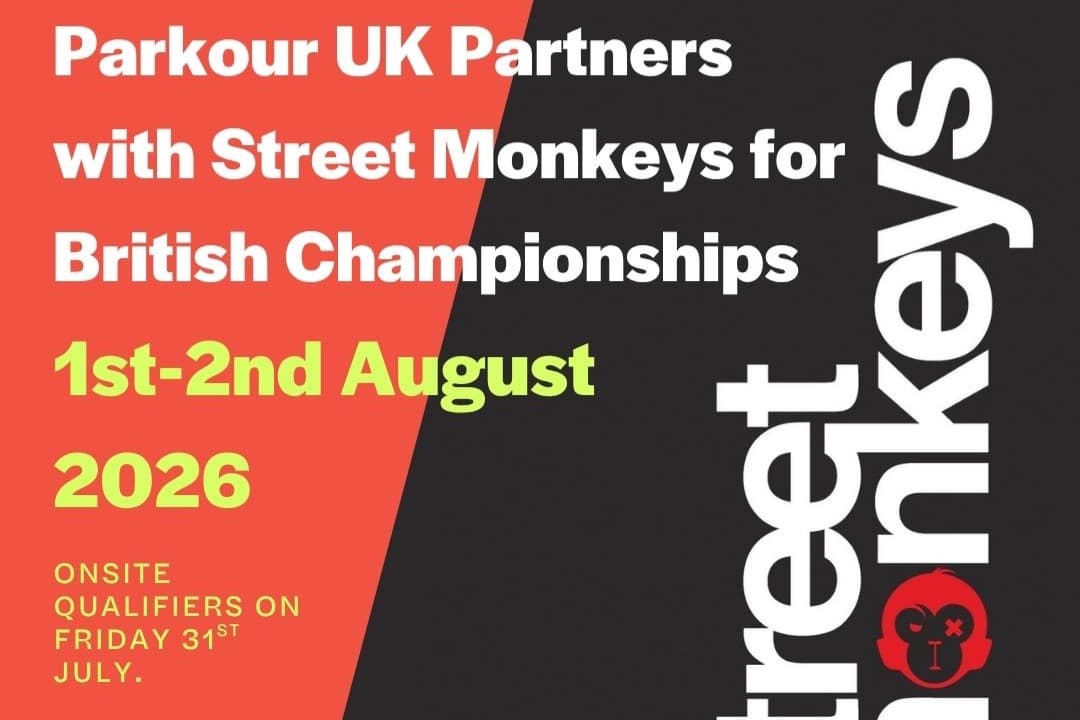
The modern parkour ecosystem is also getting more formal about safety and support. Parkour UK’s resources hub includes safeguarding for children and vulnerable adults, plus mental health support, which tells you the sport is being organized around participation rather than just performance. Parkour UK is also trialing a new Level 1 coaching qualification in 2026.
There is a practical business reason for that push. Parkour UK says its framework is partly designed to help underwriters understand the sport better and improve its insurability. That is a big step for an activity long treated by outsiders as too chaotic to categorize. The reality is more orderly: coaches, progressions, risk management and welfare systems are becoming part of the infrastructure.
The long arc is bigger than the clips
A 2008 PubMed case report already described parkour as popular in Europe and quickly gaining popularity in the United States. That detail now reads like an early marker of a much larger shift. Parkour is no longer just the thing people watch in a montage before moving on. It has a training logic, a psychology of self-efficacy, an international competition circuit and a support structure built around keeping people in the sport.
That is why the viral clip is only the entry point. The staying power comes from something more durable: the chance to move through space on your own terms, to learn control one obstacle at a time, and to build confidence from movements you can measure with your own body.
This article was produced by Prism’s automated news system from verified source data, official records, and press releases, then run through automated quality and moderation checks before publishing. The system is built and supervised by the people who set the standards it runs under. Read our full AI policy.
Did this article answer your question?