Parkour’s global identity is shaped by rival governing bodies
Parkour now runs on two tracks: Parkour Earth’s community-led federation model and FIG’s tightly scored competition system, and that split shapes everything from judges to medals.
Parkour’s identity is being built in real time, and the sport now lives under two visible governance layers. Parkour Earth presents itself as the international governing body for parkour, freerunning, and Art du Déplacement, while FIG has turned competition into a codified, judgeable discipline with a published code of points and formal officiating rules. That divide explains why the same sport can look community-driven in one context and highly institutional in another.
Parkour Earth’s model starts from the community
Parkour Earth says it was founded in 2017, when six established national parkour organisations came together to build an international federation. Its structure is unusual by mainstream sports standards: the organization says its community includes individuals, community-level groups, and national parkour organisations, with a goal of helping countries without national representation build community-led national bodies.
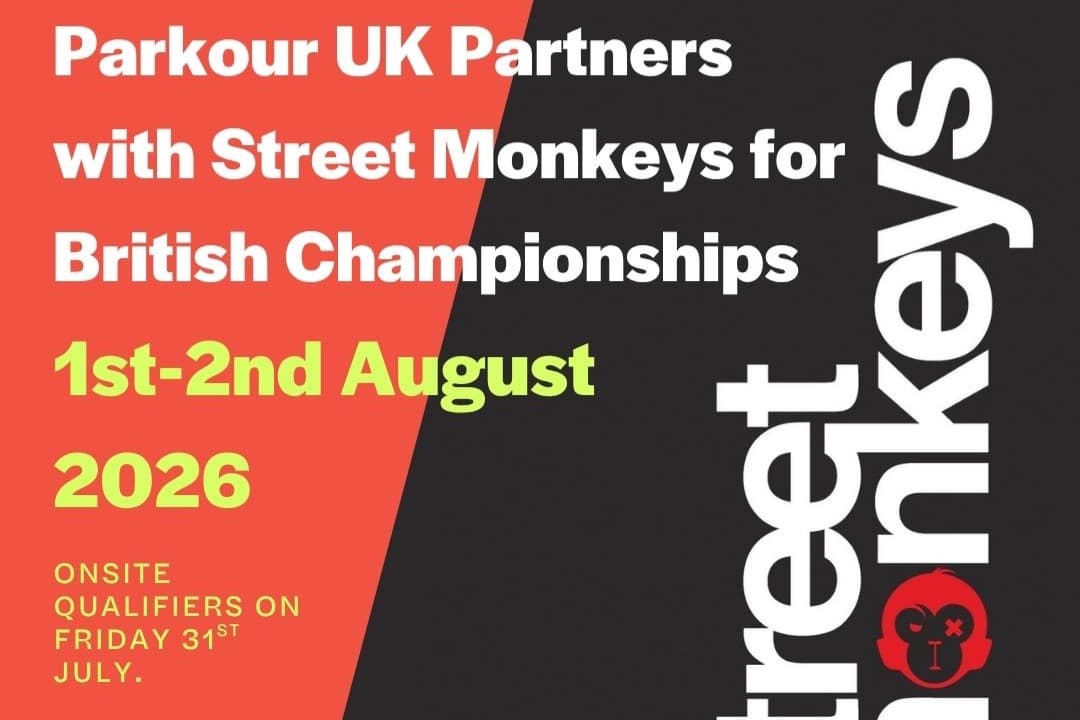
The founding bloc matters because it shows where the sport’s legitimacy was first assembled. Contemporary reporting named the six founding national federations as Parkour UK, France’s Fédération de Parkour, New Zealand Parkour, Australian Parkour Association, Parkour South Africa, and the Polish Parkour and Freerunning Federation. That is not the typical top-down club pyramid seen in older sports. It is a federation model assembled from the ground up, with national representation treated as the core building block rather than a byproduct.
Parkour Earth also frames its mission around autonomy. Its public materials say it is built to protect the global parkour community’s independence and to keep its structures open and responsive. That language is more than branding. It signals that parkour’s international identity is still being negotiated through membership, representation, and federation-building, not just by who wins medals.
National bodies have multiplied alongside that international push
The clearest sign of parkour’s organizational growth is that national-level governance is spreading even as the international picture remains contested. Parkour UK and the United States Parkour Association both describe themselves as national governing bodies, which tells you the sport is not waiting for a single global architecture before building local authority. National recognition is becoming a lever for resources, coach education, and event development.

The UK example is especially concrete. Parkour UK says official recognition opened access to grants and National Lottery funding, and that money helped develop training spaces, coaching programmes, and community initiatives. That is the practical payoff of governance in parkour: it changes whether the sport can build facilities, train coaches, and stabilize participation outside of the elite competition circuit.
That funding path also shows why governance matters beyond medals. A national body can turn recognition into infrastructure, and infrastructure changes who gets to train, where they train, and how consistently the sport can grow. In parkour, the politics of representation are not abstract. They shape whether a city gets a space to jump, vault, and land safely.
FIG has built the competition layer from the top down
On the other side sits FIG, which has taken the sport’s competitive side and formalized it into a rule-based system. The FIG Parkour Code of Points 2025-2028 was approved by the FIG Executive Committee in February 2024, published on 22 April 2024, and set to take effect on 1 January 2025. FIG says the code is meant to provide an objective way to evaluate parkour competitions at regional, national, and international levels, with standard scoring for Speed and Freestyle.
That matters because it changes parkour from a purely expressive discipline into one that can be measured against a common rubric. Once there is a code of points, judges can be trained, comparisons can be standardized, and competition results can be slotted into an international calendar. FIG also publishes specific judges’ rules for parkour, which confirms that the sport now has a formal officiating system, not just an event-by-event set of conventions.
The judging pipeline is tight by design. FIG’s parkour judges’ rules for 2025-2028 say intercontinental and international judges’ courses last one day of course work and one day of examination, with practical video evaluation. Participation in international courses is capped at 15 judges per federation. That cap shows how controlled the pathway is: federation by federation, judge by judge, FIG is building a cadre that can interpret the code the same way from one competition to the next.
What the world championships reveal about the sport’s shape
The competition calendar shows how that rulebook is already being used. FIG held the first FIG Parkour World Championships in Tokyo in October 2022 after the event was delayed from 2020 by the COVID-19 pandemic. The second FIG Parkour World Championships took place in Kitakyushu, Japan, from 15-17 November 2024, and that event also included the first-ever FIG Parkour Junior World Championships.
The 2024 Kitakyushu results underline how international the field has become. FIG’s live results page showed seven countries in the men’s speed semi-final, and its medal standings listed Mexico, Sweden, China, Switzerland, the United States, Italy, Japan, Czech Republic, and the Netherlands among the medal-winning countries. That spread tells you parkour is no longer confined to one or two regional pipelines. The sport is producing finalists and medalists across multiple continents, even as the governance debate around it remains unresolved.
The junior world championships are just as important. Adding a youth world title to the same event in Kitakyushu shows that FIG is not merely staging one-off showcases. It is building a full competition ladder, from junior ranks to senior worlds, which is exactly how a sport hardens into a repeatable international product.
Why this split defines parkour’s future
Parkour’s unusual strength is also its complication. Parkour Earth is trying to define legitimacy from the community outward, through national representation and member-driven organization. FIG is defining legitimacy from the competition outward, through code, officiating, and world championships. Both systems claim to serve the sport, but they emphasize different things: autonomy on one side, standardization on the other.
That tension is why parkour news can look fragmented if you only follow results. A national federation announcement, a judges’ course, a junior world championship, and a community-building initiative are not separate stories. They are all pieces of the same fight over how parkour should organize itself. The sport’s global identity is being written by two institutions at once, and the split is now part of the game.
This article was produced by Prism’s automated news system from verified source data, official records, and press releases, then run through automated quality and moderation checks before publishing. The system is built and supervised by the people who set the standards it runs under. Read our full AI policy.
Did this article answer your question?