Agassi’s Kuala Lumpur presence fuels Malaysia’s pickleball growth surge
Andre Agassi's Kuala Lumpur showcase drew nearly 100 fans, ended 2-2, and gave Malaysia a star-powered push toward pickleball's next growth wave.

Andre Agassi did more than headline a showpiece in Kuala Lumpur. His appearance turned a celebrity exhibition into a live test of how fast pickleball can move from curiosity to culture in Malaysia, where a packed, high-rise showcase and a growing base of players suggest the sport is gaining traction far beyond novelty.
At Merdeka 118, the JOOLA Titans Tour stop made history on the 118th floor, where nearly 100 fans watched four first-to-seven matches that finished in a 2-2 draw. Agassi, Ben Johns, Federico Staksrud, Kate Fahey, Colin Johns, Anna Bright and Brooke Buckner were all part of the lineup, but the night’s biggest draw was the sight of Agassi partnering Brooke Buckner against Johns and Bright in one of the headline matches. The setting gave the event a theatrical edge, but the response in the room showed something more important: pickleball already has an audience in Malaysia willing to turn out for elite-level spectacle.
That is where Agassi’s presence starts to matter beyond nostalgia. Christian Didier Chin, one of the local voices closest to the scene, said Agassi’s charisma and character were what drove interest, and that distinction matters in a market still defining itself. A global icon can do what a standard exhibition cannot: give young players a face to chase, a reference point that makes the sport feel larger than recreation. In a country where pickleball is still building its identity, Agassi’s name helps make ambition feel tangible.
Malaysia’s growth numbers explain why the response was so immediate. DUPR said in April 2025 that the Alliance Bank KL Open in Kuala Lumpur had 648 players from 13 countries across 12 categories, making it Malaysia’s largest pickleball tournament at the time. DUPR also said Malaysia ranked as the world’s third-largest country by total DUPR users and the second-fastest-growing globally, while Kuala Lumpur was the fastest-growing DUPR city in the world. More than 400 DUPR clubs were active across the country, a sign that the sport’s base is widening fast.
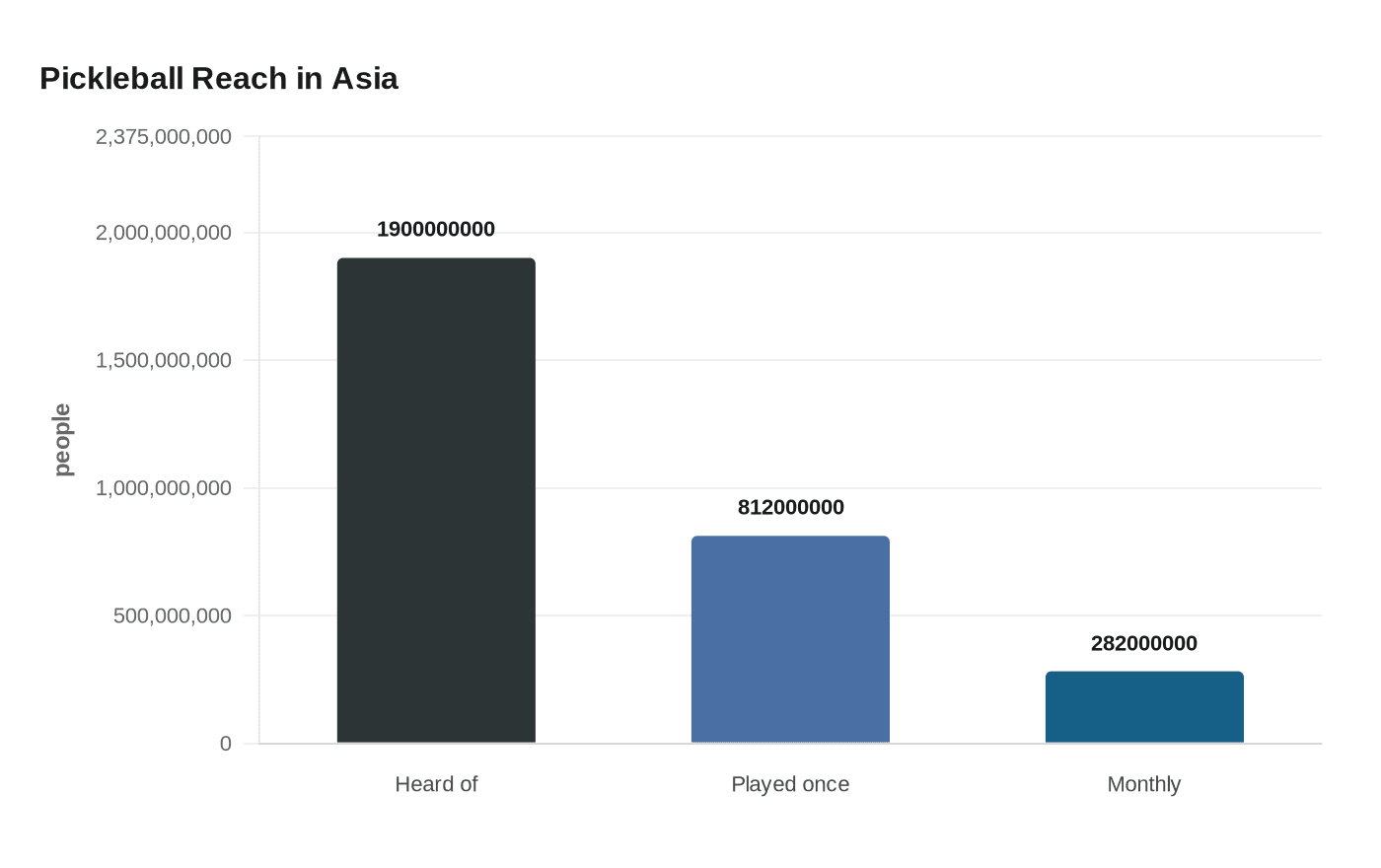
The regional picture is even larger. DUPR’s July 2025 survey across 12 Asian markets found that 1.9 billion people in Asia had heard of pickleball, 812 million had played at least once and 282 million were playing monthly. Those figures help explain why Kuala Lumpur is being treated less like a stop on a tour and more like a proving ground for the sport’s next phase in Asia.
The appeal is not only star power. Goh Liu Ying said pickleball is easier to learn than badminton and more social, a message that fits Malaysia’s youth and family pathways, including introductions through Kidlympics. Agassi added another layer by saying an Olympic future for pickleball is realistic and achievable, calling the sport still in its infancy. In Kuala Lumpur, that sounded less like hype than a challenge: the crowd was there, the elite names were there, and the market response suggested Malaysia may be moving from observer to driver in Asia’s pickleball surge.
This article was produced by Prism’s automated news system from verified source data, official records, and press releases, then run through automated quality and moderation checks before publishing. The system is built and supervised by the people who set the standards it runs under. Read our full AI policy.
Did this article answer your question?