Asia's Junior Pickleball Pathway: From Grassroots to Pro Tour
Japan dispatched four U19 players to a Hainan final in early 2026; here's the blueprint every Asian federation needs to build the next generation of pickleball pros.
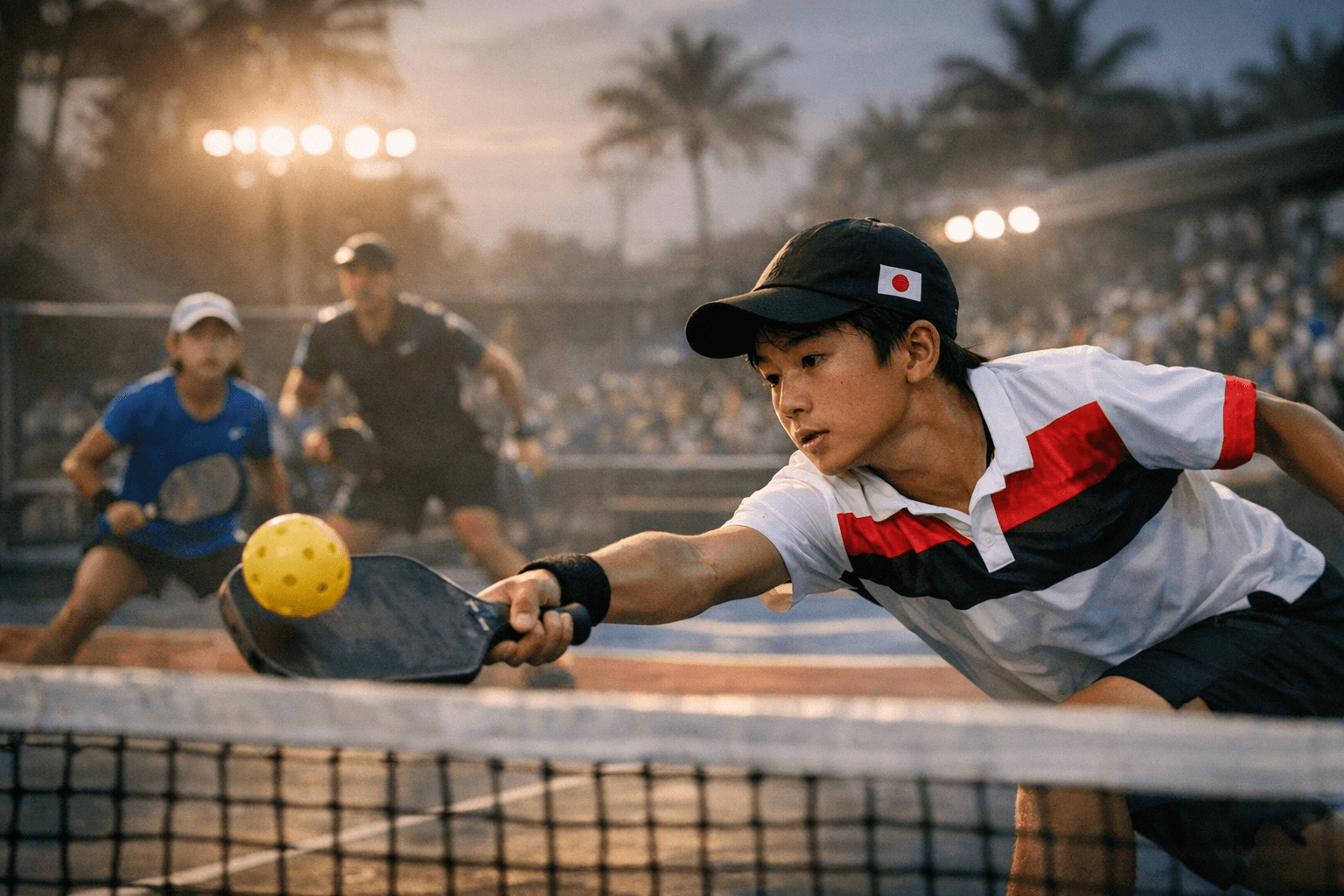
Four players, Takeuchi, Endo, Noguchi, and Fujiwara, boarded flights from Japan to compete at the PCL Asia Rising Stars Asia Regional Final in Hainan, China from March 31 to April 6, 2026. The Pickleball Japan Federation partnered with the international league PCL to promote U19 player development, and that dispatch of four named athletes to a structured international final is precisely what a functioning junior pathway looks like at the delivery end. The architecture behind that moment, from school clinic to national selection to international exposure, is what every Asian federation needs to build right now.
The Six-Layer Framework
A complete junior-to-pro pipeline is not a single program; it is six integrated systems that must work simultaneously. Those layers are: talent identification and grassroots participation, coach and referee education, an age-group competition calendar spanning U12 through U19, regional training hubs, scholarship and financial support, and pro transition mechanisms such as wildcards and feeder events. Each layer requires its own KPIs, defined stakeholders ranging from community clubs to national federations, and identified funding sources across government sport grants, corporate sponsorship, and event revenues. Build all six coherently and the pipeline runs itself. Build only two or three and talent leaks out at every gap.
Layer 1: Talent ID and Grassroots Scale
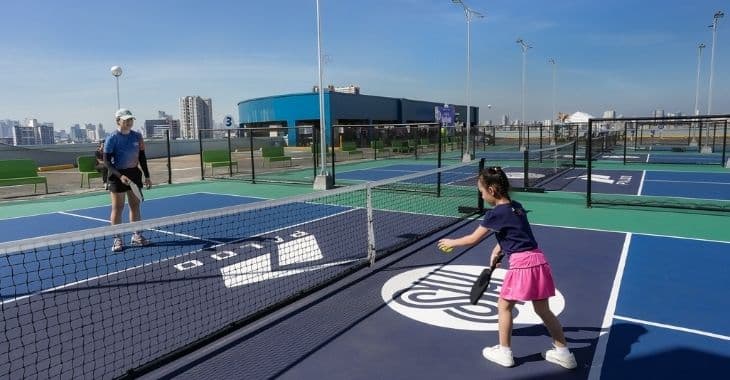
The entry point has to be low-cost and school-facing. Community clinics anchored in a "dink-first" philosophy, scaled equipment including smaller courts and nets for U12 play, and rental paddles at open sessions remove the financial barrier that disqualifies most young athletes before a coach has even seen them. The Asia Federation of Pickleball's junior program targets young players through school partnerships, youth clinics, and junior leagues, offering structured coaching and competitive opportunities for children and teenagers. Festival-style sign-up events are the most efficient talent funnel: run them at schools, track attendance in a centralized database, and connect each registered player to either a DUPR rating or a national rating system from day one. Japan's federation has formalized this through published U19 selection lists, making selection and tracking central to the process rather than an afterthought. The measurable KPI at this layer is raw participation: how many U12 players entered the database this year versus last?
Layer 2: Coach Education and Certification
No pipeline survives bad coaching. Invest in a tiered certification structure covering assistant coach, Level 1, Level 2, and performance coach, and blend online theory modules with mandatory on-court practical assessment. AFP's coaching certification requires coaches to demonstrate competence in three key areas: skills, teaching ability, and knowledge, and candidates must be at a 3.5 player level before attending a certification workshop. Certification must be a gate, not a suggestion. Coaches at national junior camps should hold at minimum a Level 1 credential, and recertification must be mandatory to protect program quality and athlete safety. AFP and continental bodies should schedule certification workshops annually and align them with national talent ID timelines so a new cohort of qualified coaches is always ready when the next grassroots intake arrives. Track coach certification rates as a core federation KPI alongside participation numbers.
Layer 3: Competitive Calendar and Junior Structure
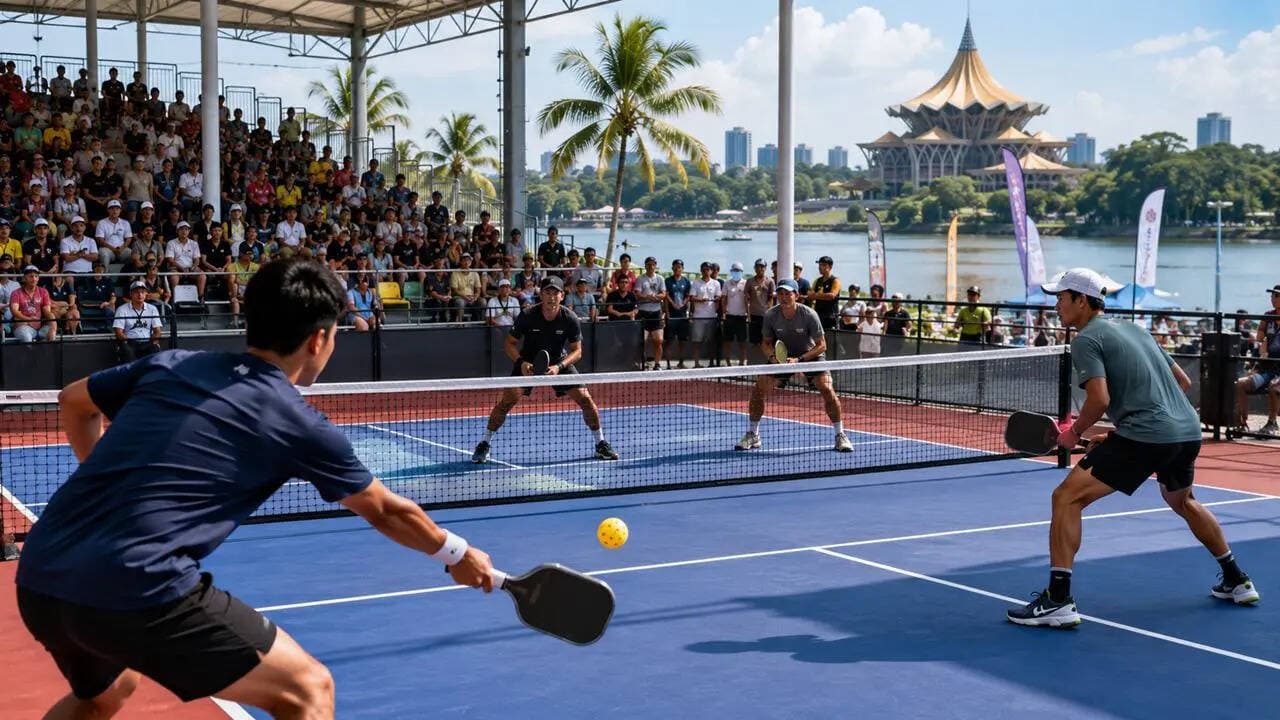
The Asia Pickleball Junior Open 2025 was the second edition of AFP's premier junior tournament, building on the success of the inaugural event, which saw participation from over 120 players across Vietnam, India, Malaysia, Taiwan, and Japan. That cross-border model is the template. A well-designed junior calendar runs regional qualifiers into a national finals into an international invitational, with age-appropriate formats at every level: shortened games and round-robin pools for development divisions, bracketed playoffs as athletes mature. The 2025 Junior Open was held July 13-15 in Quang Nam Province, Vietnam, and at USD $35 per event per participant, with the third and fourth event registrations free, the AFP has already embedded affordability into its competition structure. Mixed-age team events belong in the calendar specifically to accelerate doubles development and expose younger players to pressure matchplay.
The exit criterion moving a player from sectional to national competition should be explicit: a minimum DUPR rating threshold, a defined finish position at regional level, or both. Vague selection kills trust in the system. Publish the criteria before the season begins.
Layer 4: Regional Training Hubs and Scholarships
Elite junior athletes cannot develop without consistent access to quality infrastructure, and across most of Asia, a single national training center is not enough given travel costs and school schedules. The answer is a network of city or province-level regional hubs, each with accredited coaches, physiotherapy coverage, and basic sport science support. Partnerships with universities and sports institutes unlock strength-and-conditioning resources and academic flexibility for high-potential athletes who are still in school. Scholarship pathways that activate during school breaks, funded through a mix of government grants, corporate sponsorships, and prize money cascaded from national events, mean that family income is not a ceiling on talent.
The tournament-to-training ratio is a KPI that gets overlooked but matters enormously in Asia's context. With school calendars leaving limited court time during term, a 3:1 training-to-competition ratio during peak school periods and a 2:1 ratio during school holidays is a reasonable benchmark for U16 and U19 athletes to aim for.
Layer 5: The Transition to Pro
PCL Asia Rising Stars is a program designed to provide young athletes across Asia with competitive opportunities and structured development pathways aligned with international standards. Through this partnership, young players from Japan join a global development route, expanding their opportunities to compete on the world stage. That is the model for the pro transition layer: structured exposure, not ad hoc wildcards. Define the milestones clearly: a national DUPR rating threshold, a top-three finish at the U19 national final, or a selection panel recommendation backed by verifiable performance data. Then use PPA Asia sanctioned events, including 125 and 250 point-level tournaments, as the proving ground. The PPA Tour Asia Sansan Fukuoka Open, held August 26-31, 2025, was the first PPA event held in Japan and one of eight PPA Asia events planned across the region in 2025, signaling that the pro infrastructure now exists at sufficient scale to absorb developing players. Travel grants, wildcard access, and coaching stipends are non-negotiable support mechanisms during transition. Mandatory physio and sport science plans protect athletes whose bodies are not yet conditioned for the professional competition load.
Layer 6: Measurement and Governance
A pathway without measurement is just activity. The core KPIs to track annually are retention rates across age bands (how many U12 players become U16, how many U16 players reach U19), results at international junior events, injury incidence rates, coach certification rates, and upward mobility metrics, meaning how many juniors earn entry into sanctioned pro-level events in a given year. In 2026, AFP is rolling out several key initiatives including identifying and empowering junior coaches across Asia, launching AFP-endorsed junior camps and training series, and introducing the AFP Junior Ranking System to recognize and track competitive performance across the region. That junior ranking system is the governance infrastructure the region has been missing. Once it is live, federations can audit their pipelines against a common standard rather than relying on self-reported data.
Good governance also means transparent athlete support policies and published selection criteria for national junior squads. A federation-led annual development review, tied to funding cycles and the following season's calendar, closes the accountability loop.
Building for the Long Game
The core challenge across Asia is not enthusiasm; participation is growing rapidly. The challenge is converting that enthusiasm into elite performance through a system that accounts for limited court access, school schedule constraints, multi-sport athletes, and the real cost of cross-border competition. The federations and clubs that invest in all six layers now, with measurable exit criteria at every stage and honest annual audits of the numbers, are the ones that will have players on the PPA and MLP Asia rosters a decade from now. The Japan-to-Hainan pipeline already exists. The blueprint is there; the work is in building it everywhere else.
This article was produced by Prism’s automated news system from verified source data, official records, and press releases, then run through automated quality and moderation checks before publishing. The system is built and supervised by the people who set the standards it runs under. Read our full AI policy.
Did this article answer your question?