Asia’s pickleball boom creates second-act careers for veteran players
Asia’s pickleball boom is opening pro doors to players in their 50s, turning experience and touch into marketable assets. Singapore shows how courts, contracts, and a growing fan base are building that second act.

Pickleball’s sharpest Asian story is not a teenage prodigy breaking through. It is a 56-year-old former lawyer turning late-career instincts into a professional contract, and a region learning that age can be an asset rather than a barrier. Yeo Jih-Shian’s rise, along with the broader push in Singapore and across Asia, shows a sport that can reward touch, anticipation, and judgment as much as raw speed.
Age is not the exception in Asia’s pickleball economy
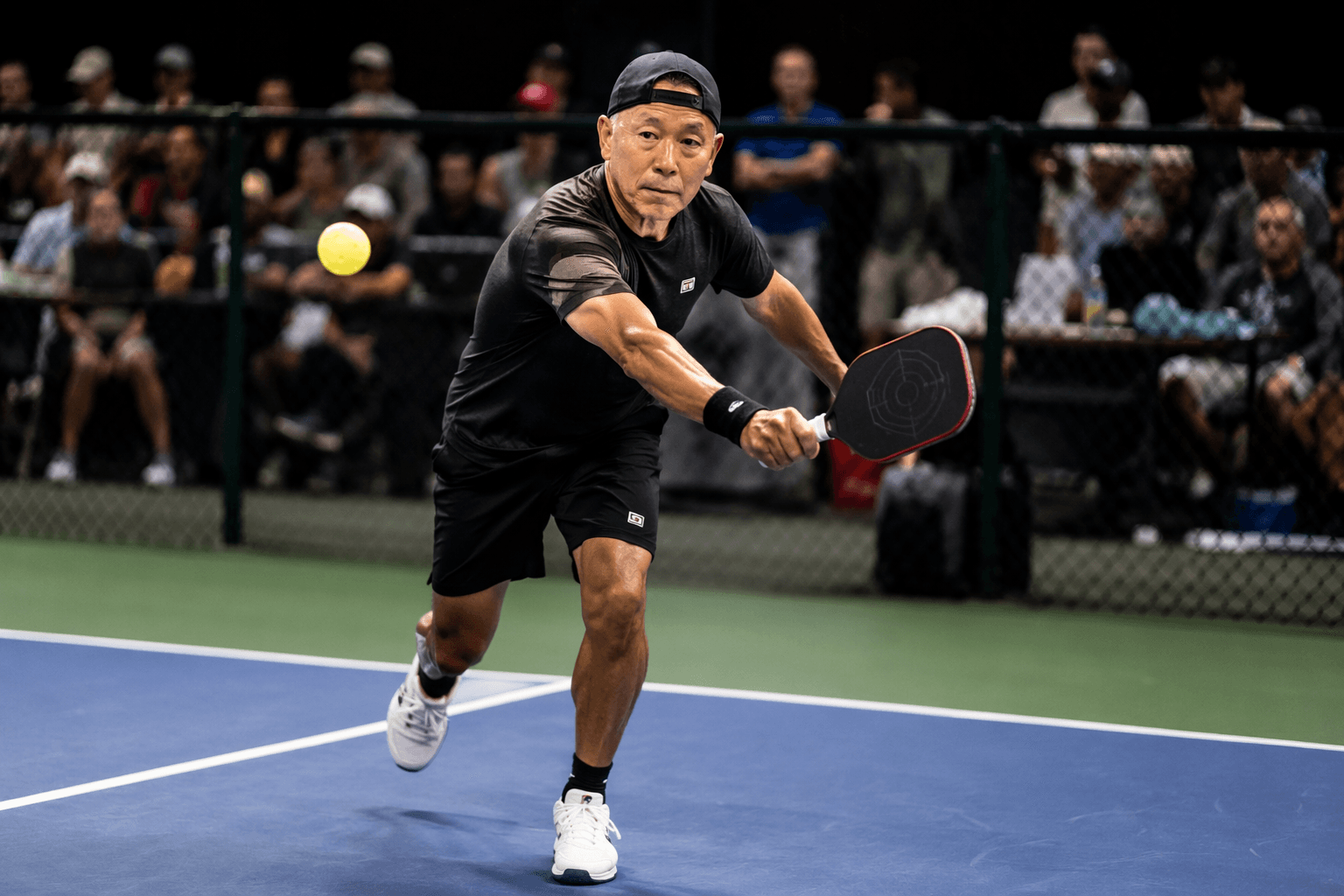
Yeo Jih-Shian came to pickleball after careers and games that gave him a different kind of toolkit: table tennis, badminton, and tennis, then a switch during the Covid-19 pandemic in 2021. He won tournaments well enough to earn a one-year contract with Sypik, and that matters because the deal was not built around youth potential alone. It was built around the idea that a player in his 50s can still generate value on court.
Sypik’s Singapore pro team made that point even more clearly by mixing ages across the roster. Alongside Yeo were Zermaine Lew, 25; Pini Lee, 57; and Ping Boon Chia, 40. The company’s spokesperson framed the signing as a milestone for pickleball in Singapore and a sign of the sport’s growing prominence there. That is the real shift: in pickleball, competitive relevance can now travel with a player past the age ceiling that rules many other sports.
Why the sport opens a different kind of pathway
Pickleball’s layout helps explain why second-act careers are possible. The court is smaller, the ball is slower, and the paddle is lighter than in tennis, which makes the sport easier to pick up quickly. The non-volley zone, meanwhile, pushes players toward strategy rather than pure power, so a veteran who sees the game early can stay dangerous without needing the explosive movement demanded by more physically punishing racket sports.
That advantage shows up in the age spread around the sport in Singapore. A national player described a squad ranging from 19 to 55 years old, a spread that would look unusual in almost any other pro-adjacent racket sport. In pickleball, it reads as normal because the game itself gives older players a legitimate way to stay in the competition.
Singapore’s courts are becoming the clearest proof of concept
The growth is not just happening in player recruitment. Singapore’s infrastructure is expanding quickly enough to support the broader ecosystem around these older and younger players alike. Performance Pickleball’s founders said they had built a community of more than 5,000 members, a sign that the sport is moving beyond a niche gathering of racket-sport converts and into a meaningful recreational base.
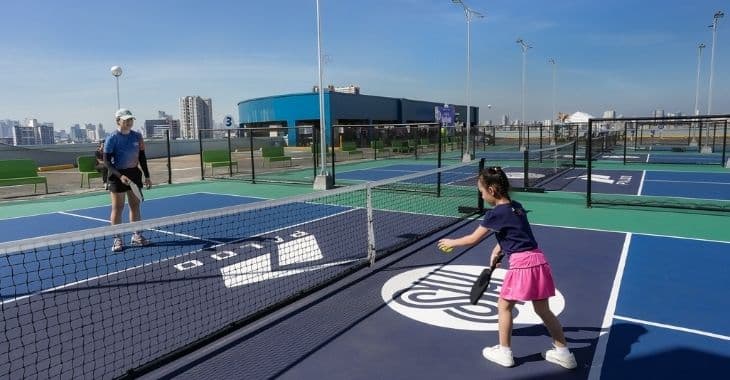
The city-state has also started converting that demand into actual playing space. Singapore opened eight sheltered pickleball courts at the retrofitted Little India Bus Terminal, a practical move in a climate where covered courts matter for year-round play. Another eight dual-use courts were planned at the Singapore Sports Hub by January 2026, extending the sport’s reach into one of the country’s best-known sporting sites. Those numbers matter because pickleball does not grow on branding alone. It grows when players can get court time.
Asia’s racket-sport culture makes the transition easier
UPA Asia’s case for the region is straightforward: pickleball feels familiar in a part of the world already steeped in racket sports. In research with YouGov, about 28% of respondents already had racket-sports experience, with many transitioning from tennis, badminton, table tennis, and squash. That background lowers the entry barrier and helps explain why the sport can spread quickly in places where those games are already part of the sporting culture.
The social side is doing just as much work. UPA Asia said 29% of respondents picked up pickleball because family and friends were already playing it, and 27% said it would help them make new friends. Those numbers help explain why pickleball can expand faster than more specialized sports: it works as both a competitive outlet and a social habit, which widens the pool of people who will try it and keep returning.
The pro pipeline is being built in public
The biggest sign that Asia’s pickleball market is maturing is the way it is trying to professionalize talent across age groups. UPA Asia’s Trailblazers Program is presented as a pathway that turns “today’s talent in to tomorrow’s stars,” and the phrase is more than marketing language. The program is designed to increase competitiveness and recognition for Asian players and to connect them to a high-performance route through PPA and MLP competition.
That route already has a concrete shape. In 2025, UPA Asia sent 12 Asian players to a three-month all-expenses-paid stint in Arizona, giving them exposure to a higher-intensity training and tournament environment. The 2026 Trailblazers Class then expanded the model further, with eight Trailblazers earning two-year pro contracts and eight Rising Stars receiving one-year contracts and development support. For a sport still building its labor market, those contracts are not a side note. They are the labor system.
What Singapore’s tournament calendar says about the next step
The growth in courts, players, and contracts is now feeding into a bigger event calendar. Singapore will host the first PPA Tour Asia tournament from July 23 to 26, 2026, when the US$70,000 PPA Asia 500 Singapore Open arrives at the Singapore Sports Hub. That is more than a single tournament stop. It signals that Singapore has moved from community-building to staging a regional professional showcase.
That shift matters because the sport’s selling point in Asia is not only that it is accessible. It is that it can support a broad age range without forcing players out once their explosive years are behind them. Veteran athletes, family players, and aspiring pros are all finding a place in the same ecosystem, and that mix is exactly what gives pickleball room to keep expanding across aging Asian societies.
This article was produced by Prism’s automated news system from verified source data, official records, and press releases, then run through automated quality and moderation checks before publishing. The system is built and supervised by the people who set the standards it runs under. Read our full AI policy.
Did this article answer your question?