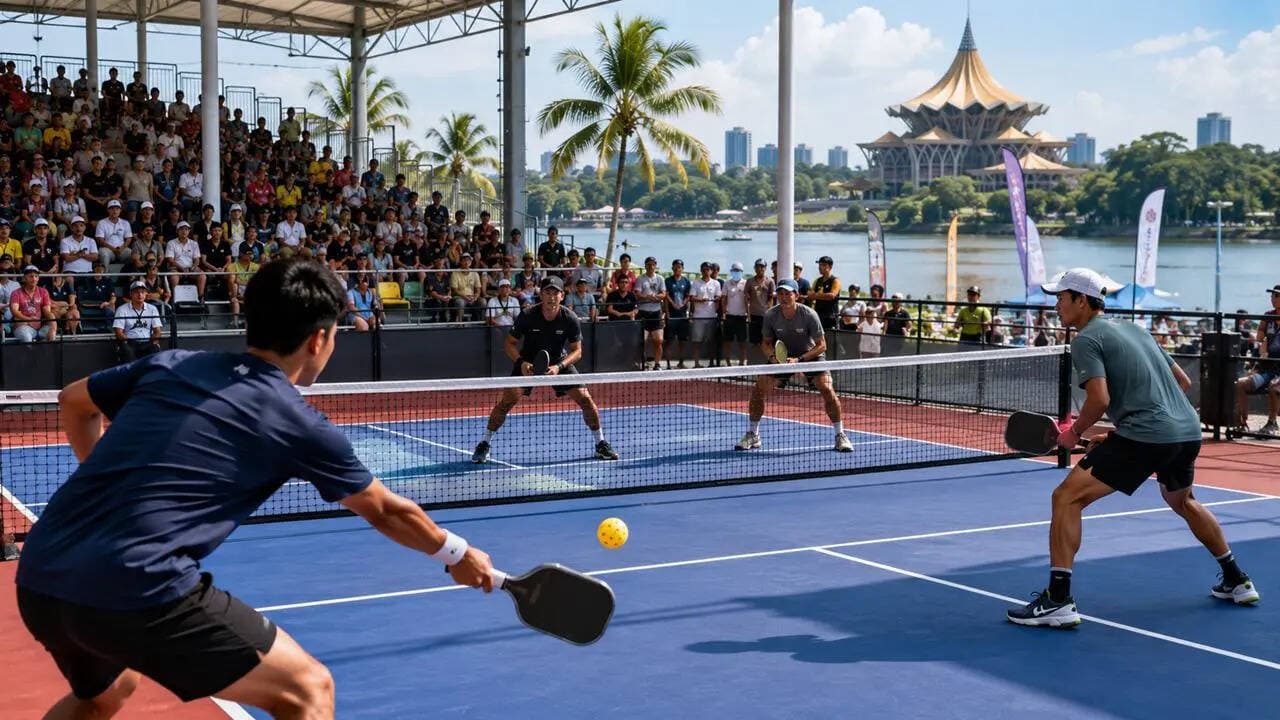
SM Supermalls uses pickleball courts to boost mall traffic and sales
SM’s courts are doing more than hosting games. They are turning pickleball into a mall-traffic engine, and that is a play other Asian landlords will study closely.
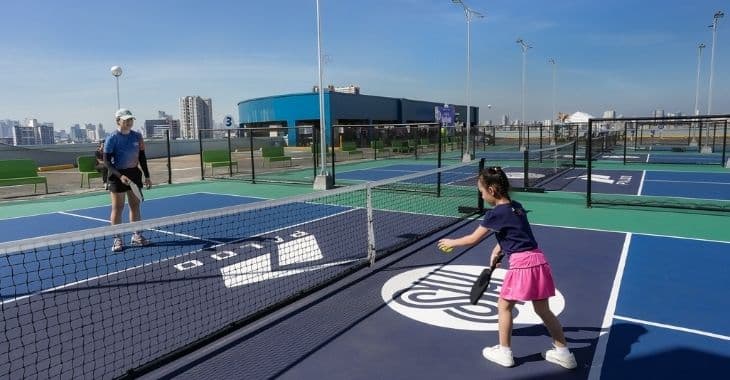
SM Supermalls is treating pickleball less like a lifestyle perk and more like a traffic engine. The courts are bringing players in, keeping them inside longer, and giving mall operators a fresh reason to expect spending in food, retail and leisure beyond the game itself. That is why the company’s push matters well past the baseline question of who is playing.
Pickleball as a retail strategy
The clearest sign of the shift came when SM Supermalls put permanent courts into SM City Sta. Mesa, SM City Bicutan and SM City Marikina on May 2, 2025 under its SM Active Hub and SM Sports and Leisure Center program. By the end of 2025, SM said it had 61 pickleball court locations across the Philippines, including 37 permanent courts. By May 31, 2026, that network had grown to 86 courts across 29 malls nationwide, and SM said it had staged more than 100 tournaments, open plays and clinics.
That scale changes the story. A few courts can be dismissed as a novelty. An 86-court network spread across 29 malls looks like a property strategy, one built to turn a sport into repeat visits and a reason to return next week, not just once.
Why the numbers matter for the mall business
The timing lines up with the strength of SM Prime’s mall traffic. The company said its malls averaged 115 million visits per month in 2025, with total annual mall traffic reaching 1.4 billion. December 2025 peaked at 153 million visits, while average daily foot traffic in 2024 rose to 5.2 million from 4.9 million in 2023.
Those numbers matter because pickleball is not being added to a weak retail model. It is being layered onto a property engine that already moves huge crowds. In that setting, a court does more than host a match. It creates dwell time, pulls in friends and family, and gives the mall another reason to sell meals, drinks, apparel and impulse purchases on the same trip.
SM Prime’s traffic data also helps explain why pickleball has become part of its broader customer strategy. The company has tied strong footfall to new attractions and data-based customer insights, which is exactly the kind of environment where experiential sports can work as a sales tool instead of a standalone amenity.
Why the Philippines is the right market
The Philippines has a built-in advantage for this model: mall culture is already part of everyday life. That makes indoor and semi-indoor sports easier to absorb into the weekly routine, especially when the courts sit inside places people already visit for errands, meals and shopping.
The sport itself is also more organized than casual observers may realize. The Philippine Pickleball Federation says pickleball first arrived through a Cebu clinic in February 2016, was formally organized in 2019, and is recognized by both the Philippine Sports Commission and the Philippine Olympic Committee. In February 2026, the federation announced a unified national framework plus new registry and ranking systems, a sign that the sport is moving from scattered play into a more structured domestic ladder.
That matters for SM’s malls. Courts do not just need bodies. They need a growing player base, and the federation’s move toward organization gives mall-based pickleball more of the infrastructure it needs to keep expanding.
From mall courts to branded competition
SM has not stopped at simply building places to play. In 2025, SM and Toby’s Sports launched the SM Pickleball SuperSeries, with legs at SM Megamall, SM Mall of Asia and SM North EDSA. The winning team received an all-expense-paid slot to the PCLA Finals in Shenzhen, China, which pushes the initiative beyond casual recreation and into a clear competition pathway.
That is the smart part of the model. A court network can feel static if it only hosts open play. Add branded events, and the property starts to generate recurring storylines, reasons to revisit, and a more committed community around the space. SM has also expanded pickleball into Four E-Com Center in 2026, a reminder that the company is not treating the sport as a one-mall experiment. It is moving the concept across property types, including office-linked spaces.
The regional signal for Asia
SM’s move also fits a wider regional pattern. The Asia Federation of Pickleball says it serves as the Asian confederation for the International Pickleball Federation and the World Pickleball Federation, and in December 2024 it backed the merger of those two global bodies.
That sounds administrative, but it matters commercially. When governance consolidates and regional pathways become clearer, landlords and developers get a cleaner argument for investment. Pickleball starts to look less like a fad program and more like an emerging mass sport with formal structures, competitive ladders and a growing market for facilities.
What SM is really selling
Joseph Francis Silva, Senior Assistant Vice President for SM Sports & Leisure, said the company wants to create “more opportunities” for people to stay active, connect and grow through sport, and that SM remains committed to giving pickleball fans space to play and build bonds with a community.
That is the public-facing version of the play. The business version is simpler: if courts bring people in, keep them there and give them a reason to come back, they are no longer just sports facilities. They are retail traffic tools. For mall operators across Asia, SM’s pickleball push is now a live case study in how a niche sport can become everyday consumer behavior, and how a court can double as a reason to visit the mall.
This article was produced by Prism’s automated news system from verified source data, official records, and press releases, then run through automated quality and moderation checks before publishing. The system is built and supervised by the people who set the standards it runs under. Read our full AI policy.
Did this article answer your question?