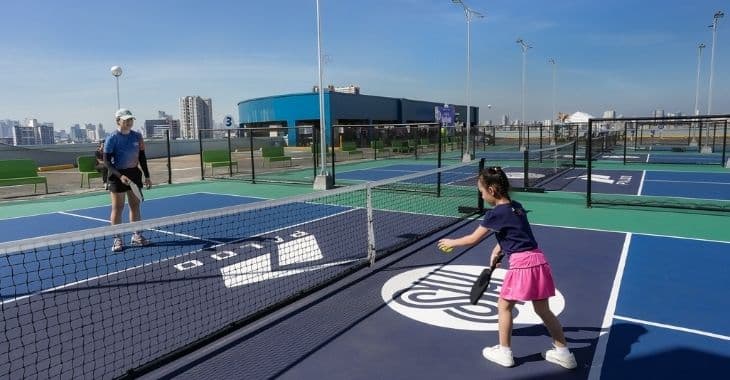
Sarawak emerges as Asia’s next pickleball hotspot ahead of 2026 tournament
Sarawak is betting on a bigger court, bigger purse and bigger travel draw to turn Kuching into Asia’s next pickleball base.
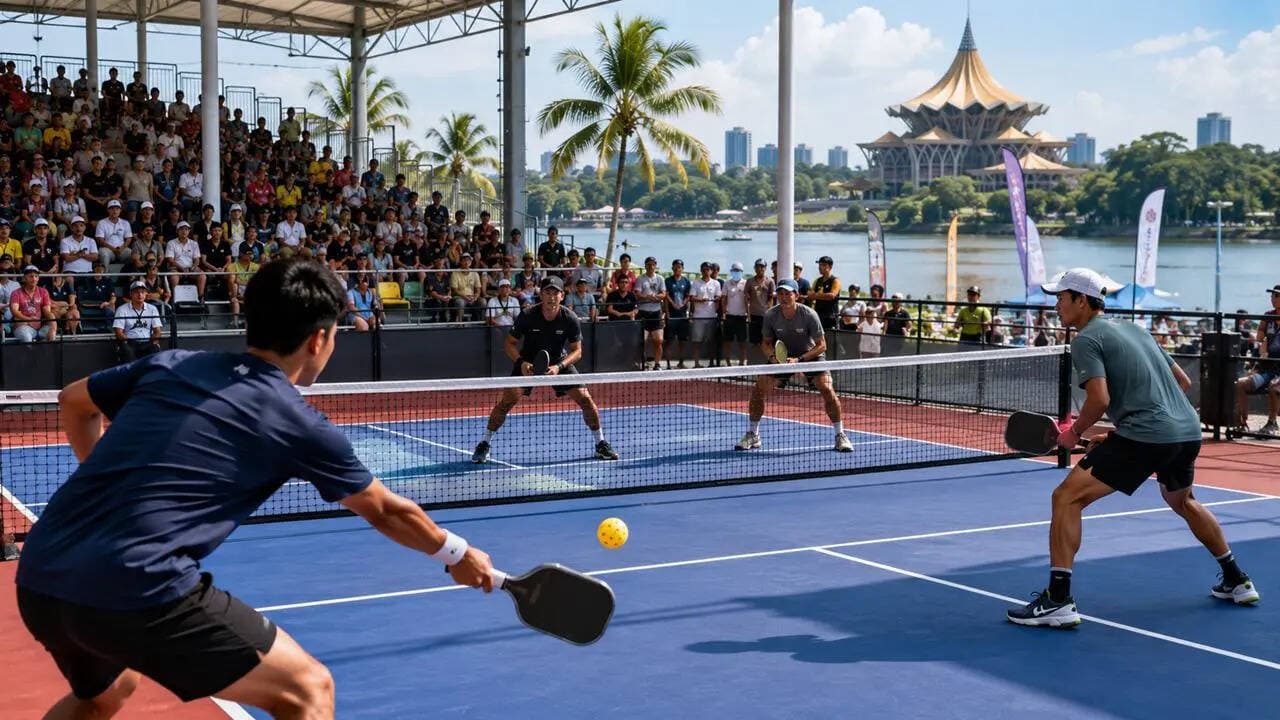
Sarawak is pushing pickleball far beyond a one-off tournament stop. The state is using the Borneo Pickleball International Tournament 2026 at PIKABOL Malaysia to sell a bigger idea: that Kuching can become a regional hub where competition, travel and business all pull in the same direction.
Sarawak’s bid to become a regional magnet
The clearest sign that this is more than a local event is scale. The Borneo Pickleball International Tournament 2026 is scheduled for October 7 to 12 at PIKABOL Malaysia, with Times Now projecting about 2,000 players, spectators and visitors, and nearly 500 players coming from Sarawak, Sabah, Peninsular Malaysia, Brunei Darussalam, Singapore and other international destinations. That kind of cross-border mix changes the feel of a tournament: it stops being a domestic calendar item and starts functioning like a regional gathering point.
Sarawak’s own earlier tournament history backs that ambition. The inaugural Borneo Pickleball International Tournament ran from October 8 to 14, 2024, at the PIKABOL Indoor Complex in Kuching, and Sarawak officials described it as Malaysia’s and Borneo’s first major team pickleball championship. They also called it the largest pickleball tournament in Malaysia and Borneo at the time, which matters because it shows the state is trying to build continuity, not just stage a headline event once.
Why the venue matters as much as the trophy
The venue is part of the argument. PIKABOL is described on its own site as a premium 16-court indoor facility in Kuching, and that court count gives the tournament something many fast-growing sports still lack in Asia: enough playing space to stage multiple brackets without collapsing into scheduling chaos. For players, that means more matches, less waiting and a better chance of a tournament that feels organized rather than improvised.
The 2026 edition also looks more ambitious on the competitive side. The flagship team competition will feature 24 teams across men’s open singles, men’s open doubles, women’s open doubles, men’s veteran doubles over 50 and mixed open doubles, while individual events will span four categories. The prize purse has jumped to RM80,000 from RM20,000 in 2024, and the champion team prize alone stands at RM20,000. That increase is not cosmetic: bigger money usually means a stronger field, more travel commitment and a more serious case for repeat participation.
Sports tourism is the real business case
The most important part of Sarawak’s pitch is economic, not athletic. Sarawak Minister of Youth, Sports and Entrepreneur Development Dato Sri Abdul Karim Rahman Hamzah has tied the tournament to local business opportunities, broader economic activity and the state’s profile as a preferred venue for international sporting events. That matches the logic of the Sarawak Post Covid-19 Development Strategy 2030, which places sports tourism inside a broader plan to make the state a leading ASEAN destination for eco-tourism and business events by 2030.
That policy context matters because it turns pickleball into infrastructure for place branding. A successful tournament does not only sell tickets or medals. It fills hotel rooms, moves diners into local restaurants, boosts transport demand and gives small businesses a reason to plan around an annual sports calendar. If Sarawak can keep the event growing, the state gets something more durable than a weekend spike: a recurring reason for people from Borneo, the wider region and beyond to travel to Kuching.
There is also a credibility test embedded in the expansion. The 2024 tournament had an expected 500 players and 2,000 visitors, and 2026 is being framed as the next step in that same buildout. If the numbers hold and the event keeps attracting visitors from multiple markets, Sarawak can point to a functioning sports-tourism engine rather than a promotional campaign with a temporary crowd.
What players, organizers and traveling fans gain if it works
For players, a stronger Sarawak stop means more than a larger bracket. It offers a central meeting point for Southeast Asian competition, a better-funded prize structure and a venue built for indoor play in a climate where weather can otherwise disrupt schedules. The 24-team team competition also gives clubs and regional squads a reason to treat the event as a serious target, not an optional add-on.
For organizers, the prize is repeatability. A venue with 16 courts, a higher purse and a regionally diverse player pool creates the conditions for a tournament brand that can be scaled year after year. That is the difference between event marketing and ecosystem-building: one burns through attention, the other makes future editions easier to sell because the experience already has proof points.
Traveling fans gain the most when the surrounding experience is strong enough to turn a tournament into a destination. Kuching can offer a packed event week, but the broader payoff comes if the city becomes a reliable place where spectators know they will get quality matches, manageable logistics and a social scene around the courts. In that sense, Sarawak is not simply trying to host pickleball. It is trying to make pickleball one more reason Asia’s players and supporters put Kuching on their travel map.
This article was produced by Prism’s automated news system from verified source data, official records, and press releases, then run through automated quality and moderation checks before publishing. The system is built and supervised by the people who set the standards it runs under. Read our full AI policy.
Did this article answer your question?