China-ASEAN Pickleball Open and Tennis Festival Draws 500 Competitors
More than 500 players from China and five ASEAN nations competed in Nanning's China-ASEAN pickleball open and city tennis meet, strengthening regional sports ties.
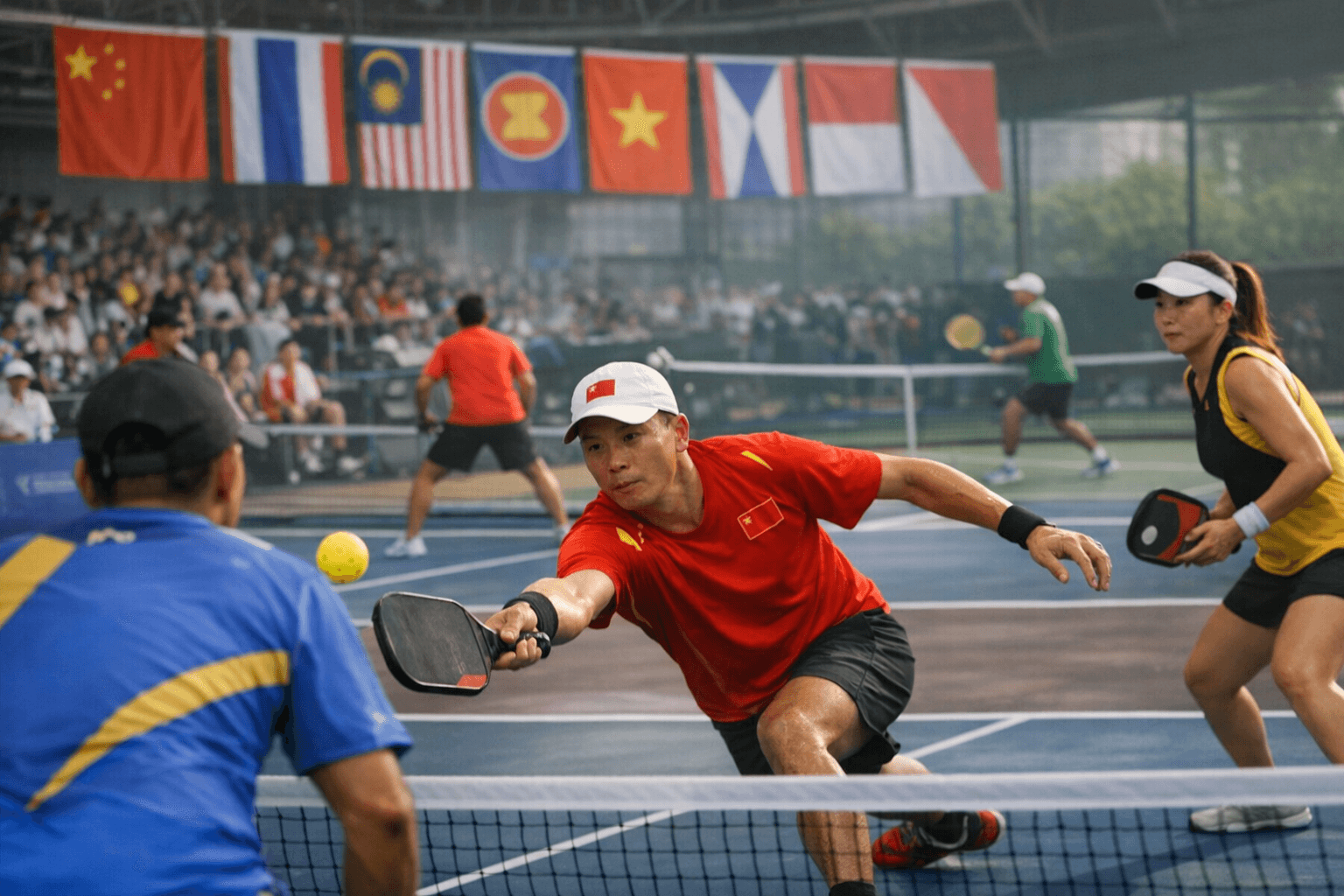
The China-ASEAN Pickleball Open, held alongside the China-ASEAN City Tennis Meet in Nanning, Guangxi, brought 48 teams and over 500 players to the courts on January 9. Delegations from China, Vietnam, Thailand, the Philippines and Brunei turned out for a day of competitive play and cross-border exchange that organizers say reinforces growing sports connections across the region.
The event was staged by the National Sports Administration Tennis Management Center, the Chinese Tennis Association and the Guangxi Zhuang Autonomous Region Sports Bureau. It expanded this year's footprint by adding pickleball to the long-running city tennis program, a move intended to broaden participation and tap into pickleball's rising popularity among recreational and competitive players alike.
丁祥华, deputy director of the National Sports Administration Tennis Management Center, set the tone in the opening remarks, saying, "体育已成为促进民心相通、深化友好合作的重要力量." His comment framed the tournament as part of broader people-to-people diplomacy where sport opens informal channels of friendship and cooperation among China and ASEAN communities.
Vietnam's pickleball contingent was among the more visible international groups. Team leader 黄国荣 noted that the sport is rapidly catching on at home: "近年来匹克球在越南逐渐风靡,越南选手此行一方面是切磋球技、提高竞技水平,另一方面希望深化与中国及东盟各方的友谊与交流." For Vietnam and other visiting teams, the competition was as much about sharpening skills, serving, dinking, third-shot strategy and court positioning, as it was about building relationships across borders.
For local players and club organizers in Asia, the combined event demonstrated practical opportunities. Adding pickleball to an established tennis meet brought new spectators, encouraged multi-sport scheduling at public venues and showcased how shared-court formats can boost turnout. Community clubs can look to this model when planning mixed-sport festivals to attract families and recreational players who may be new to the game but eager to try it.
The tournament also suggests a trajectory for regional development: more integrated events, greater grassroots exchange, and wider adoption of pickleball in ASEAN countries. Expect to see local leagues and municipal sports bureaus exploring similar pairings of tennis and pickleball, and for coaching exchanges and player clinics to follow as teams pursue higher competitive levels and stronger ties across the neighbourhood.
This article was produced by Prism’s automated news system from verified source data, official records, and press releases, then run through automated quality and moderation checks before publishing. The system is built and supervised by the people who set the standards it runs under. Read our full AI policy.
Did this article answer your question?