Former tennis stars drive India’s growing pickleball league in Bengaluru
Former tennis pros are finding a real second act in Bengaluru’s pickleball boom, where franchise leagues, rankings and crowds are turning a side sport into a career path.

Sharmada Balu did not need a long adjustment period to see the promise in pickleball. She won the first match she ever played, felt the competitive pull immediately and, after stepping back from tennis, found a sport that let her stay inside high-level competition without waiting for a tennis comeback that might never arrive.
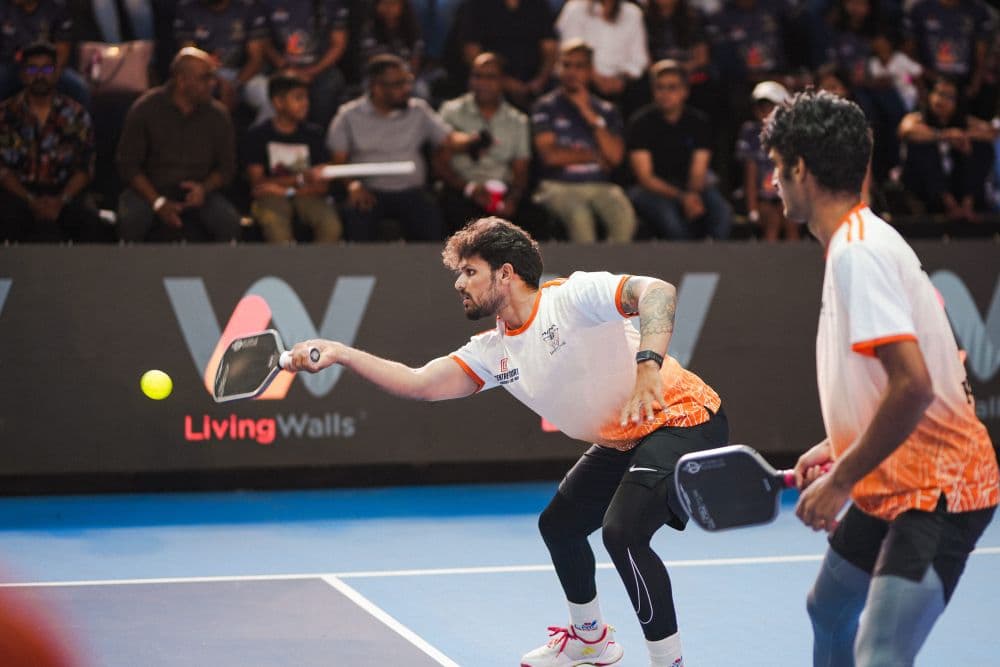
That is the larger story in Bengaluru right now. The city’s picklball scene is no longer a novelty for weekend players, but a place where former racquet-sport professionals are testing a new market for talent, recognition and earnings. As the Sumadhura Centre Court Pickleball League moved through its first weeks, Balu and Anup Basti became case studies in how India’s tennis pipeline is beginning to flow into pickleball.
Why former racquet athletes are switching
Pickleball looks familiar to tennis and badminton players at first glance, but the transition is not a straight translation. The sport rewards footwork, fitness and crisp mechanics, yet it punishes tennis habits that rely on pace and power alone. Balu’s own explanation captures that divide: the game asks players to slow the ball down, stay calm and attack only at the right moment.
That tactical reset is part of the appeal. For athletes who have already spent years training their bodies and minds for competition, pickleball offers a quicker route back to meaningful match play than many other second-career options. It also offers a broader pathway, with team franchises, ranking events and international tournaments creating more ways to stay relevant than a traditional singles-only grind.
Balu’s shift is about more than nostalgia
Balu’s move matters because it is not framed as a last resort. She describes pickleball as arriving at exactly the right time, after she had stepped back from tennis and was looking for another way to remain in sport. That makes her case especially important for Asian racquet athletes who want a bridge from one elite circuit to another rather than a clean break from competition.
Now captaining the Rally Renegades, a 10-player team, Balu is part of a Bengaluru league built to look and feel like a proper sports product. The franchise format gives players a team identity, regular match days and a season structure, all of which help pickleball feel less like a recreational import and more like a developing professional ladder.
The results have already given the league a pulse. On opening night, the Rally Renegades beat Mana BMR Smash Club 4-2, winning four of the six ties across singles and mixed doubles. More than 1,200 spectators turned up, a useful sign that this is not just a closed-room experiment for insiders.
Basti’s international example shows the ceiling is higher
Anup Basti’s story points to the other side of the opportunity, the one beyond India. He won gold at the English Pickleball Open, an event Pickleball England describes as the largest pickleball tournament outside the United States. In his telling, the tournament drew 2,500 competitors from around the world and used 60 courts at the same venue, a scale that underscores how quickly pickleball can grow when the structure is right.
A 2025 report put the English Open field at 2,348 players from across the globe, which still lands in the same place: international pickleball is now large enough to resemble a real tour ecosystem rather than a collection of isolated showcases. For former tennis players, that matters. Access to big fields, high-volume draws and recognizable event brands can make the sport feel like a credible arena for ranking points, travel and sustained competition.
Basti’s success also reveals something important about the Asian talent pipeline. The region already produces technically polished racquet athletes through tennis and badminton, and pickleball is proving that those skills can be repurposed quickly. The players still have to learn the softer touch and sharper patience the game demands, but they are not starting from zero.
Bengaluru sits inside a bigger Indian reset
The city’s franchise league did not appear in a vacuum. The Indian Pickleball Association says it is recognized by India’s Ministry of Youth Affairs and Sports, and it claims more than 500 professional players, more than 100 ranking tournaments, more than 50,000 players and coverage across 27 states. That kind of footprint matters because sport only becomes a career when it develops a ladder, not just a buzz.
India’s pickleball calendar has been filling in fast. In 2025, reporting said the country would host the Pickleball Asia Cup 2025 after the IPA’s recognition. India also already has a global franchise framework in the World Pickleball League, which launched in Mumbai in January 2025 as India’s first global franchise-based pickleball league. Its inaugural season ran from January 24 to February 2, 2025, at Jio World Garden, and Bengaluru Jawans won the title.
Then came the Indian Pickleball League in December 2025, launched by The Times Group and described as India’s first official national franchise-based pickleball league. Put together, these competing structures show a sport that is still organizing itself, but doing so at speed. For players, that can mean more entry points. For cities like Bengaluru, it means the chance to become a hub rather than a stopover.
What this means for Asian racquet sports
Balu and Basti are not simply tennis players trying something new. They are early evidence that pickleball can absorb elite racquet talent and offer something back: a route to stay competitive, a chance to build a public profile, and access to a sport where the professional map is still being drawn. In that sense, Bengaluru is not just hosting another league.
It is showing how a second career can be built, one franchise match and one international tournament at a time.
This article was produced by Prism’s automated news system from verified source data, official records, and press releases, then run through automated quality and moderation checks before publishing. The system is built and supervised by the people who set the standards it runs under. Read our full AI policy.
Did this article answer your question?