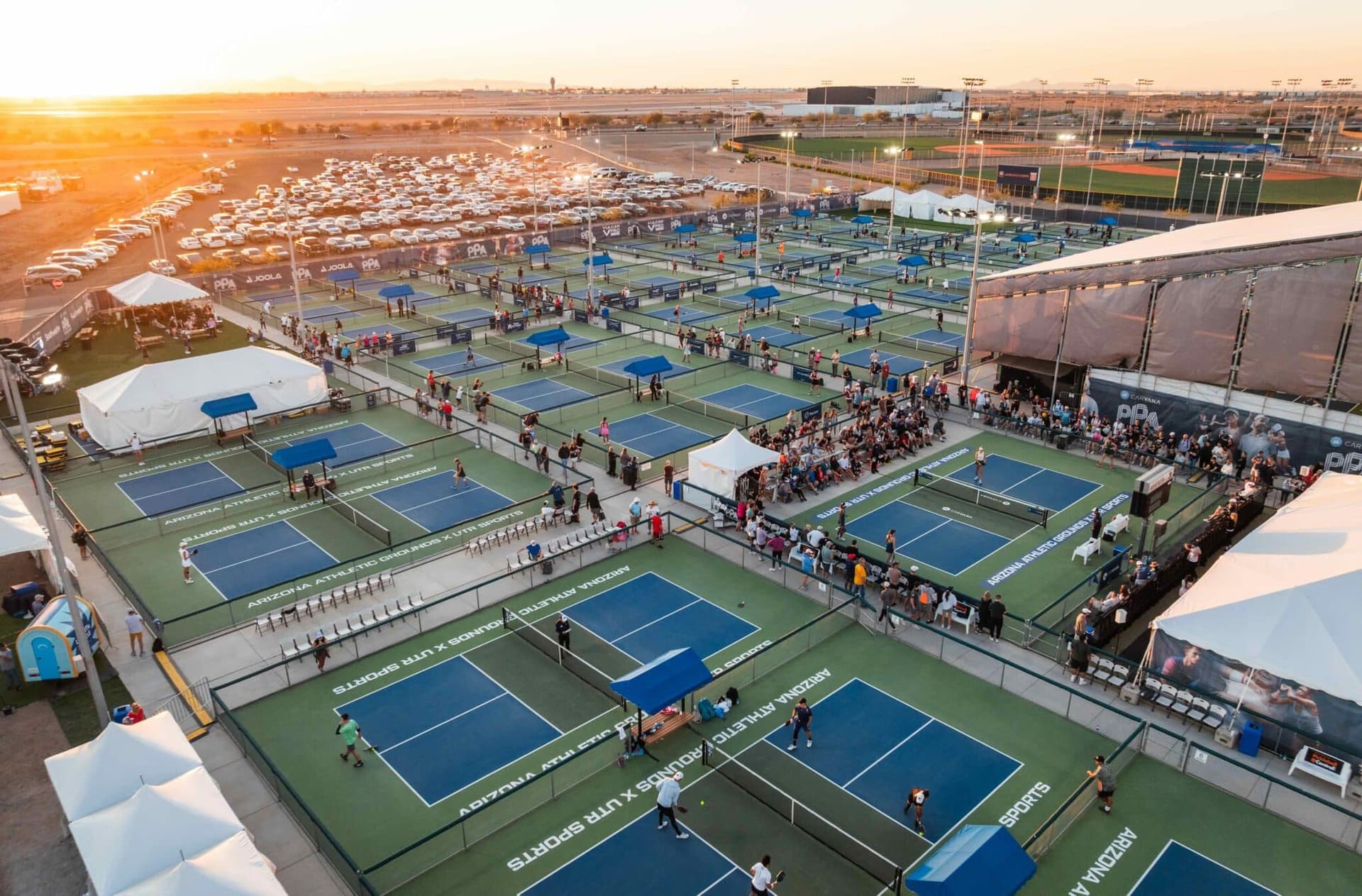
Hebi turns pickleball boom into tourism and community growth
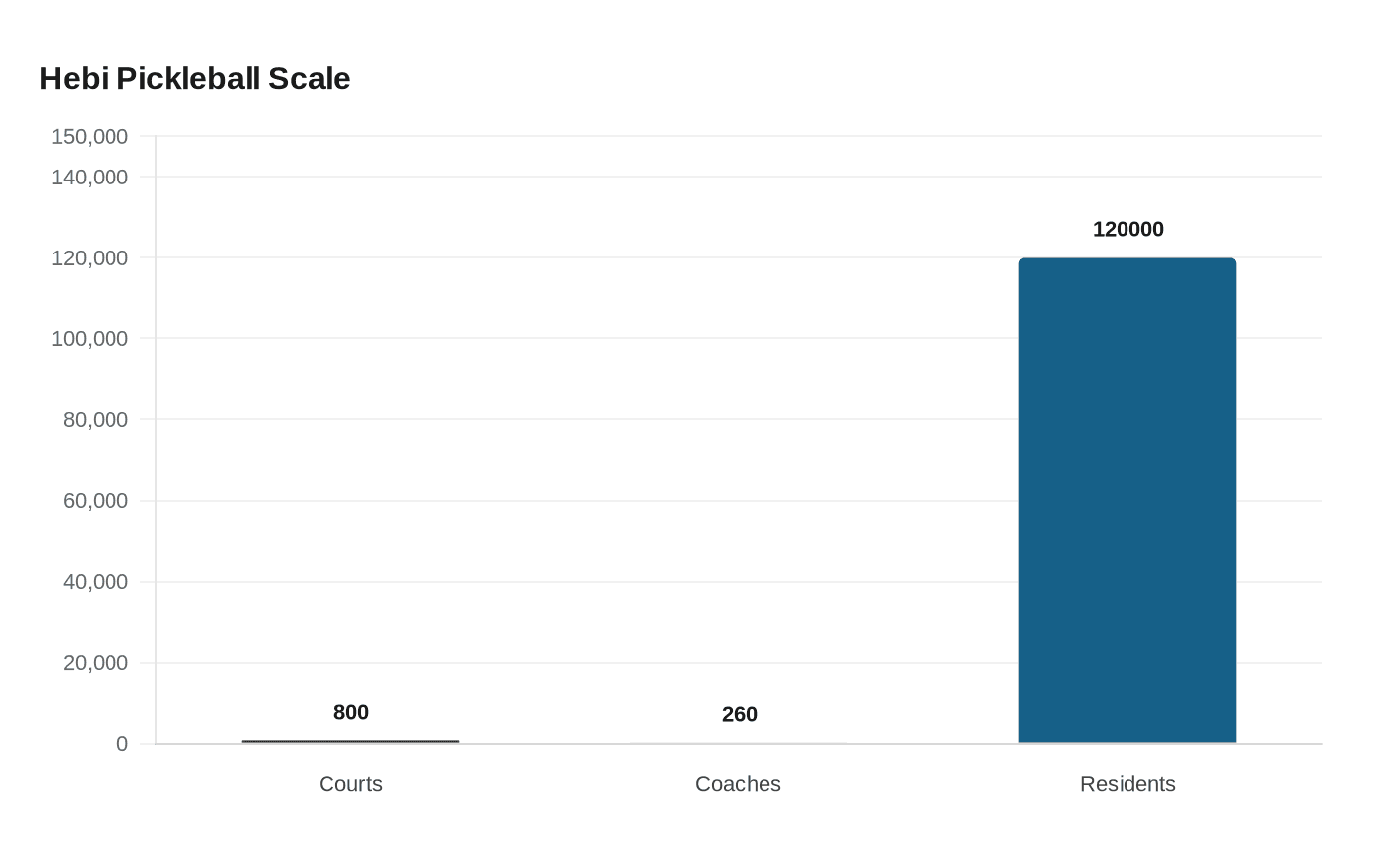
Hebi built more than 800 courts and pulled 120,000 residents into pickleball, turning a fast-growing racket sport into a tourism engine.
Hebi’s rise shows how a city can turn pickleball from a novelty into infrastructure
Hebi did not simply adopt pickleball. It built a system around it. In just two years, the city in Henan Province has created more than 800 courts, trained over 260 professional coaches and referees, and drawn more than 120,000 residents into the sport, a scale that now makes Hebi one of the clearest case studies in pickleball’s Asian ceiling.

The bigger story is not only that people are playing. It is that Hebi has treated pickleball as a civic asset, linking sport, tourism, and community identity in a way that other Chinese and Asian cities will study closely. Pickleball, which began in the United States in the 1960s, has exploded globally because it is easy to pick up, social, and adaptable to existing facilities. Hebi has taken those strengths and amplified them with local support, especially from the Henan provincial sports bureau, which helped place the sport at the center of the city’s development push.
How Hebi scaled so fast
Hebi introduced pickleball in 2023 and moved quickly from experimentation to mass participation. The key was access. By building out more than 800 courts in a short span, the city removed the biggest barrier that usually keeps emerging sports niche: there was simply nowhere convenient to play. That court count matters because pickleball does not need the footprint of a full tennis infrastructure, and Hebi has used that advantage to seed the sport across neighborhoods and public spaces.
The other piece is personnel. Training more than 260 coaches and referees gave the city a basic competitive and instructional structure, which means the boom is not depending only on casual pick-up play. It has a pipeline of supervision, rules, and organized activity that can sustain growth beyond a first-wave craze. That distinction is important in Asia, where many sports expand quickly in one segment and then stall when coaching, officiating, and local leagues fail to catch up.
A Hebi player said the sport is easy to learn, can be played on a badminton court, and appeals to people of all ages. That mix of simplicity and flexibility helps explain why the city has been able to reach far beyond early adopters and into ordinary family and community use.
Why the city’s model works for everyday players
Hebi’s breakthrough is rooted in low-cost access and high social value. Because pickleball can be played on a badminton court, the sport fits existing recreational habits and spaces that many Chinese cities already understand. That lowers the cost of entry for schools, public venues, and community centers, while also making the game feel familiar to players who already know racket sports.
The sport’s social nature matters just as much. In Hebi, the draw is not a solitary fitness trend but a shared activity that brings together younger players, older residents, and newcomers who may have never picked up a racket before. That broad appeal is exactly why the sport can spread quickly in dense urban settings, where a single court block can serve as both a recreation hub and a community gathering point.
Hebi’s experience points to a practical formula other cities could copy:
- Make courts easy to access, not just available on paper.
- Train coaches and referees alongside player enrollment.
- Use existing badminton-style spaces where possible.
- Treat the sport as a public participation project, not only a competition tool.
- Connect play to local identity so the sport feels like part of the city, not an imported novelty.
What the national championships revealed
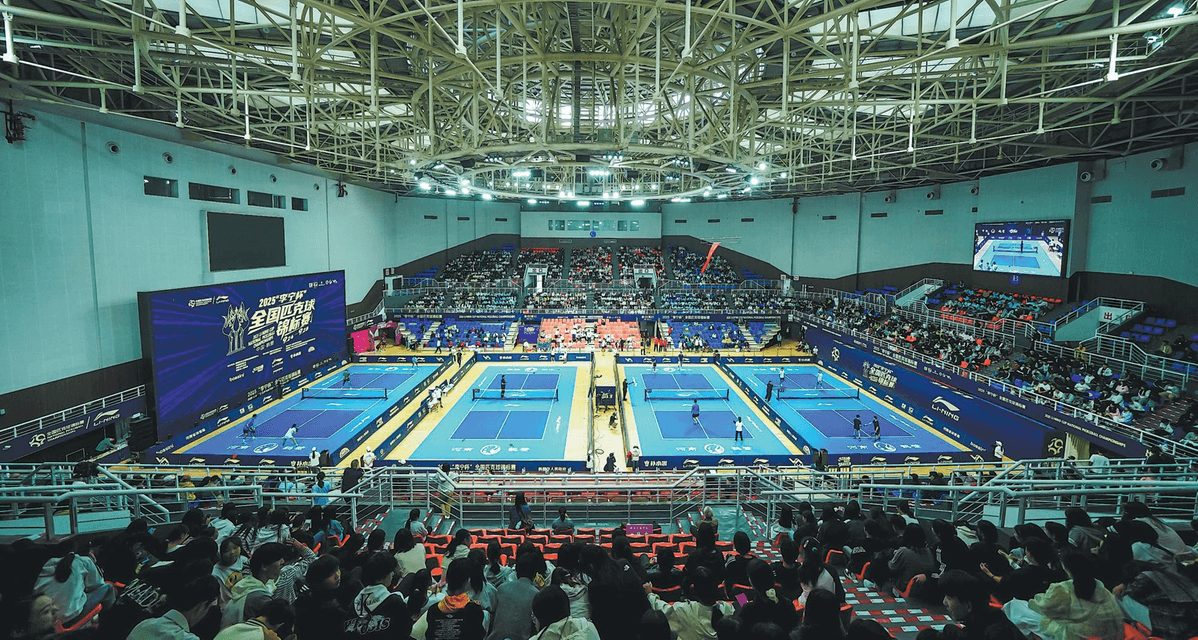
The clearest sign that Hebi’s boom has moved beyond grassroots novelty came at the 2025 Li-Ning Cup National Pickleball Championships, held at the end of September in Hebi. The four-day event featured both team and individual competition and drew 311 athletes from 25 teams across China. Those numbers matter because they show Hebi is not just producing players; it is becoming a venue where the sport’s national structure can gather, showcase, and legitimize itself.
The opening ceremony in Xunxian county turned that competitive event into something larger. A live light-and-drums performance unfolded around a 600-year-old city wall, tying pickleball to local heritage rather than separating it from Hebi’s historical identity. That is the tourism angle in action: the city is not presenting sport as a standalone attraction, but as a reason to visit, stay, and experience a wider cultural package.
This is where Hebi stands out from a standard sports development story. The city is not only building facilities for residents. It is using pickleball to frame a new image of itself, one that can pull in visitors for tournaments while also giving locals a fresh point of pride. In the process, the championships become both a sporting event and a showcase for Hebi’s cultural landscape.
What Hebi signals for pickleball in Asia
Hebi’s model suggests that pickleball’s future in Asia may depend less on elite spectacle and more on municipal strategy. The sport has already proven that it can spread on accessibility alone, but Hebi shows how quickly it can scale when a city commits public land, public coaching, and public branding to the project. That combination turns an emerging racket sport into something closer to civic infrastructure.
The timing is important too. The Chinese Tennis Association officially launched a national pickleball competition system in 2024, which gives the sport a formal framework at the national level. Hebi’s rise within that broader system shows how local governments can accelerate adoption once there is official structure to plug into. The city’s growth is not happening in isolation. It is arriving just as the sport’s competitive identity in China is being defined.
For other Asian cities, the lesson is straightforward. If the goal is to grow pickleball beyond a fad, the winning formula is not a one-off event or a single publicity push. It is a layered approach: build courts, train officials, activate schools and community spaces, and attach the sport to something larger than itself. Hebi has done that faster than most expected, and the result is a city that now looks less like an outlier and more like a blueprint.
If pickleball is going to keep climbing in Asia, it will need more places willing to think like Hebi.
This article was produced by Prism’s automated news system from verified source data, official records, and press releases, then run through automated quality and moderation checks before publishing. The system is built and supervised by the people who set the standards it runs under. Read our full AI policy.
Did this article answer your question?