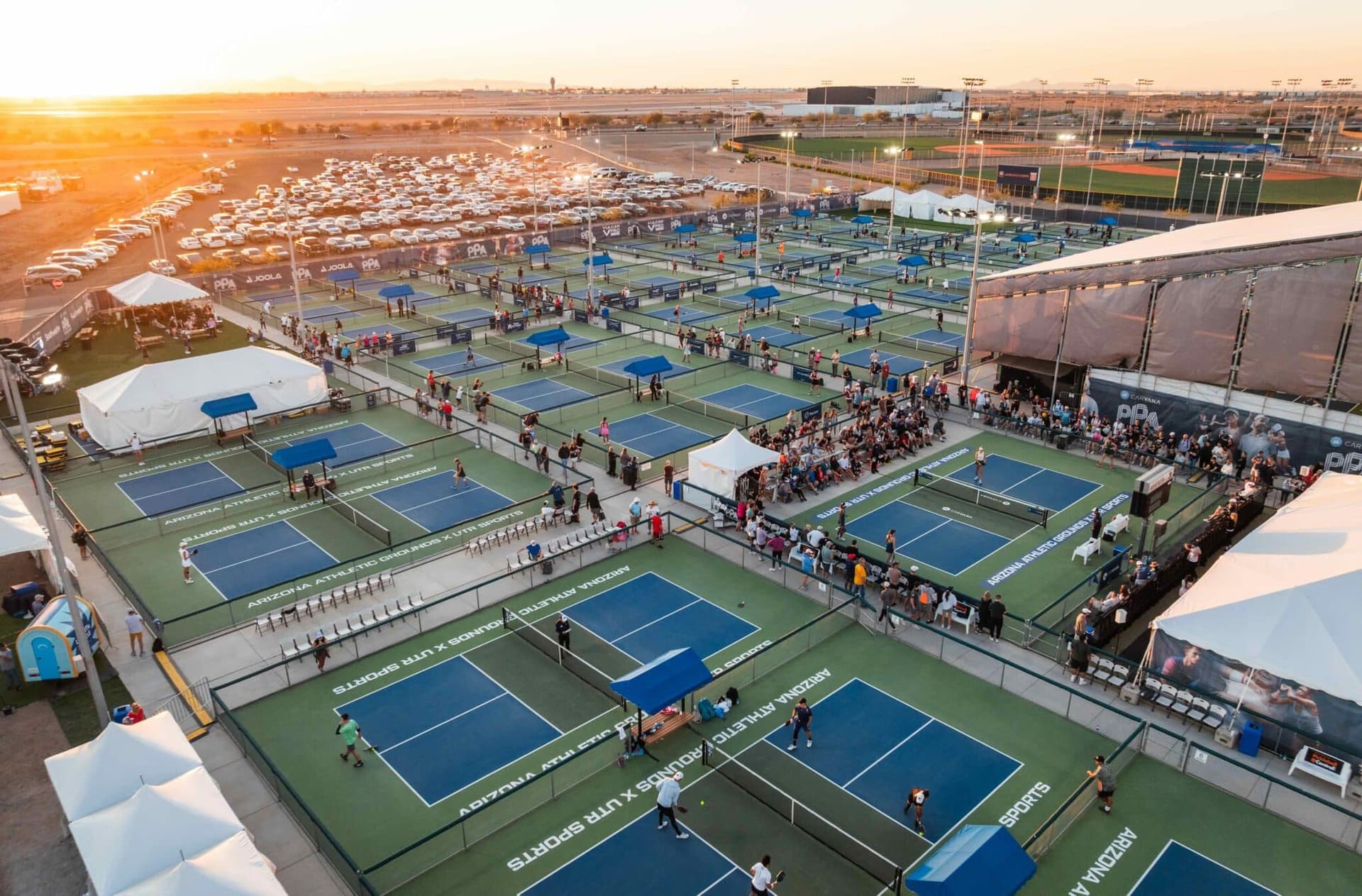
Hong Kong mall atrium becomes pickleball’s urban growth model
Hong Kong is turning mall atriums into pickleball engines, showing how dense cities can trade vacant land for visibility, sponsors, and new players.
Hong Kong’s mall court is the new growth strategy
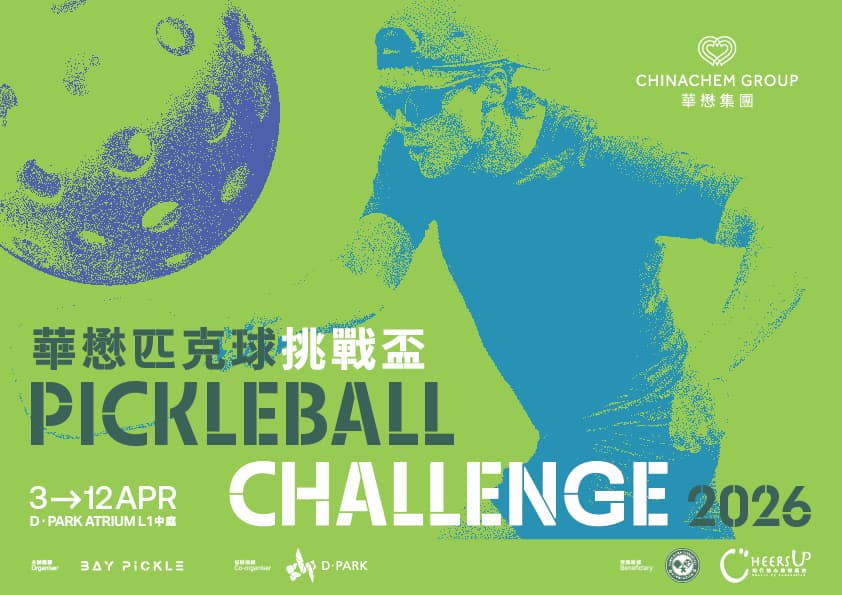
Hong Kong is giving pickleball something most Asian cities still lack: a stage that is visible, commercial, and already embedded in daily life. PCL Season 3’s Hong Kong Division ran for five weeks as a demonstration of the sport’s entertainment value, while Chinachem Group’s CCG Pickleball Challenge 2026 at D·PARK pushed the idea further by calling itself Hong Kong’s first large-scale pickleball tournament inside a shopping mall. Together, those events show the real shift: pickleball is no longer waiting for dedicated land to appear. It is moving into the spaces people already use, trust, and pass through every day.
That matters in a vertical city. Hong Kong does not have the luxury of broad spare land or easy court access, and that scarcity is exactly why the mall atrium works. It is not a conventional racquet-sport venue, but it is a practical one for a city built on retail, transit, and public gathering. The point is not novelty. The point is reach. When a sport is staged where shoppers, commuters, families, and mall workers already are, it stops feeling remote and starts feeling available.
What the CCG Challenge changes in practice
The CCG Pickleball Challenge 2026 is the clearest proof that this format can scale. Chinachem Group said more than 1,500 players were expected to compete in over 800 matches, spread across 10 consecutive days from April 3 to April 12, 2026, during the Easter holidays. An opening ceremony and celebrity invitational were scheduled for April 2, and the event also included a free-admission pickleball carnival with DIY workshops, themed game booths, and photo spots.
That combination changes the economics of a tournament. A standard draw serves players; a mall-based festival also serves foot traffic, family time, and brand visibility. The four-day pickleball exchange trip to Malaysia, valued at HKD12,000, offered to the men’s and women’s open singles champions added a cross-border incentive that made the competition feel larger than one weekend result. In a region where player pipelines matter, that kind of prize helps turn a local event into a gateway.
The social effect is just as important. A free-admission carnival lowers the barrier for first-time viewers, and DIY workshops turn passive spectators into people who can imagine playing. The mall setting makes discovery easy. Someone who came for shopping or dinner can leave having watched a match, picked up a paddle, and seen a path into the sport.

East Point City shows the model can be repeated
If the CCG event proved scale, the PCL Asia activation at East Point City proved repeatability. The mall was transformed into a professional indoor pickleball venue for a month-long Hong Kong charity tournament, with 70 professional-level matches staged inside the atrium. The event was co-organized with Operation Smile and included a charity celebrity match on March 22, 2026, followed by PCL Asia regional league semifinals and finals on April 18 and 19.
This is the critical test for dense Asian cities: can a commercial venue support both spectacle and actual competition standards? At East Point City, the answer was yes. A Chinese-language report said the atrium was fitted with professional nets and competition-grade court lines, which is the difference between a photo opportunity and a credible sporting environment. The venue did not merely host pickleball. It normalized it, placing a professional court inside a public space and making the sport visible to anyone walking through the mall.
That visibility is a development tool. Hong Kong China Tennis Association has described pickleball as inclusive, accessible, and suitable for people from children to seniors. The mall format reinforces that message better than a closed club ever could. It tells families, retirees, students, and casual visitors that pickleball is not a gated pastime. It is a sport they can see, understand, and try.
Why Hong Kong’s model is commercially stronger than a one-off novelty
The biggest business insight from Hong Kong is that pickleball’s value is not limited to ticket sales or match outcomes. It sits at the intersection of retail traffic, community programming, sponsor exposure, and grassroots conversion. A mall atrium gives organizers a built-in audience. It also gives sponsors a polished, lifestyle-forward environment that looks modern on camera and useful on social feeds.

That is a major advantage in Asia, where sports often compete for attention inside crowded urban routines. A mall venue creates a different kind of athlete-fan relationship. Players are no longer hidden behind fences or in suburban sports parks. They are performing in the same civic space where people eat, shop, and socialize. That gives pickleball a public identity that feels urban rather than elite, and practical rather than niche.
The growth in Hong Kong’s court supply helps explain why the model is catching on. A March 2026 report said private pickleball courts had climbed from just a handful the previous year to about 20. That is still a small base, but it is enough to show momentum. When court supply is catching up to demand, commercial real estate becomes part of the solution, not just a backdrop.
The regional signal for other dense Asian markets
Hong Kong is offering more than a tournament calendar. It is offering a playbook for land-scarce cities that want pickleball to grow without waiting for a full venue buildout. The formula is straightforward: use existing commercial infrastructure, make the sport highly visible, pair it with community programming, and turn the event into an entry point for new players.
The upcoming Hong Kong Slam makes the stakes even clearer. PPA Tour Asia has scheduled it for October 19 to 25, 2026, with US$1.1 million in prize money and 1,500 ranking points, calling it Asia’s biggest ever pickleball event. That places Hong Kong on a deeper competitive track, not just an exhibition track. It suggests that the same city willing to stage pickleball in a mall atrium is also becoming a serious destination on the regional tour map.
That is why Hong Kong’s experiment matters beyond its own borders. For cities across Asia where space is scarce and attention is expensive, the lesson is simple: pickleball grows fastest when it is seen first. Put the court where the crowd already is, and the sport can convert curiosity into participation, and participation into a durable market.
This article was produced by Prism’s automated news system from verified source data, official records, and press releases, then run through automated quality and moderation checks before publishing. The system is built and supervised by the people who set the standards it runs under. Read our full AI policy.
Did this article answer your question?