India’s teenage girls drive pickleball’s shift to competitive sport
Aayra Khanna and Anushka Chhabaria’s Team India breakthrough shows Indian pickleball’s next wave is already being built on rankings, trials, and national ambition.

Teenage girls are no longer an add-on to India’s pickleball story. Aayra Khanna and Anushka Chhabaria, both selected in the Under-16 girls category for India’s first official national-team trials, now sit inside a system that is starting to look and act like a serious sporting pipeline. Their rise comes as the country’s official structure expands fast, with the Indian Pickleball Association saying it is recognized by the Ministry of Youth Affairs and Sports and now spans more than 500 professional players, 100-plus ranking tournaments, 50,000-plus players, and 27 states.
The shift is bigger than two names. It signals that Indian pickleball is moving from a recreational wave into a competitive ladder where age-group talent can see a route to national selection, international travel, and ranking progression. That matters because sports only professionalize when the calendar becomes meaningful: trials in Ahmedabad, nationals in Bengaluru, and a World Cup target in Florida created a pathway that teenage girls can train toward instead of simply joining for fun.
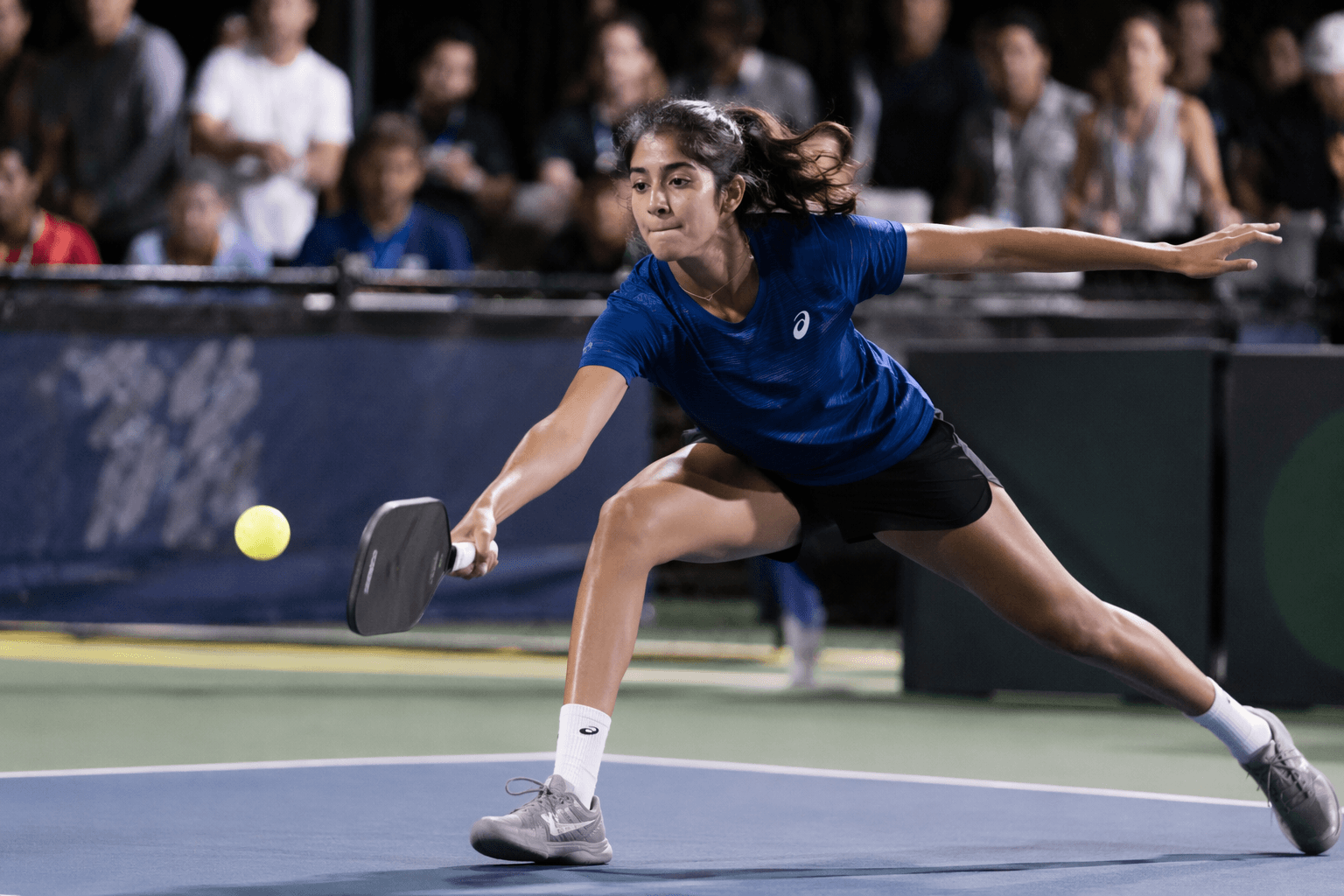
The Ahmedabad trials were the clearest proof of that change. India held its first official national-team selection trials on August 30 and 31, 2025, in Ahmedabad for the Pickleball World Cup in Florida, USA, scheduled for October 27 to November 2, 2025. The mere existence of those trials changed the logic of the sport. Players were no longer chasing scattered events or informal reputation alone; they were competing for a defined Team India spot with an international destination attached.
For Aayra Khanna and Anushka Chhabaria, the Under-16 girls selection was more than a promising result. It showed that India’s system is beginning to identify younger players early and place them on a national track before other sports even finish sorting out school-level talent. That is how pipelines are built: not by waiting for players to peak, but by giving them a place to go next.
Bengaluru then confirmed that the base beneath the top tier is getting deeper. The first official Indian Pickleball Nationals ran from November 13 to 16, 2025, at The Sports School in Bengaluru and featured more than 1,800 matches, with participants from over 20 states. That scale matters because it shows depth, not just headlines. A sport can claim momentum when it can fill a weekend; it starts to look institutional when it can sustain thousands of matches across regions.
The results also showed that women’s competition is no side note. Naomi Amalsadiwala and Pearl Amalsadiwala won the Open Women’s Doubles title, underlining that the women’s game is producing recognizable championship pairings, not just isolated individual standouts. Maharashtra finished atop the medal tally after four days of action, another sign that the strongest programs are now separated by preparation, depth, and repeatable performance rather than novelty.
India’s numbers now place this surge inside a much larger Asian story. A June 2025 UPA Asia and YouGov survey found that about 1.9 billion people across 12 Asian territories had heard of pickleball, 812 million had played at least once, and 282 million played at least monthly. India ranked next after Vietnam in pickleball experience, with more than 31 percent of Indian respondents saying they had played at least once, and the country was said to have more than 178 million frequent players.
That scale changes the meaning of every junior breakthrough. When a sport has already reached tens of millions of regular participants, the challenge is no longer awareness. The challenge is sorting recreational interest into elite performance. That is exactly what the current Indian structure is beginning to do, and teenage girls are moving to the front of that process.
The gender story is especially important. The IPA has a published gender inclusion policy that explicitly commits the federation to equal opportunities and gender balance. In practice, that gives female players a stronger claim to coaching attention, competitive entry, and institutional legitimacy at a moment when the sport is still defining its elite standards. For teenage girls, that is not symbolism. It is access to a system that is willing to treat them as part of the main event.
The timing also matters because the business side is catching up with the sporting side. The inaugural Indian Pickleball League was announced as a five-team franchise competition starting on December 1, 2025, in New Delhi. Even before the first ball is struck, that kind of league changes the incentive structure around the sport. It creates a professional ceiling, makes sponsorship easier to imagine, and gives emerging players a future that goes beyond one-off tournaments.
That is why the teenage girls’ rise should be read as a turning point, not a feel-good trend. India’s pickleball scene now has official selection, a national championship, a state-spanning player base, a gender policy, and a franchise league on the calendar. For Aayra Khanna, Anushka Chhabaria, and the next wave behind them, the message is unmistakable: the sport is no longer asking whether it can support serious girls’ competition. It is already building the infrastructure around it.
This article was produced by Prism’s automated news system from verified source data, official records, and press releases, then run through automated quality and moderation checks before publishing. The system is built and supervised by the people who set the standards it runs under. Read our full AI policy.
Did this article answer your question?