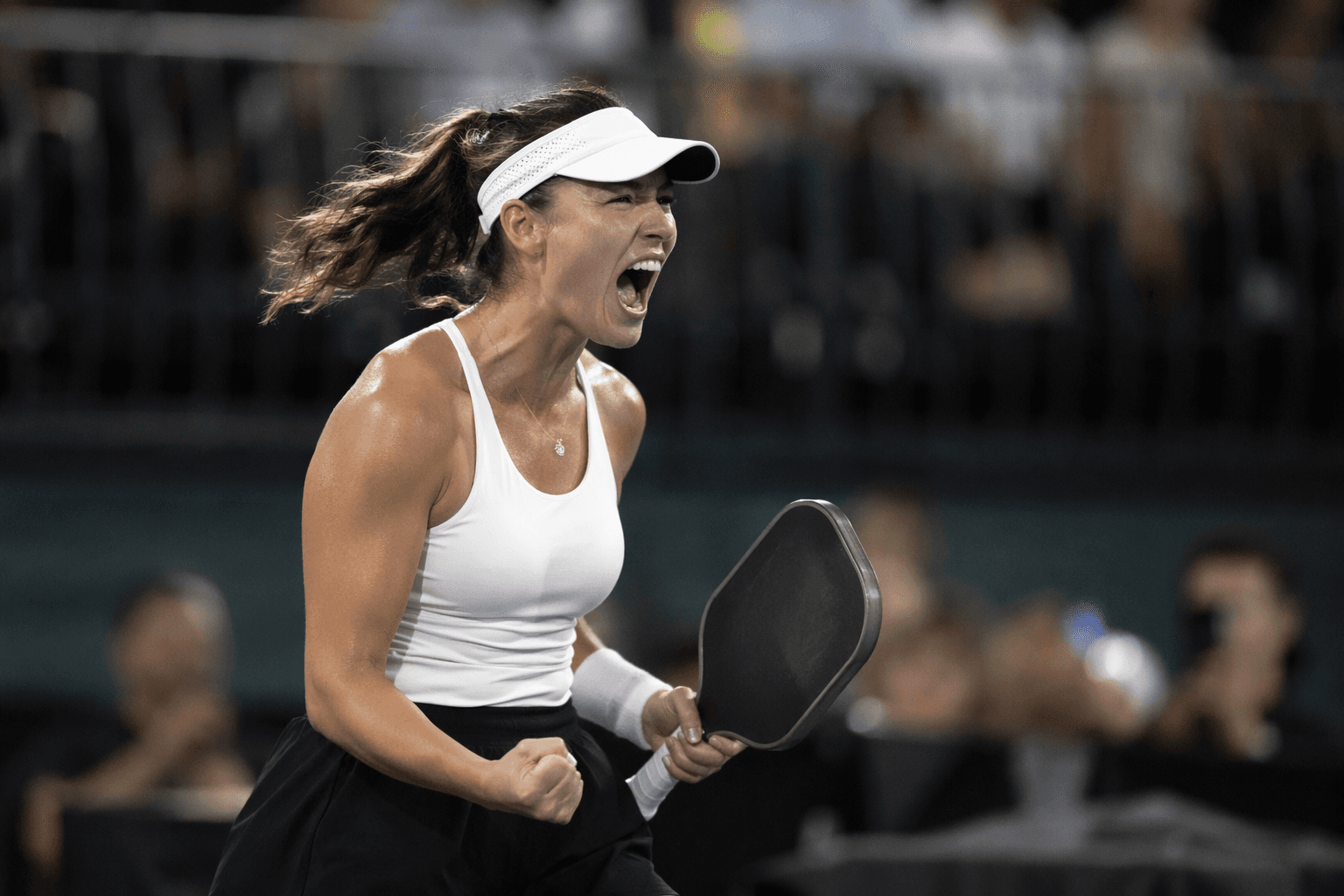
Macao Open signals a more unpredictable era for Asian pickleball
A 15-year-old beating the top seed and multiple cross-market breakouts in Macao show Asian pickleball's old order is slipping.
Macao Open signals a more unpredictable era for Asian pickleball
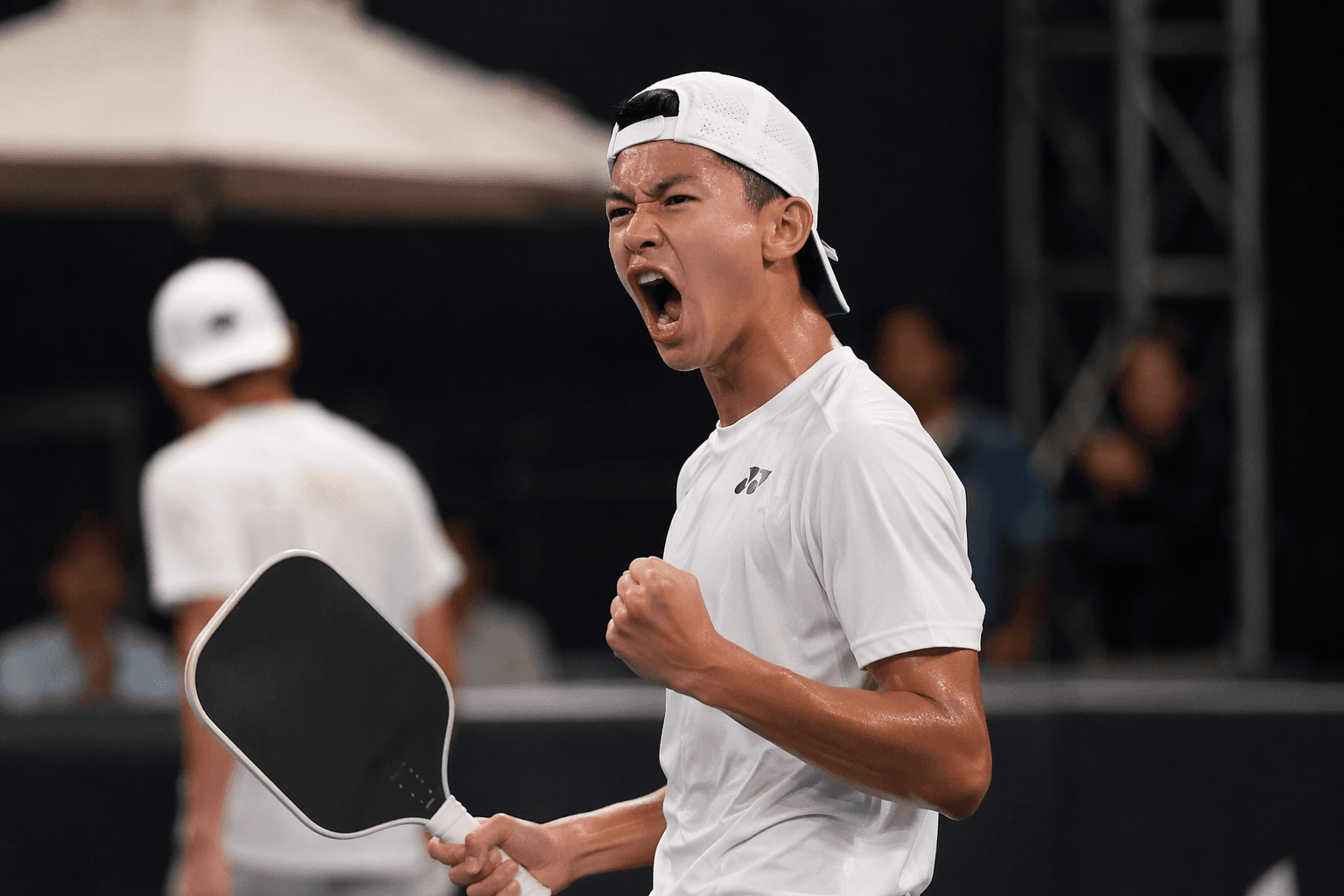
A 15-year-old taking down the top seed in straight games is the kind of result that changes the conversation fast. In Macao, Tama Shimabukuro beat Hong Kit Wong 11-9, 11-9, then turned the weekend into a double-gold statement by adding the Men’s Doubles title with Armaan Bhatia. The message from The Venetian Macao was clear: Asian pickleball is no longer being carried by a fixed hierarchy.
Macao was a volatility test, not just a stop on the calendar
The Macao Open 2026 ran from May 28 to May 31 at The Venetian Macao in Macao, China, as a PPA Tour Asia 500 event with 500 ranking points on the line. It also sat in a broader business frame, with US$70,000 attached to the stop and age and rating categories played alongside the pro draw. That mix matters because it shows the event was not only about elite trophies. It was also part of a deeper effort to build a competitive ladder and a larger participation base across Asia.
That is why the weekend felt bigger than a single draw. Macao was positioned early in the tour’s 2026 run, between Kuala Lumpur and later stops such as Beijing, Tokyo, Singapore and Hong Kong. When a tournament lands inside a dense regional calendar like that, its results do more than fill a results page. They influence confidence, seeding narratives and the way players, sponsors and fans read the shape of the season ahead.
The headline results that broke the old script
Shimabukuro’s Men’s Singles win was the sharpest signal of the weekend. He had been a two-time Men’s Singles quarterfinalist in Asia before Macao, so this was not a lucky run by an unknown name. It was a genuine step forward from a player who had been hovering on the edge of the top tier, and he beat a proven regional champion in Hong Kit Wong, the Hong Kong Open 2025 winner.
The Men’s Doubles title then reinforced the same point from a different angle. Shimabukuro and Armaan Bhatia beat Mitchell Hargreaves and Kenta Miyoshi 12-10, 11-5, giving both Shimabukuro and Bhatia double gold. That matters because it was not a simple home-country sweep or a neat confirmation of one established power. It was a cross-market pairing delivering at the highest level, a useful marker for how alliances and talent movement are shaping the Asian game.
The other bracket swings were just as telling. Rika Fujiwara and Kei Sawaki stunned the No. 2 seeds in Women’s Doubles after falling behind 2-11 in the first game, then Fujiwara went on to win Women’s Singles gold. Ho Tam reached two Championship Sunday finals, adding another layer of depth to a weekend that kept producing new finalists, not just repeat winners. The medals were spread across Japan, Hong Kong, India and Chinese Taipei, a distribution that would have looked much less likely a short time ago.
Why the new unpredictability matters
For rankings, Macao is important because PPA Tour Asia is no longer a small sample of predictable outcomes. A 500-point stop can reshape confidence and momentum quickly, especially when a teenager can beat the No. 1 seed and a veteran champion can be pushed out by a surging younger player. That kind of churn makes every upcoming draw harder to forecast, which in turn makes seeding more meaningful and more vulnerable.
For sponsorship, the appeal is obvious. Unpredictability creates storylines, and storylines sell. A tour that can produce teenage breakthroughs, cross-market doubles pairings and multiple double-gold weekends has a far stronger commercial pitch than one dominated by the same names every time. Brands want a sport that feels like it is moving, and Macao showed that Asian pickleball now has the kind of competitive instability that keeps audiences watching.
For fans, the shift is cultural as much as sporting. Asian pickleball is moving away from the “growth story” phase, where the biggest question was whether the sport would scale, and into a phase where the question is who actually owns the region’s biggest stages. That is a more mature, more compelling ecosystem. It also makes the sport easier to follow emotionally, because surprises give casual viewers a reason to stay and committed fans a reason to argue about what comes next.
The calendar shows how quickly the ecosystem is maturing
The 2026 PPA Tour Asia calendar runs to 10 stops across seven Asian markets and ends with the Hong Kong Slam, which the tour says will be the biggest professional pickleball tournament ever staged in Asia, with up to US$1.1 million in prize money. That structure gives Macao real context. It is not an isolated burst of drama; it is one chapter in a tightly packed circuit that is building scale, prestige and regional relevance at the same time.
The next stop after Macao is the Beijing Open, scheduled for June 17-21, 2026. That short turnaround means form from Macao can travel quickly, and so can doubt. Players who left The Venetian Macao with momentum will arrive in Beijing with belief, while the names that were upset will have to prove Macao was a blip rather than the start of a wider shift.
What Macao says about the road ahead
The clearest takeaway from Macao is that Asian pickleball is becoming less top-heavy and more open. Teenagers are winning major finals, established champions are being tested, and medal tables are no longer clustering around one dominant nation or one predictable pair. That kind of spread is exactly what a maturing sports ecosystem looks like.
Macao did not just produce results. It exposed a new competitive mood across the region, one where Japan, Hong Kong, India and Chinese Taipei can all expect to matter in the same bracket. If that pattern holds through Beijing, Tokyo, Singapore and Hong Kong, then the biggest story in Asian pickleball will no longer be whether the sport has arrived. It will be how many different players and pairings can now shape its future.
This article was produced by Prism’s automated news system from verified source data, official records, and press releases, then run through automated quality and moderation checks before publishing. The system is built and supervised by the people who set the standards it runs under. Read our full AI policy.
Know something we missed? Have a correction or additional information?
Submit a Tip