Singapore's early start made it Asia's pickleball beachhead
Singapore got to pickleball before the boom, and that head start still shapes Asia’s fastest-growing scenes, from community-centre courts to a 2026 PPA stop.
Singapore did not stumble into pickleball after the rest of Asia. It got there in the 1980s, built a formal national body in 1995, and turned community-centre curiosity into a model that newer markets still copy. The Asia Federation of Pickleball calls Singapore the oldest pickleball-playing nation in Asia, and the country’s 1996 visit from co-inventor Joel Pritchard gives that claim real weight.
How Singapore became the first foothold
The Singapore story starts with access, not hype. Pickleball was first introduced in the 1980s, then the Singapore Pickle-Ball Association was founded in 1995, giving the sport a proper home before many Asian markets had even heard the name. That timeline matters because the game did not just arrive in a burst of novelty, it had time to settle into local routines, build regular play, and develop the habits that turn a fringe pastime into an organized sport.
The 1996 visit from Joel Pritchard is the link that makes Singapore’s early adoption stand out on the continental map. Pritchard, widely credited with helping invent pickleball in 1965 on a badminton court at his home in Bainbridge Island, Washington, was not just a name on a lineage chart. His presence in Singapore tied the city-state to the sport’s origin story at a moment when the game was still small enough for personal connections and club networks to matter more than broadcast deals or professional tours.
Why the game took root there
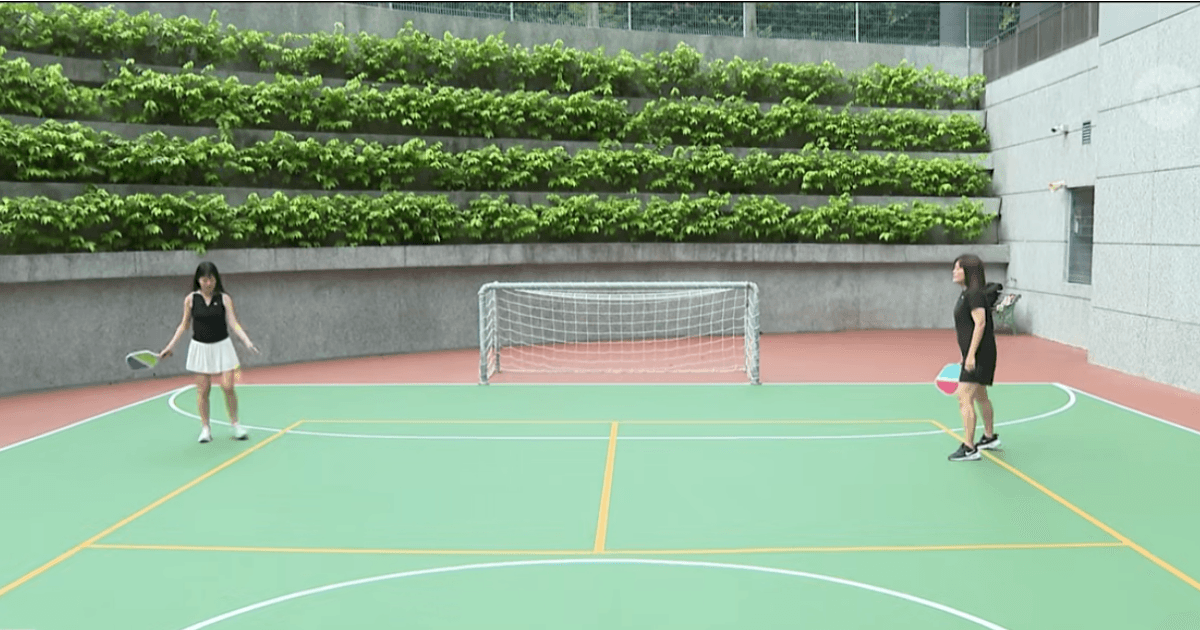
Singapore’s real advantage was infrastructure. Singapore Pickleball says it worked with Sport Singapore and the People’s Association to build interest groups in community centres and sports halls, which is exactly the sort of civic plumbing a new sport needs if it wants to survive beyond the first wave of curious players. Community centres gave pickleball a low-friction entry point, while sports halls offered repeatable spaces where beginners could learn, seniors could keep playing, and small groups could become regulars.
That structure also explains why pickleball spread with such little drama. Singapore Pickleball says the association has served the community for 26 years and has organized try-outs, clinics and national-level tournaments. That is the unglamorous part of a sports boom that too often gets missed: the clinics that convert first-timers, the try-outs that lower the barrier, and the tournaments that give players a reason to keep showing up.
The association’s current identity reinforces that broad-base approach. Singapore Pickleball says it is the official National Sports Association for pickleball in Singapore, and its FAQ says the 2023 rebrand from the Singapore Pickle-Ball Association was meant to create a new identity that embraces diverse age ranges and carries an iconic emblem for the city-state. The group’s UEN, S95SS0066G, also points back to the 1995 founding date, which underlines how long Singapore has been running an organized program while much of Asia was still in the discovery phase.
From senior-friendly pastime to national sport
The earliest growth in Singapore came through people, not policy. The Asia Federation of Pickleball’s history page describes an early player discovering the game in a community-centre setting, hearing the distinctive sound from an adjacent badminton court, and trying pickleball with friendly senior players before spreading it through enthusiasm and social circles. That detail captures the sport’s first selling point in Singapore: it was easy to pick up, easy to explain, and easy to share.
Singapore Pickleball’s FAQ also frames the sport as part of daily life and links it to mental health and wellness. That matters because pickleball’s Singapore rise has never been just about competition, or even about exercise in the narrow sense. The game fit a city that already understood how to use public space, social programming and accessible sports to keep people moving, and that made it more durable than a novelty trend.
The numbers from recent reporting show the base has clearly moved beyond niche status. Bookings at Singapore’s 30 public pickleball courts have more than tripled since 2023. The country now has over 5,000 active pickleball players, and more than a fifth of them compete in tournaments. Those figures tell a simple story: the sport has enough depth to fill courts consistently, enough ambition to produce competitors, and enough staying power to create friction over access as demand rises.
Why Singapore still matters to Asia’s growth curve
Singapore’s importance now extends far beyond its own borders because it sits at the center of a much bigger regional surge. A 2025 UPA Asia and YouGov study surveyed more than 14,000 respondents across 12 Asian territories and found that 1.9 billion people had heard of pickleball, 812 million had played at least once, and 282 million were playing at least monthly. The territories included China, Chinese Taipei, India, Indonesia, Japan, Malaysia, the Philippines, Singapore, South Korea, Hong Kong, China, Thailand and Vietnam, which makes the survey less a snapshot of one market than a map of the sport’s continental reach.
Singapore’s own awareness figure shows how early start and present-day scale now overlap. In the same study, 70 percent of respondents in Singapore were aware of pickleball, a sign that the country has already moved deep into mass recognition even as the sport keeps expanding around it. That is what makes Singapore more than a historical footnote: it is a mature market in a still-forming regional sport, which gives it a different kind of influence than faster-growth newcomers chasing their first wave.
The next stage is already scheduled. Singapore will host its first Professional Pickleball Association Tour Asia event, the PPA Asia 500 Singapore Open, from July 23 to 26, 2026 at Sports Arina @ Expo. The event pushes the city-state from origin story to active stop on the professional circuit, which is the clearest sign yet that the country’s first foothold is now part of Asia’s current pickleball economy.
Singapore’s value to the sport is not that it was first by accident. It is that it built the institutional habits, public spaces and social entry points that let pickleball survive long enough to become regional infrastructure. That is the playbook newer Asian markets are following now, whether they know it or not.
This article was produced by Prism’s automated news system from verified source data, official records, and press releases, then run through automated quality and moderation checks before publishing. The system is built and supervised by the people who set the standards it runs under. Read our full AI policy.
Know something we missed? Have a correction or additional information?
Submit a Tip