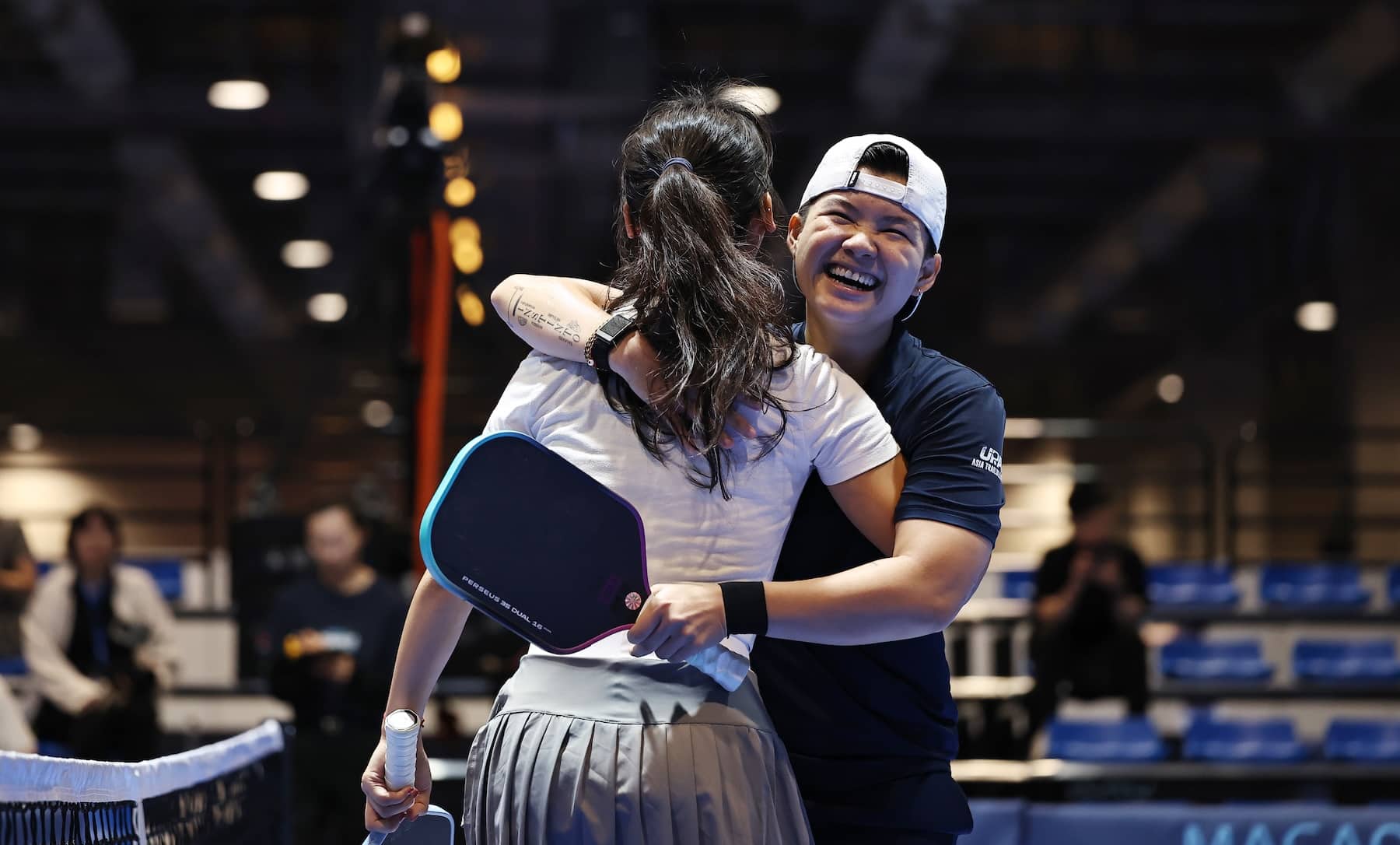
Macao Open tests Asia's packed pickleball calendar and player endurance
Macao's glossy resort stage comes right after Kuala Lumpur, turning Asia's busy pickleball calendar into a test of recovery, travel and who can survive the grind.

A fast lane with no soft landing
Macao is being framed as a showcase event, but the harder story is the toll of getting there. The Macao Open runs May 28-31, 2026 at Hall D, Cotai Expo, The Venetian Macao, as a PPA Asia 500 stop with US$70,000 in pro prize money and 500 ranking points, and it lands only days after Kuala Lumpur, another 500-point event with US$50,000 on offer. That back-to-back structure is exactly why the new Asia circuit feels different: the calendar is no longer just a list of stops, it is a test of recovery, travel discipline and whether players can keep producing when the tour barely pauses.

PPA Tour Asia built this opening block to move quickly. Its season preview set the tone with Hanoi in early April, Kuala Lumpur in mid-May and Macao at the end of May, while the official results page shows Kuala Lumpur ran May 12-16, 2026, sharpening the overlap even further. That compressed rhythm matters because it asks athletes to reset their bodies, rework tactics and cross borders with little room for error. In a regional tour, the schedule itself becomes part of the competition.
Macao is more than a pretty backdrop
The venue choice tells you why the tour wants Macao in this slot. The official event page places the tournament in the Pearl River Delta and describes The Venetian Macao as one of the world’s most iconic venues, which makes the stop about more than points and prize money. It is a high-visibility stage built for commercial reach, and the site also makes clear that age and rating categories run alongside the Pro draw, a structure that widens participation while putting the elite matches in front of a larger event ecosystem.
That broader ecosystem is already showing up in the numbers. Tournament registration pages list 608 players for Macao, a field large enough to turn the event into a true traffic jam of draws, courts and recovery windows. Kuala Lumpur was no lighter, with 595 players registered there, which underscores how dense the regional schedule has become before the tour even reaches its later stops. When a circuit can attract fields that size in consecutive weeks, the business upside is obvious, but so is the pressure on players and organizers to keep the quality high.
The brackets show who gets tested first
Macao is not just a travel stress test, it is also a hierarchy test. PPA Tour Asia’s bracket announcement put Hong Kit Wong at No. 1 in men’s singles, while Lingwei Kong is making her Asia debut as the No. 1 seed in women’s doubles and mixed doubles. Those are the kinds of seedings that make a stop feel consequential, because they turn Macao into a place where regional stars, newcomers and established partnerships all have to prove they can handle a premium draw under the same roof.
That is where the calendar story connects back to the business story. If the circuit is going to keep expanding, the rankings only matter if the best players can actually show up fresh enough to defend them. Macao’s draw says the tour has reached a level where seed lines, debut appearances and venue prestige all matter at once, but it also shows how thin the margin gets when a player is asked to peak again almost immediately after another full event.
Kuala Lumpur is the warning label and the blueprint
The clearest proof of how quickly this tour turns over came in Kuala Lumpur. Official results show Hien Truong won men’s singles, Chao Yi Wang won women’s singles, Len Yang and Collin Johns took men’s doubles, Yufei Long and Ting Chieh Wei won women’s doubles, and Alix Truong and Tama Shimabukuro captured mixed doubles. Those are the names that now carry momentum into Macao, and they illustrate the exact challenge of a packed calendar: the players who survive it are the ones who can recover fast enough to protect form from one stop to the next.
That same tension runs through the wider 2026 build-out. PPA Tour Asia has already positioned Hanoi, Kuala Lumpur and Macao as the opening stretch of a larger regional push, and the official language around the tour stresses expansion in the Pearl River Delta and other high-visibility markets. World Pickleball Magazine’s coverage has framed the calendar as a question of cost, travel and sustainability, which is the right lens here: a stronger circuit can bring more ranking opportunities and more commercial attention, but only if the schedule does not start burning through the athletes who make the product credible.
Macao, then, is not just a glamorous stop on a growing map. It is the point where Asia’s pickleball boom meets its limits, and where the tour has to prove it can scale without asking players to pay for growth with their legs. If the region can balance prize money, visibility and recovery, the circuit looks real. If not, the calendar will be the first thing that exposes the gap between ambition and endurance.
This article was produced by Prism’s automated news system from verified source data, official records, and press releases, then run through automated quality and moderation checks before publishing. The system is built and supervised by the people who set the standards it runs under. Read our full AI policy.
Know something we missed? Have a correction or additional information?
Submit a Tip