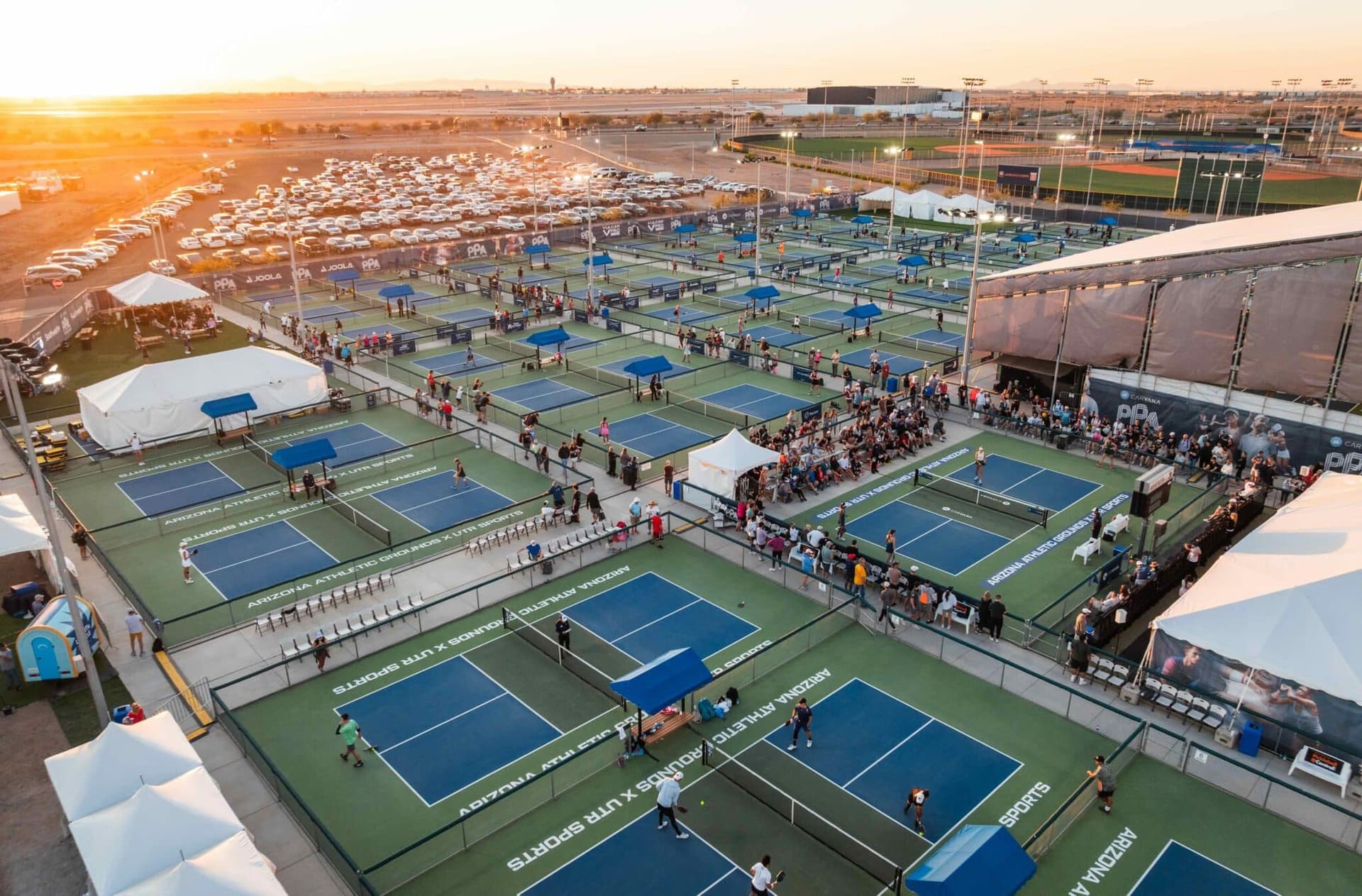
Pickleball becomes a real estate draw in India’s cities
Pickleball is moving from club sport to sales pitch in India’s cities, where builders see a compact court as a way to lift demand, community and occupancy.
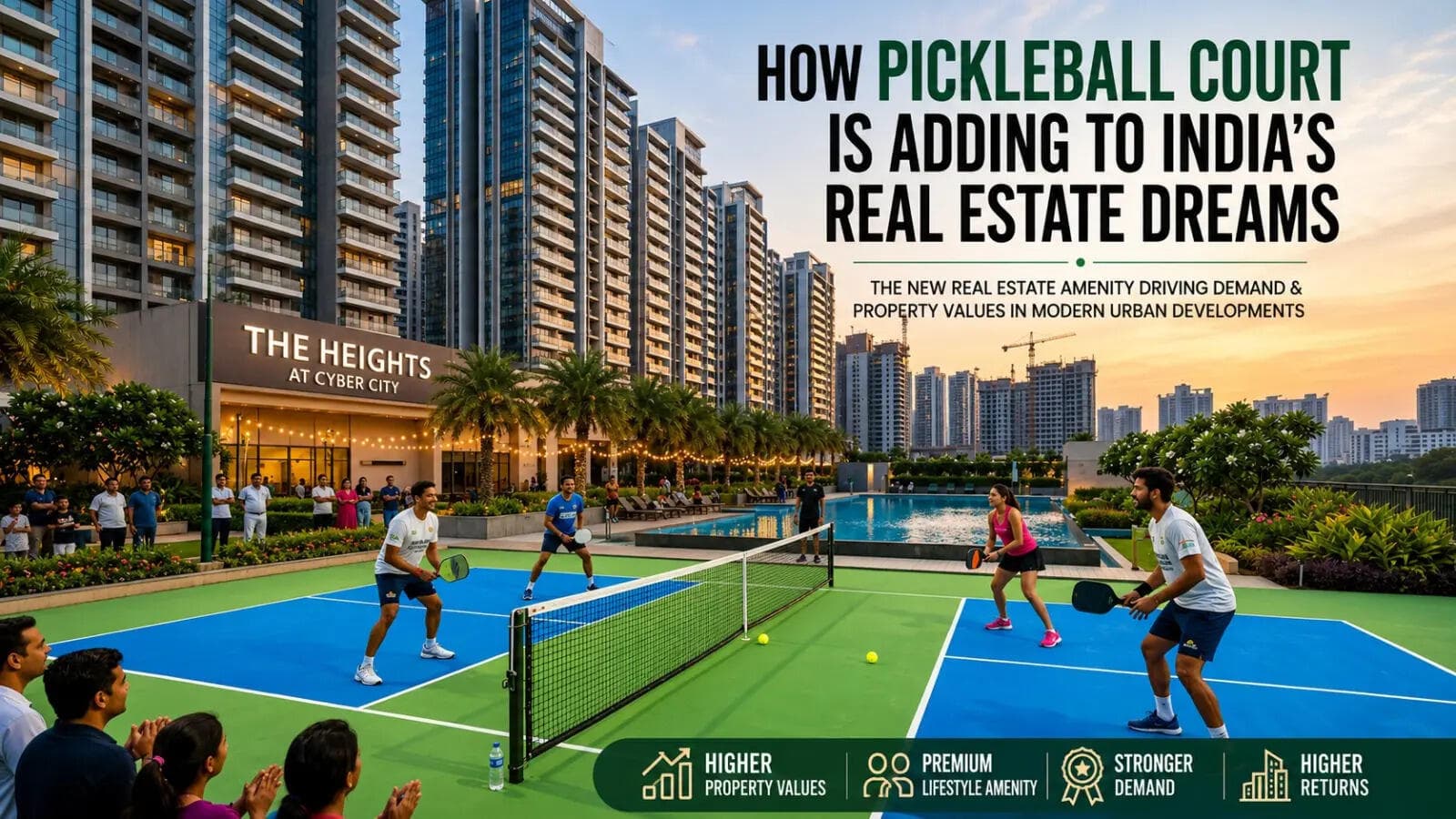
The clearest sign that pickleball has escaped the recreational lane in India is not a trophy or a television deal. It is a sales pitch.
In dense cities where land is expensive and recreation space is tight, developers are starting to treat pickleball courts like a core amenity, not an afterthought. The logic is simple: a sport that is easy to learn, social to play and small enough to fit into leftover corners of a project can help a building feel active, modern and lived-in from day one. For buyers, that can mean more than a nice extra. It can shape how a project feels, how often residents use it and how strongly a developer can market community life.
Why pickleball fits the urban real-estate playbook
Pickleball works in India’s cities because it solves a space problem as much as a leisure problem. A standard court can take roughly 2,000 square feet, and builders have found ways to place it on rooftops, podiums, basements and other underused pockets of a project. Compared with more space-hungry sports, that makes it unusually adaptable for urban housing, where every square foot has to justify itself.
That compact footprint is only part of the appeal. Pickleball also creates movement, short games and frequent interaction, which makes it useful for residential marketing. A court is not just a place to play; it is a place where neighbors meet, kids linger after school, working adults squeeze in a game before dinner and a development can look busy instead of sterile. In a market where occupancy, amenity premiums and resident demand matter, that social energy is part of the product.
M3M’s bet on pickleball as a brand and a building amenity
One of the clearest examples is M3M, the Gurugram-based real-estate giant that has made pickleball part of its strategic play in the National Capital Region. The company owns the Capital Warriors Gurgaon franchise in the Indian Pickleball League, and it also backs the lawyers-only LawStrings Pickleball League as title sponsor. That is a stronger commitment than a one-off promotional court; it shows the sport being woven into brand building, league ownership and community marketing at the same time.
Robin Mangla, president of M3M, has framed pickleball as an efficient and inclusive sport, which gets to the heart of why developers like it. It is approachable enough for first-time players, active enough to signal a healthy lifestyle and flexible enough to work in compact communities. For a builder, that combination is valuable because it turns a court into a lifestyle statement without requiring the scale of a full sports campus.
The numbers behind the boom
This is not a story built on hype alone. India’s pickleball ecosystem has expanded fast enough to make the real-estate angle plausible. The Indian Pickleball Association says the sport was brought to India in 2008 through the earlier All India Pickleball Association, and it now says it has official recognition from the Ministry of Youth Affairs and Sports, 500-plus professional players, more than 100 ranking tournaments and coverage across 27 states.
The player base has also accelerated. Sportstar reported that registered players under the governing body rose from about 10,000 in 2021 to around 60,000 in 2024. Moneycontrol has also reported that India had about 8,000 registered players and around 35,000 amateur players at one point, with estimates that participation could reach one million within five years. For developers, those numbers matter because they suggest the sport is still young, but no longer too small to matter. It is starting to look less like a niche hobby and more like an amenity with mass-market potential.
The infrastructure trail points the same way. Moneycontrol reported plans for KheloMore and the All India Pickleball Association to establish 100 courts in two years, and separate reporting said India crossed the 1,000-court mark in 2025. That kind of growth helps explain why pickleball is showing up in housing brochures and urban amenity decks rather than only in private clubs.
Legitimacy is the other half of the story
Real-estate builders are betting on pickleball partly because the sport now has a clearer institutional backbone. The Indian Pickleball Association says its recognition by the Ministry of Youth Affairs and Sports, confirmed on May 1, 2025, gives the sport a more official place in India’s sporting structure. That recognition matters because it strengthens the case for standardized rankings, a more visible development pathway and a calendar of events that can keep the sport in the public eye.
The Indian Pickleball League adds another layer. Its inaugural season is scheduled for December 1-7, 2025, at KD Jadhav Indoor Hall in New Delhi, with six franchise teams including Capital Warriors Gurgaon. The league says it is India’s first and only national franchise-based pickleball league, which gives developers another reason to view the sport as more than a passing fad. A court is more valuable when the sport around it has franchises, events and a recognizable competitive structure.
The Indian Pickleball Association also says it will host the Pickleball Asia Cup 2025, a move that raises the sport’s profile beyond India and gives the country a place in the wider regional conversation. For builders, that kind of visibility can translate into a stronger amenity story, especially in premium projects where residents expect more than a swimming pool and a gym.
The social layer that makes it stick
Pickleball’s strongest advantage may be how naturally it builds communities. Coverage from Chennai showed players using WhatsApp groups and recurring meetups to keep the game going off the court as much as on it. That kind of behavior is gold for developers because it creates a social loop inside the housing project itself. A court is no longer only an asset to advertise; it becomes a place where residents organize their own life around the property.
The sport’s ease of entry also broadens its reach. Reporting from cities such as Mumbai, Bengaluru, Hyderabad, Lucknow and Delhi has shown tennis players gravitating toward pickleball because it is easier to pick up and less demanding of specialized technique at the start. That makes it attractive across age groups and skill levels, which is exactly what developers want when they are trying to create amenities that feel inclusive rather than elite.
A real shift, or a luxury-marketing fad?
The answer depends on whether pickleball keeps doing the thing that makes it so attractive to builders: producing daily activity in small spaces. If courts stay busy, if leagues continue to grow, if resident groups keep forming around the sport and if more projects treat it as a must-have rather than a novelty, then pickleball will look less like a trend and more like urban infrastructure.
If the courts sit empty, the story changes fast. But right now, the sport has the ingredients that real estate likes most: low space requirements, visible energy, community value and a growing competitive ecosystem. In India’s crowded cities, that is enough to turn a game into a sales tool, and maybe into a lasting part of how residential life is built.
This article was produced by Prism’s automated news system from verified source data, official records, and press releases, then run through automated quality and moderation checks before publishing. The system is built and supervised by the people who set the standards it runs under. Read our full AI policy.
Did this article answer your question?