Pickleball Fukuoka Open 2026 in Itoshima Offers 12 Categories Jan 16-17
A two-day regional tournament in Itoshima staged 12 categories, drawing age-group and skill-level play and shaping the local competitive pickleball calendar.
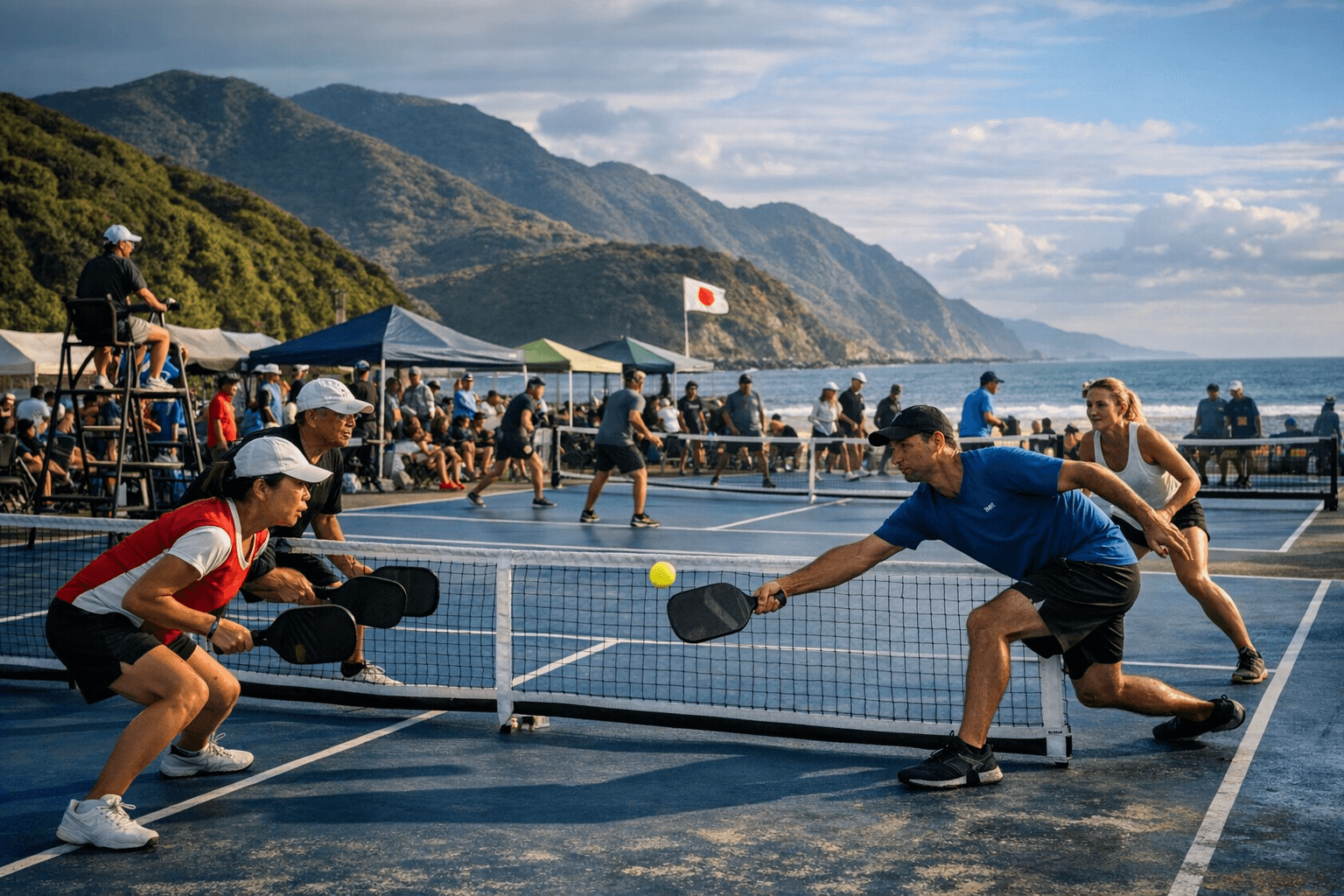
A weekend tournament at Itoshima City Sports Park delivered broad participation and fast, tactical pickleball across 12 distinct categories, reinforcing the sport’s rapid growth in regional Japan. The Pickleball Fukuoka Open 2026 ran Jan 16-17 and combined men's doubles, women's doubles and mixed doubles across age divisions and beginner-intermediate brackets, using a prelim-league to main-draw format that put emphasis on consistency and quick adjustments.
Tournament organizers from the local operating committee worked with regional clubs to run practical logistics that matter to competitors: scheduled practice windows on-site, clear access guidance from the nearest train station and dedicated parking, and a rules framework that included 15-point, one-set matches in several divisions. The short-set scoring produced a tournament rhythm of aggressive starts and decisive third-shot tactics, where teams that seized early net control and executed crisp dinks consistently advanced out of round-robin play into single-elimination brackets.
Without headline professional names on the entry list, the draw was notable for depth rather than star power. Veterans in age-group brackets showcased tactical nuance around the kitchen, relying on placement and patient third-shot drops, while beginner and intermediate divisions highlighted rapid skill gains and the classic learning curve from baseline dinking to transition volleys. The combination of age-based and level-based categories created cross-generational matchups that elevated local rivalries and gave newer players tournament experience against seasoned opponents.
From an industry perspective, the Fukuoka Open’s comprehensive event page served as a model for regional tournament organization. By publishing dates, venue details, category breakdowns, tournament format and entry rules, including first-come, capacity-limited registration and the possibility of additional recruitment or trial sessions, the organizers reduced friction for players, directors and club coaches. That clarity supports growth across Asia’s grassroots circuit by making events accessible to recreational players who now expect standardized, searchable information when planning travel and training.
Economically and culturally, the event amplified Itoshima as a community sport hub. Local clubs benefitted from concentrated court time and practice scheduling, while nearby businesses gained foot traffic from participants and supporters. Socially, the mix of beginner brackets and veteran categories reinforced pickleball’s reputation as an inclusive, intergenerational sport where fitness, social connection and competition intersect.
For players and organizers watching the calendar, the Fukuoka Open offered a template: run tight logistics, offer varied categories to match demand, and use short-set formats to maximize court turnover and competitive intensity. With regional appetite growing, expect more tournaments to adopt similar structures and for Itoshima’s event to become a regular stepping stone for clubs and players seeking ranked match experience and community exposure.
This article was produced by Prism’s automated news system from verified source data, official records, and press releases, then run through automated quality and moderation checks before publishing. The system is built and supervised by the people who set the standards it runs under. Read our full AI policy.
Did this article answer your question?