Seoul and Da Nang Reveal Two Distinct Paths to Pickleball Growth
Seoul tripled its public pickleball stock with one Han River conversion; Da Nang is about to stage the sport's first-ever World Cup on Asian soil.
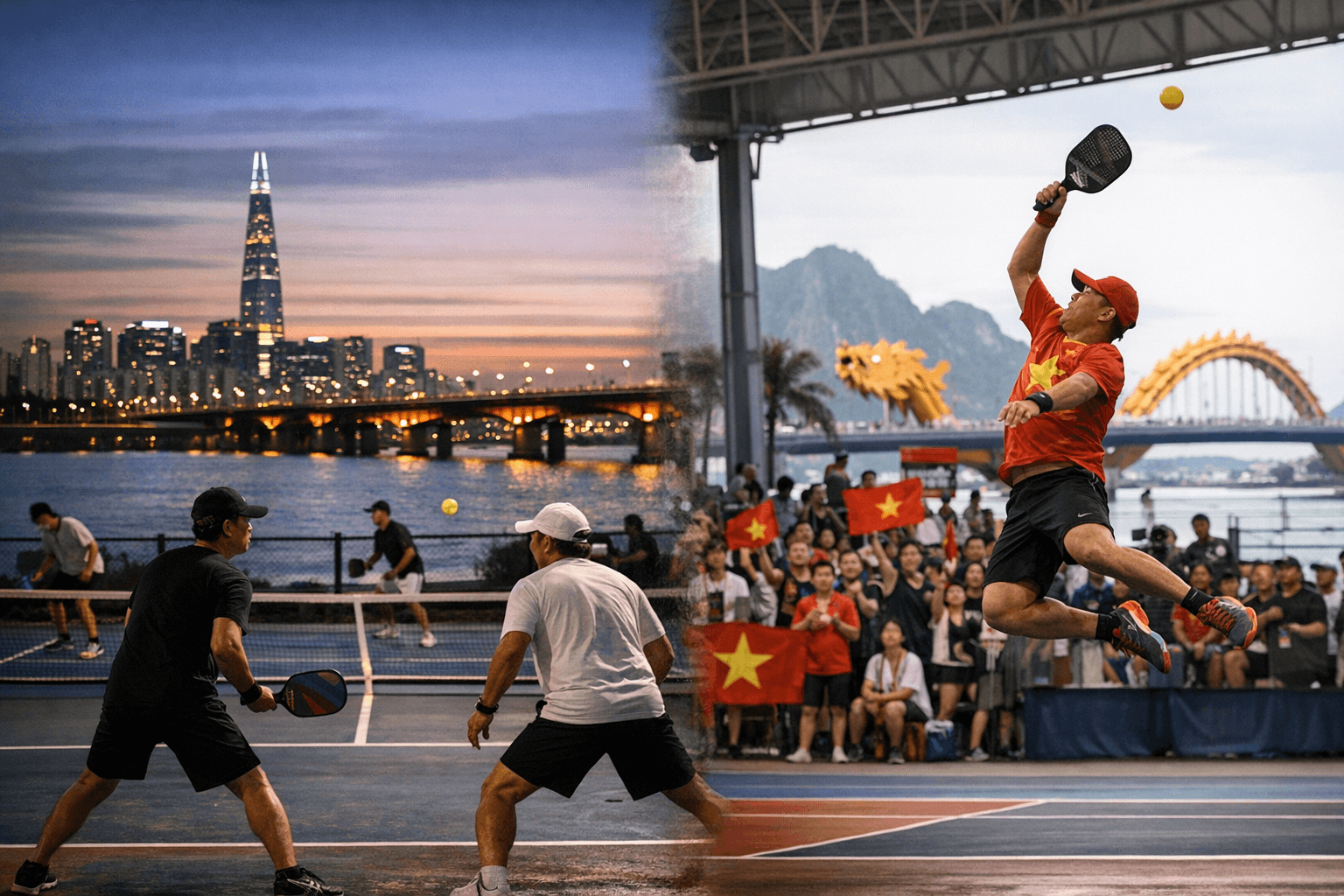
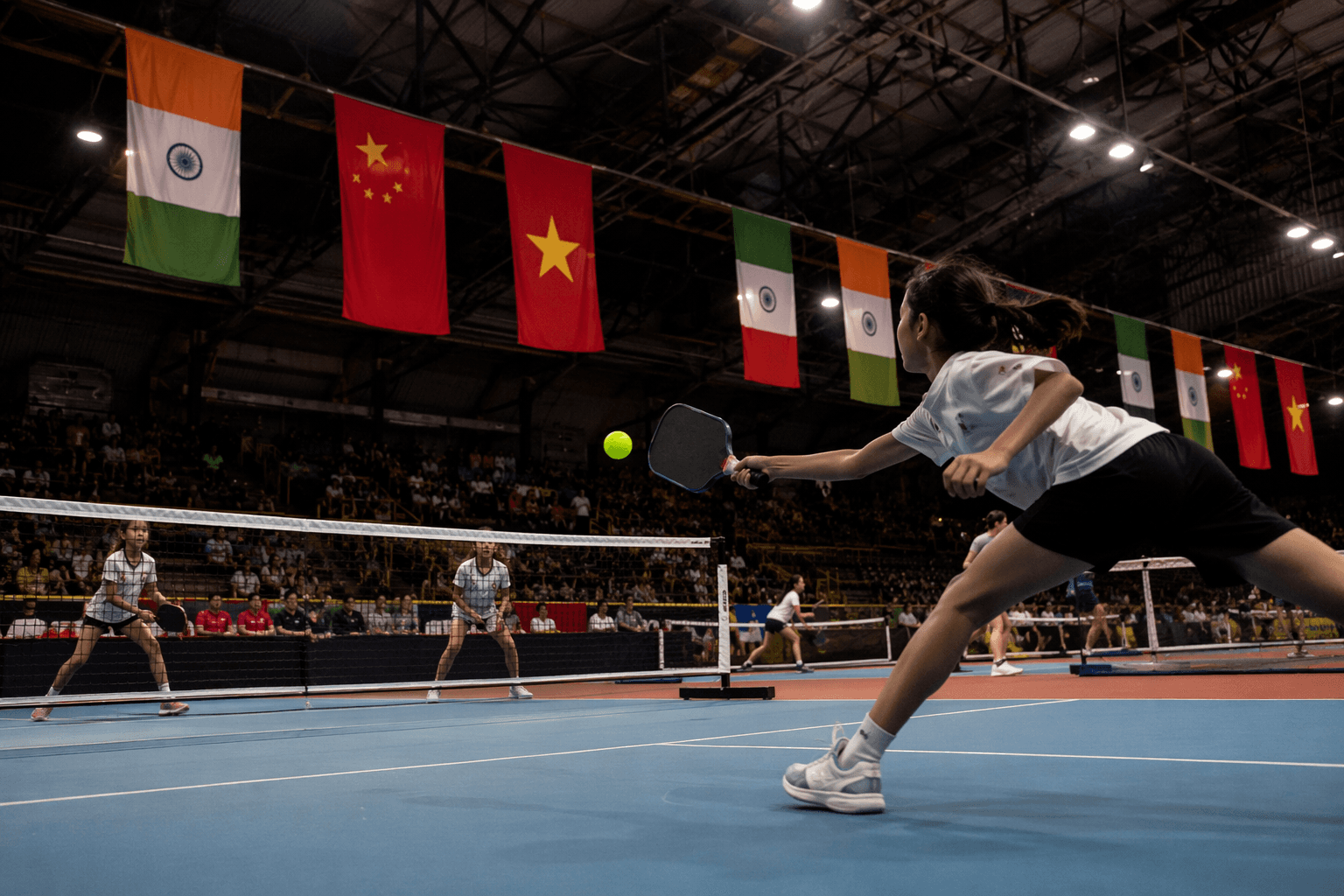
For the first time in the Pickleball World Cup's three-year history, the tournament will leave the Americas. When it arrives in Đà Nẵng from August 30 to September 9, 2026, it will do so in a city that barely had a formal pickleball association two years ago. Six thousand kilometers north, Seoul quietly converted a disused football pitch along the Han River into South Korea's largest pickleball complex, opening 14 courts at Gwangnaru Hangang Park on March 28 and 29, 2026, to an opening-weekend crowd of roughly 500 players. Two cities, two entirely different municipal instincts; together they sketch the clearest picture yet of how Asian cities can scale this sport deliberately and fast.
The divergence is not accidental. Seoul's government invested in permanent public infrastructure tied to a mayoral health mandate. Đà Nẵng's leadership chased the biggest available international event and built its institutional apparatus around it. Neither city copied the other, but both validated a thesis that a growing number of Asian mayors are beginning to test: pickleball grows fastest when a city treats it as an urban planning decision, not a recreational afterthought.
Seoul's Playbook: Infrastructure First, Community Second
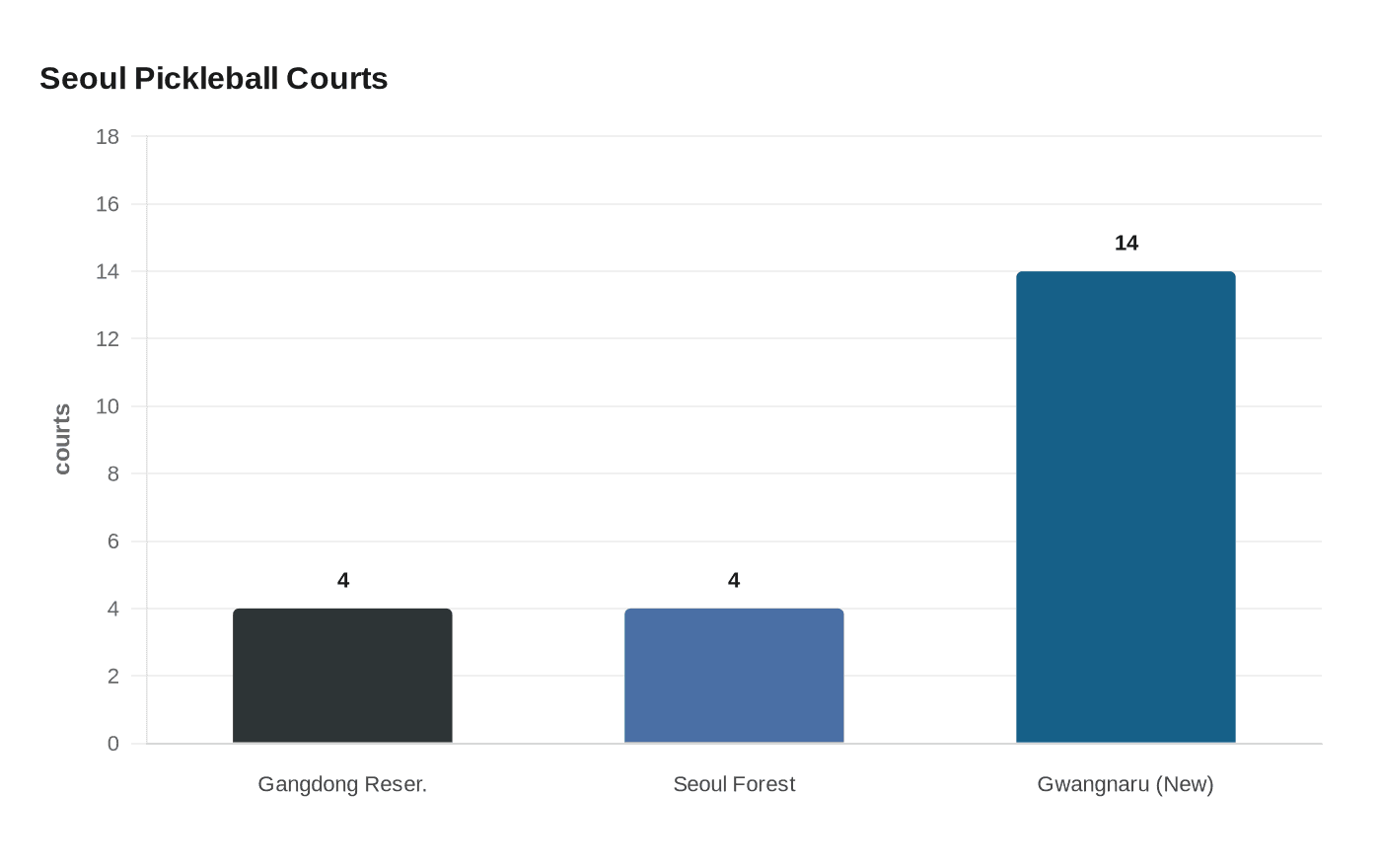
Seoul's most consequential decision was a land-use call. An underperforming football field at Gwangnaru Hangang Park was repurposed into a 4,000-square-meter, 14-court venue with full supporting amenities. Before the complex opened, Seoul had just eight public pickleball courts citywide: four at the Gangdong District reservoir and four at Seoul Forest. The Gwangnaru facility pushed that total to 22, effectively tripling the city's public supply in a single project.
The price point is deliberately civic. At 8,000 won for a two-hour session, which is broadly in line with Seoul's public tennis court rates, access is designed for habitual recreational use rather than premium sport positioning. That framing matters for adoption: players who might hesitate at a private club membership are far more likely to try a sport priced like a city tennis court. The opening weekend made this philosophy visible, combining a family tournament, hands-on beginner lessons, and open play sessions in a format that served first-timers and competitive players on the same day.
The facility sits inside Mayor Oh Se-hoon's Healthy City Seoul initiative, which provides the political and budgetary architecture that a standard parks project cannot access alone. When pickleball is classified as a public health intervention, it draws cross-departmental funding from parks, health, and tourism, and it becomes far harder for future budget cycles to defund. For Seoul, the Gwangnaru complex also functions as a domestic event venue: a 14-court facility can host regional weekend tournaments and federation selection camps, generating revenue that partially offsets operating costs over time.
Đà Nẵng's Playbook: Land the Event, Build Backward
Đà Nẵng reversed the sequence entirely. Rather than build courts and wait for demand to appear, the city's Pickleball Association pursued the biggest available international event and used the hosting mandate to accelerate infrastructure and institutional development. The result is a deal for the Pickleball World Cup, the sport's premier nation-against-nation competition, which will hold its first-ever Asian edition in Đà Nẵng this September. The previous three editions were all held in the Americas: two in Peru and one in Florida.
The ambition is considerable. Organizers are targeting approximately 4,000 players from roughly 80 countries, timed deliberately to coincide with Vietnam's National Day holiday week beginning September 2, maximizing hotel occupancy and domestic visitor spending in a single concentrated window. The city had already demonstrated it could execute at this level: the PPA Tour Asia-Vietnam ran at Tien Son Sports Arena in late 2025, drawing more than 120 professionals and 1,000 amateurs. The inaugural Asia Pickleball University Championship also landed in Đà Nẵng in July 2025, making the coastal city arguably the continent's most active pickleball host across a 12-month stretch.
The figure at the center of Đà Nẵng's strategy is Tran Phuoc Son, who serves simultaneously as Chairman of the Da Nang Pickleball Federation and as the city's Standing Vice Chairman of the People's Council. That dual role is not incidental: it signals that pickleball's development in Đà Nẵng is a municipal priority with direct access to government resources, not a federation project operating outside official channels. The city has committed to incorporating pickleball into school physical education programs and placing it on the official roster of regularly developed sports. That pipeline, from classroom introduction to competitive pathway, is what separates a hosting legacy from a one-event footnote.
Reading the Two Models Side by Side
Placed against each other across five core metrics, the contrast sharpens:
- Courts added: Seoul added 14 permanent public courts in one project, tripling citywide supply; Đà Nẵng's event infrastructure is primarily modular and temporary, with permanent courts growing through club operators and schools
- Utilization model: Seoul targets daily recreational throughput at a standardized civic price; Đà Nẵng concentrates utilization intensity into multi-day event windows, with school programming bridging the gaps between events
- Cost per court per hour: Seoul's 8,000-won two-hour rate is a fixed public access price; Đà Nẵng's model front-loads cost into event coordination, venue agreements, and federation partnerships rather than per-court operating expense
- Programming mix: Seoul leads with multi-generational recreational content for families, beginners, and seniors; Đà Nẵng leads with elite professional competition graduating toward grassroots school development
- Access rules: Seoul is publicly bookable at standard park rates; Đà Nẵng's major events require tournament registration, with broader civic access arriving through the school integration commitment
Neither model is inherently superior. They serve different starting conditions: Seoul had the land, the municipal budget, and a health-oriented mayor. Đà Nẵng had the tourism brand, the event-execution track record, and a federation chairman with a city council seat.
Five Actionable Levers Any Asian City Can Pull in 12 Months
Land Use: Convert Underused Space
Seoul's most replicable move was identifying an underperforming asset and converting it to a higher-utilization sport. Cities with idle tennis courts, low-scheduling-density recreation fields, or underused indoor halls can run the same play. A 4,000-square-meter footprint accommodates 14 courts; the conversion cost is a fraction of new-build construction, and the programming yield is immediate.
Operator Model: Anchor With Public, Supplement With Private
The most sustainable structure pairs one high-capacity public site (aim for at least eight courts) with standardized booking and affordable rates, then licenses club operators for coaching programs and private leagues. Seoul's public-access baseline provides equity; private operators fill peak-hour slots and generate ancillary revenue. This hybrid maximizes both access and cost recovery without requiring full municipal subsidy of every operating hour.
Pricing: Match Existing Recreational Benchmarks
Seoul's decision to price pickleball at or near local tennis court rates removes the premium-sport perception barrier that slows adoption in price-sensitive markets. Cities that introduce a new sport at the same cost as the one residents already know can expect significantly faster uptake among recreational players who are activity-ready but unfamiliar with the game. Free or subsidized introductory sessions during a facility launch compound the effect.
Community Programming: Sequence for Inclusion
Gwangnaru's opening weekend modeled the correct structure: families, beginners, and competitive players all in one venue over two days. Monthly beginner and family events, a school integration pilot in the first year, and a senior recreational league are the minimum programming scaffold. Đà Nẵng's commitment to embedding pickleball in physical education curricula is the highest-leverage version of this lever, because school-age players generate long-run demand that outlasts any single event cycle.
Tournament Strategy: Ladder From Local to Global
Đà Nẵng's progression is the clearest available template: city association launch, followed by a PPA Tour Asia stop, followed by a World Cup bid. Cities should map a three-year event ladder, beginning with a domestic club tournament, scaling to a regional invitational, and targeting an internationally sanctioned event by year three. Aligning event dates with national holidays or peak tourism windows, as Đà Nẵng did for both the PPA Tour and the World Cup, multiplies economic impact without adding coordination complexity.
The Combined Playbook
The most resilient municipal pickleball strategy available to Asian cities will combine what Seoul and Đà Nẵng each figured out independently: a publicly accessible, multi-court anchor facility for everyday participation; an event pipeline that begins domestically and scales toward international sanctioned competitions; and a school integration commitment that converts event-generated exposure into durable participation demand. Coach certification infrastructure, demonstrated by PPA Tour Asia's camp programs at the Đà Nẵng events, should be built into this framework from the start. Without certified coaches, the programming layer cannot scale regardless of how many courts a city builds.
Seoul's 14-court complex filled 500 players on its first weekend. Đà Nẵng is months away from welcoming 4,000 competitors from 80 countries for a tournament that has never left the Americas before now. The sport's trajectory in Asia is no longer theoretical; it has a venue address and a date on the calendar. Cities that act on these five levers in the next 12 months will be positioned to lead the next wave, not react to it.
This article was produced by Prism’s automated news system from verified source data, official records, and press releases, then run through automated quality and moderation checks before publishing. The system is built and supervised by the people who set the standards it runs under. Read our full AI policy.
Did this article answer your question?