Sibu leads Malaysia’s pickleball push with schools, courts and coaching
Sibu is building pickleball from the classroom up, pairing school clubs, public courts and coaching to create Malaysia’s next grassroots hub.
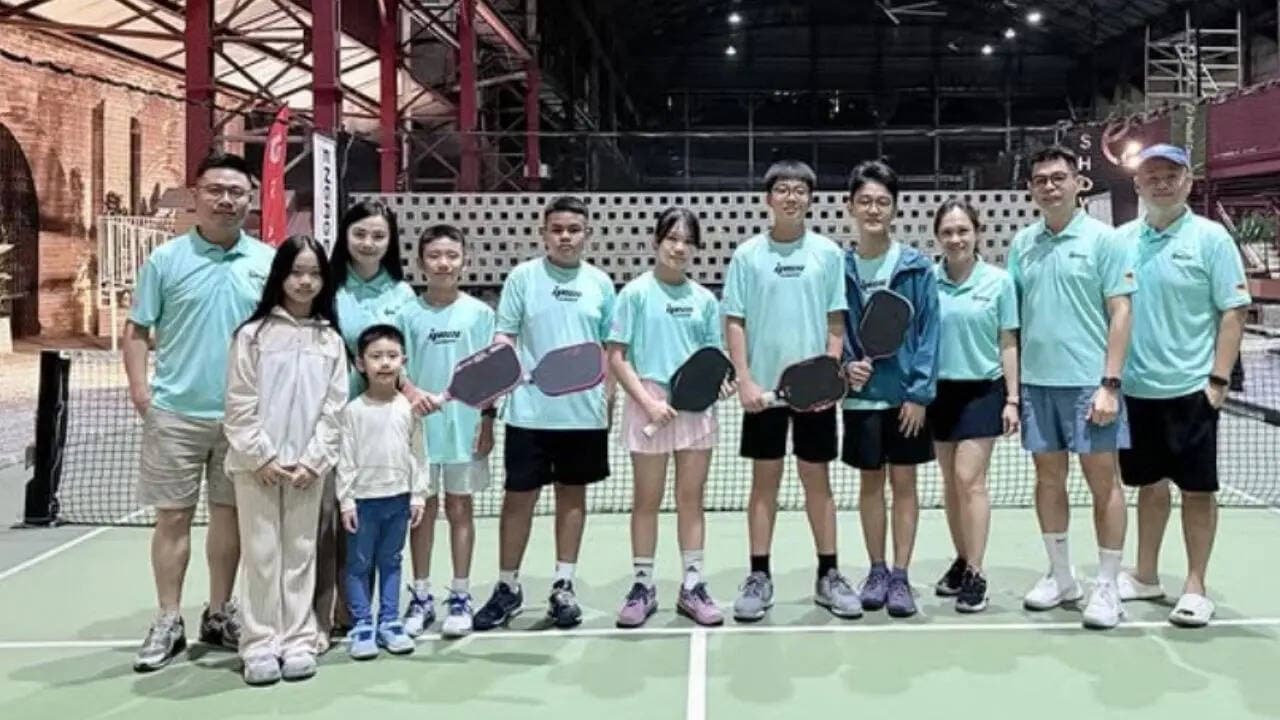
Sibu is not waiting for pickleball to go big before it gets serious. The town is trying to build the sport the hard way, one school club, one public court and one coaching pathway at a time, and that is exactly why it matters. In a country where Malaysia Pickleball Association says the sport already has more than 400,000 players, 73 tournaments, 472-plus venues and 500-plus certified coaches, Sibu is aiming to be more than a footnote in a boom. It wants to be the place that proves a second-tier city can become a real development engine before a major commercial circuit arrives.
The school pipeline is the foundation
The clearest sign that Sibu’s push is structural, not cosmetic, came when the Sarawak Education Department approved pickleball clubs in secondary schools across Sibu on December 12, 2024. That approval mattered because it gave the sport a formal route into the education system, where participation can be measured, coached and repeated rather than left to chance. Students who join the clubs can receive co-curricular activity points, which gives the sport immediate value inside school life instead of treating it as a side hobby.
The rollout was already moving fast by December 19, 2024, when 10 secondary schools in Sibu were set to establish clubs. By May 2025, Sibu Pickleball Association had expanded that footprint to 11 schools in the district: SMK Methodist, SMK Sacred Heart, SMK Bukit Assek, SMK St Elizabeth, SMK Tung Hua, SMK Deshon, SMK Sungai Merah, SMK Bandar Sibu, Catholic High School, SM Wong Nai Siong and Woodlands International School. That is what a real pipeline looks like, because it reaches across different school types and gives the sport a broader base than one academy or one private club ever could.
The selling point is not mystery. Sibu Pickleball Association has described the game as easy to learn and accessible, and school officials and students responded positively enough to turn that into a practical expansion. In a sport that often grows fastest when the barrier to entry is low, that accessibility is not a footnote. It is the whole business model.
Courts come next, but they are only half the story
If the school program is the engine, the Bukit Lima project is the hardware. In May 2025, RM3.05 million was allocated under the Rural Transformation Programme for phase one of the Bukit Lima Sports Arena, with 10 indoor pickleball courts planned and another RM2 million set aside for phase two beginning in 2026. By May 2026, the project had been reframed as the Bukit Lima Pickleball Arena, a two-storey complex with eight courts, backed by Sibu Municipal Council and Sarawak Sports Corporation, and supported by RM5.8 million in RTP funding for phase one construction.
That evolution tells you something important: Sibu is not just pouring concrete and hoping demand appears later. It is building a facility plan around the actual shape of participation, then adjusting the venue vision as the ecosystem matures. In a new sport, that flexibility is a strength. The point is not to chase the biggest possible arena headline. The point is to create a usable home base where school players, community groups and future junior representatives can all train in the same system.
This is also where the city’s broader sports ambitions come into focus. The long-term aim is not just more play; it is to embed pickleball into the region’s sporting culture, the same way established Malaysian sports grew through repeated access and public investment. That is why the infrastructure story matters so much. Courts without a pipeline are empty shells. Courts with school clubs, coaching and a competition calendar can become a real development ladder.
Community backing is turning the model into something bigger than government policy
Sibu’s push is not being carried only by public funding. Community groups have already stepped in, which is usually the detail that separates a serious sports ecosystem from a flashy pilot. Catholic High School Alumni Association has built three courts, while Sibu Methodist Schools Alumni Association planned three courts at SMK Methodist. That kind of support matters because it signals that pickleball is being absorbed into local identity, not simply imported from outside.
Joseph Chieng Jin Ek, the Bukit Assek assemblyman and Sibu Pickleball Association president, has framed the sport as a youth-development project and a long-term ecosystem build. That framing is the right one. A sport becomes durable when local political leaders, school administrators, alumni groups and sports bodies all have a reason to keep it alive after the first wave of enthusiasm fades.
The annual competition structure makes that clearer. Sibu Pickleball Association organized the 2025 Sibu Division Inter-Secondary Schools Pickleball Championship, believed to be the first of its kind in Malaysia, and it drew 16 teams from 13 secondary schools. That is not just a tournament result. It is evidence that the school pipeline is already producing competition, which is the real test of whether a sport has moved beyond introduction and into habit.
The plan for the Sibu Inter-Secondary School Pickleball Competition is even more consequential because it is meant to be annual and linked to identifying potential junior players for future Sukan Sarawak and Sukan Malaysia teams. That gives the system a finish line. Students are not only playing for school pride; they can see a route into provincial and national-age competition.
Can other Asian cities copy Sibu? Yes, but only if they copy the order
The temptation is to treat Sibu as a simple expansion story, but the useful lesson is more specific. Second-tier cities across Asia can borrow this model only if they build in the right sequence: school entry first, public backing second, courts third, competition fourth, coaching throughout. Skip the order, and you get a court with no players. Get the order right, and you create a civic sports project that can last.
That is why Sibu stands out inside Malaysia’s wider pickleball surge. The country’s governing body says it is promoting and regulating the sport nationally, but Sibu shows how the growth actually happens on the ground. It starts with a department approval on December 12, 2024, becomes a school movement by December 19, expands to 11 schools by May 2025, adds dedicated infrastructure through Bukit Lima, and ends up with a championship that feeds future state and national pathways.
The larger prize is even bigger than one town. If Sibu keeps building this way, it can become the template for how pickleball takes root in Asian cities that are not megacities but are ambitious enough to shape their own sporting future. That is how a niche sport stops looking imported and starts looking local.
This article was produced by Prism’s automated news system from verified source data, official records, and press releases, then run through automated quality and moderation checks before publishing. The system is built and supervised by the people who set the standards it runs under. Read our full AI policy.
Did this article answer your question?