World Pickleball Magazine Charts Asia's Shift From Growth to Structural Maturity
Asia's pickleball scene is graduating from viral growth to structural industry, and World Pickleball Magazine's April 2026 edition maps the precise standards that will define the next phase.

Participation numbers told one story; the April 2026 edition of World Pickleball Magazine tells another. The issue reframes pickleball's current chapter as a transition from explosive expansion to structural maturity, and for anyone following the Asian scene, that editorial shift carries real operational weight. The magazine brings together feature analysis, long-form reporting, and policy-focused pieces that examine governance, league development, youth pathways, and the commercial architecture behind multi-city professional tours. What emerges is a blueprint connecting regional tournament activity to global ecosystem-level shifts, relevant from Hanoi's court lines to the boardrooms of national federations across the region.
From Ad-Hoc Events to Tiered Competitive Calendars
The most consequential structural shift the magazine documents is the movement away from standalone mall showcases and ad-hoc open days toward integrated, tiered competitive calendars. Across Asia's fastest-growing markets, that means building a progression from DUPR- and UTR-rated grassroots events at the base, through regional qualifiers, and up to continental PPA, APP, and MLP stops at the summit. The PPA Tour Asia's 2026 season illustrates the model in practice: the tour launched with the MB Hanoi Cup at My Dinh Indoor Athletics Arena from April 1-5, drawing nearly 800 registered players and carrying prize money of up to USD $300,000. Subsequent stops span Kuala Lumpur, Macao, Ho Chi Minh City, China, Japan, Singapore, and Hong Kong through October, forming a coherent seasonal arc rather than a series of disconnected events.
For Asian clubs and tournament directors, the actionable takeaway is clear: a DUPR-rated local event is not just a community activity, it is the entry point of a pipeline. Building that pipeline credibly means designing formats, schedules, and officiating standards that allow players to progress upward without reinventing their game at each rung.
Venue and Operational Standards
The reporting dedicates significant attention to what tiered competition actually demands on the ground. Venue upgrades top the list: courts built to international specification, adequate lighting for broadcast quality, and spectator infrastructure that can accommodate both ticketed audiences and streaming coverage. Equally critical are referee and officiating standards, with the magazine examining how organizing bodies are developing line-judge training programs and enforcing consistent call-making across multi-court venues.
Anti-doping education receives pointed coverage as well. As Asian events attract professional prize money and ranking points, the responsibility of national federations to comply with WADA-aligned testing protocols and athlete education programs increases proportionally. For federations in early development stages, this is precisely the kind of structural investment that separates a credible national body from a club association operating at scale. Equipment supply chains also feature in the analysis: professional-grade paddles and approved balls are increasingly being brought into regional markets through partnerships between tour organizers and manufacturers, which matters both for competitive integrity and for the grassroots players who look to the pro scene for purchasing signals.
Prize-Money Stratification and Pro-Am Pathways
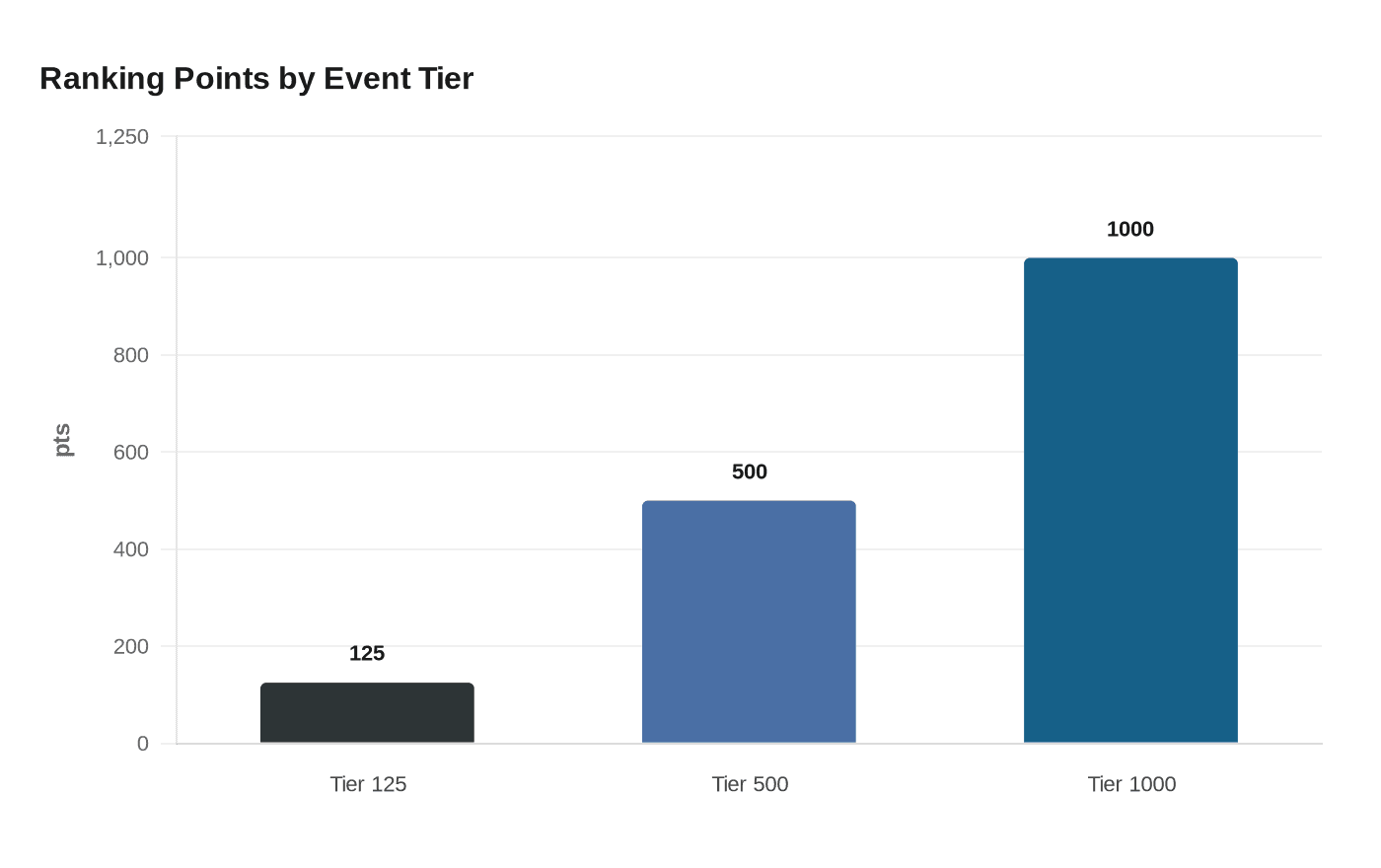
One of the issue's more technical but practically important sections examines how organizing bodies are designing prize-money tiers and pro-am pathways so regional professionals can accumulate ranking points and prize earnings without the event calendar becoming inaccessible to amateur participants. The magazine profiles the mechanics of "125," "500," and "1000" tier events, categories that specify the ranking points available at each level and directly influence which professionals will travel and compete.
For Asian stakeholders, this tier structure has two immediate implications. First, attracting a 1000-tier event to a city like Kuala Lumpur or Singapore requires the host federation or promoter to meet venue, officiating, and prize-fund standards that currently take deliberate preparation to achieve. Second, the pro-am pathway design at each tier level determines whether local amateur players can compete on the same weekend as international professionals, which is a major driver of registration revenue, community engagement, and media interest. The APP's 2026 global alliance framework, which coordinates more than 30 events under a single ranking table, is shaping how these tier mechanics operate at the international level, and Asian tour stops that feed into that ranking system carry added weight for regional professionals calculating their yearly schedules and travel investments.
Youth Development and Coach Certification
World Pickleball Magazine dedicates substantial space to youth and coaching pipelines, interviewing federation leaders and academy directors about the certification frameworks and junior competition structures being built across the sport. For Asia, where national policy, school sports programs, and club operators are often negotiating different priorities simultaneously, the magazine's coverage serves as a practical reference for anyone trying to scale youth participation without compromising athlete welfare.
The Asia Federation of Pickleball has already hosted PPR Level 1 coach certification sessions in Singapore, led by AFP-appointed coach developer Gary Tan, providing a regional model for how federations can systematize instructor quality. The International Pickleball Teaching Professional Association has run workshops in mainland China, including in Guangzhou and Shenzhen, pointing to demand for credentialed instruction beyond the regional hub cities. Japan's national federation has selected a U19 national team and enrolled players in the PCL Asia Rising Stars junior development program, which provides international competition experience and elite coaching exposure for young players across the continent. These programs are not isolated; the magazine frames them as components of a coherent coaching education ecosystem that national bodies need to build if they want to sustain competitive depth beyond the current generation of early adopters.
The actionable priority for Asian federations is establishing minimum certification requirements for coaches operating in school and club programs, creating the quality floor that makes junior competition safe, technically sound, and scalable.
Equipment for a Diverse Region
The April issue's equipment coverage is notable for its attention to how manufacturers are adapting product design to the realities of a globally diverse player base. Paddle shapes, core materials, and handle ergonomics are all being reconsidered for players who bring different physical builds, grip preferences, and climate conditions to the court. For Asian markets, where heat and humidity can affect ball bounce characteristics and grip texture, the specification of approved equipment lists by tour organizers carries practical consequences for both professionals and recreational buyers.
As manufacturers deepen their supply-chain presence in Asian markets through tour partnerships and regional distributorships, the approved equipment lists published by bodies like the PPA and APP effectively function as purchasing guides for emerging club operators and national federations sourcing gear for academies and competition play. Understanding which paddles carry tour sanction, and why, is increasingly part of the operational literacy required to run a credible competitive program.
Reading the Global Calendar from an Asian Perspective
The magazine's calendar roundup situates the Asian tour stops within the full global professional season, which matters because scheduling decisions made in North America and Europe directly affect which international professionals are available to compete in Asia, and when. The PPA Tour Asia's 2026 calendar was designed with that global context in mind, launching in April after the North American season establishes its rhythm, and building through Southeast Asia, China, and Japan before concluding in Hong Kong in October.
For players in the region, understanding the global calendar is increasingly relevant to competitive planning. Regional professionals who want to earn meaningful ranking points need to identify which tier-level events they can realistically attend, and whether an Asian stop will attract the international fields that make victories genuinely credible on a global ranking table. The magazine's reporting frames this as a two-way relationship: Asian events need international field depth to attract sponsor investment, and international professionals need accessible, well-organized Asian stops to justify the travel economics.
Building the Infrastructure That Outlasts the Boom
The broader argument running through the April 2026 issue is that the structural work happening now, governance frameworks, coach certification pipelines, tiered competition design, venue standards, and supply-chain development, will determine whether pickleball's Asian chapter produces a lasting competitive culture or remains a wave that crests without leaving durable institutions behind. The UPA Asia and YouGov research already confirms the scale of the opportunity: awareness figures reaching across 1.9 billion people, 60 percent year-over-year participation growth in 12 territories, and India alone contributing an estimated 178 million frequent players. What those numbers cannot guarantee is quality, consistency, or athlete development depth.
That is exactly what structural maturity is designed to address, and it is what this edition of World Pickleball Magazine equips Asian stakeholders to pursue with both ambition and precision.
This article was produced by Prism’s automated news system from verified source data, official records, and press releases, then run through automated quality and moderation checks before publishing. The system is built and supervised by the people who set the standards it runs under. Read our full AI policy.
Did this article answer your question?