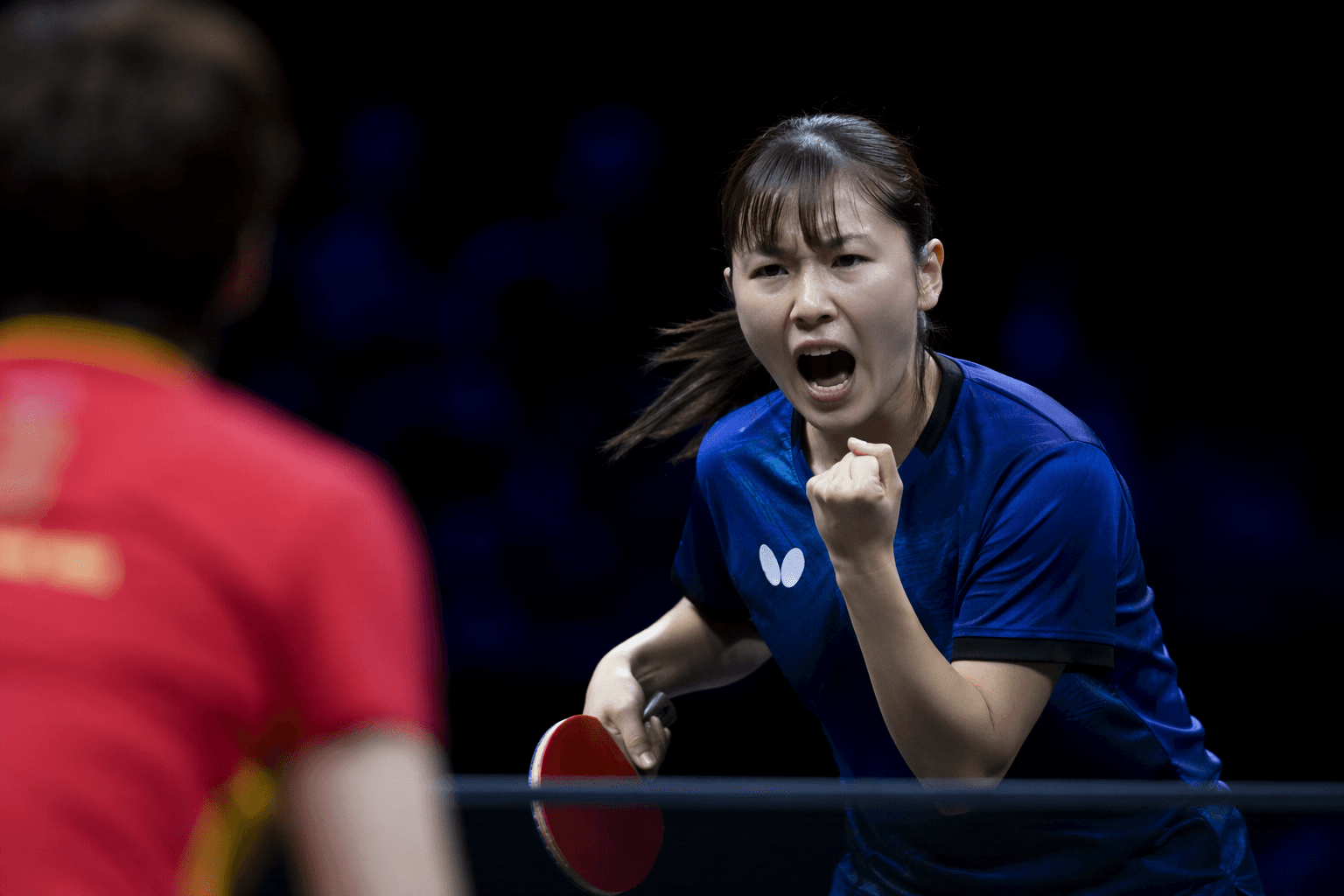
College table tennis nationals blend elite play, hobbyists, and community
Rockford showed college table tennis is more than a title chase. It is the sport’s cleanest U.S. pipeline, where elite play, hobbyists, and volunteers build the next generation together.
Rockford was not just hosting a tournament, it was showing the sport’s future
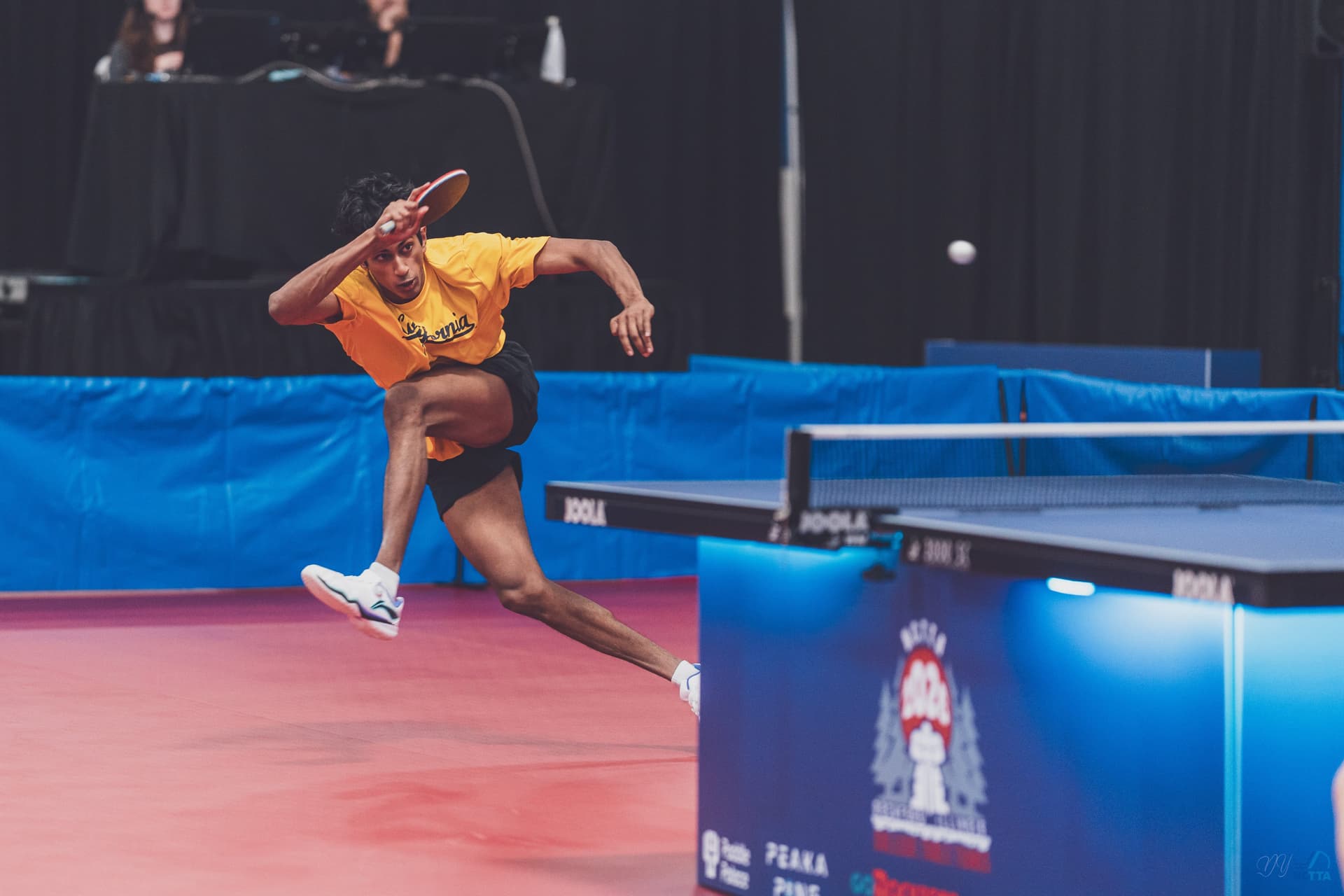
The biggest lesson from the College Table Tennis National Championships is not that Texas Wesleyan keeps winning or that Harvard can hang with anyone. It is that college table tennis may be the most important development pipeline the sport has in the United States, because it keeps producing players, coaches, volunteers, and fans from the same campus ecosystem. In Rockford, that pipeline was on full display: more than 250 athletes from over 50 schools turned the UW Health Sports Factory into a dense, loud, all-day tournament space, and none of it depended on prize money or ranking points.
That is what makes this event different from the usual championship story. The Nationals felt both improvised and serious, with 40 tables, live draw monitors, 3D-printed trophies, professional streaming setups, and 75 officials running the place out of a small command station. It looked like a real national stage, but it was powered by the kind of volunteer energy and alumni buy-in that most sports only dream about. For table tennis, that is not a gimmick. It is the model.
Why Rockford matters to the sport
The venue itself tells part of the story. The UW Health Sports Factory sits at 305 South Madison Street in Rockford, Illinois, on the site of the old Ingersoll factory, which gives the tournament a strangely fitting backdrop: a modern sport taking over a building with manufacturing bones. NCTTA has used Rockford before, including a 2013 championship, so the 2026 return was not random. It looked like a deliberate partnership between the city and a college circuit that knows how to turn a temporary venue into a full-blown home for the sport.
The National Collegiate Table Tennis Association says this championship is its premier event in North America, and the organization has the structure to back that up. It describes itself as a 501(c)(3) nonprofit, the national governing body for college table tennis in the United States and Canada, and a National Organization Member of USA Table Tennis since 2008. That matters because the event is not merely a student club meetup with trophies. It is the national funnel for a sport that is trying to grow from the ground up.
The field looked like a campus, not a pro tour
The numbers make the point even more clearly. NCTTA’s championship count says the 2026 event drew 248 student-athletes, 22 coaches, 49 colleges and universities, 104 volunteers and staff, and participants from 23 countries. The field included 4 Canadian schools and 1 school from Puerto Rico, which gives the whole thing a broader North American identity than a typical U.S. college sports event. It also says 79% of the athletes were STEM majors and 73% were undergraduates, which is exactly the kind of detail that explains why the scene feels so different from the usual varsity pipeline.
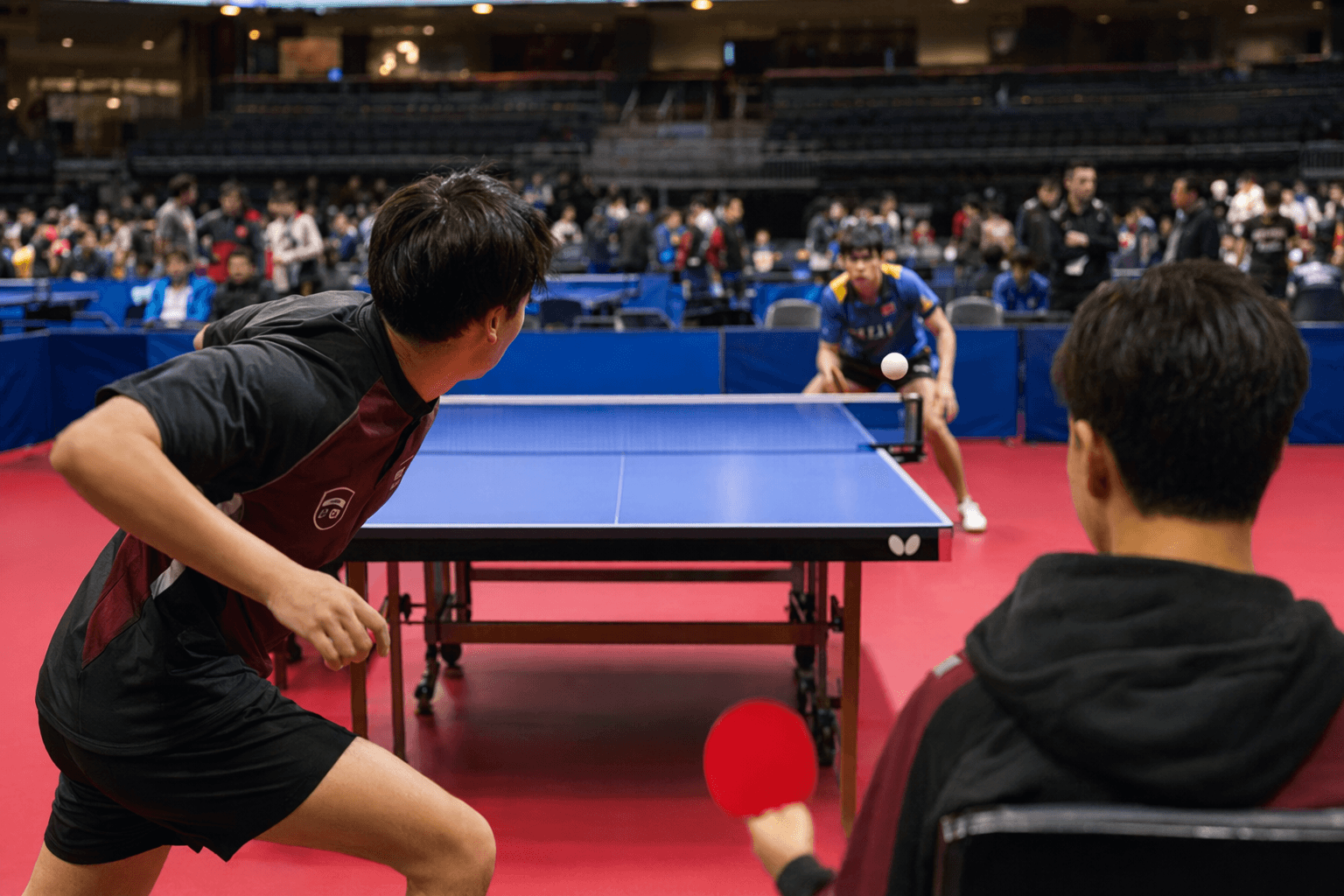
That mix is part of the attraction. Nationals brought together national-team caliber players, hobbyists, alumni, and relative beginners under the same roof, and the sport benefited from the collision. Some players were clearly there chasing a title, while others were there because college table tennis gives them a reason to keep playing after the casual club years are over. That is the hidden strength of the circuit: it does not just crown champions. It keeps people in the sport long enough for them to become coaches, organizers, and institutional memory.
The event’s format shows how broad the game has become
The championships stretched across seven disciplines: men’s singles, women’s singles, men’s doubles, women’s doubles, coed teams, women’s teams, and Collegiate Peakapong singles. That spread tells you the event is no longer built around just one clean bracket and a weekend of one-off matches. It is trying to serve different levels of commitment and different styles of play inside the same championship framework.
The qualification structure is equally important. NCTTA says singles and team spots come through league play and one of six regional championships, with the 2026 regions listed as South, Great Lakes, Midwest, Northeast, Mid-Atlantic, and West. That makes Nationals the end point of a real season, not an open-entry invitational. In other words, the event works because college table tennis has a ladder. Players are not simply showing up to see who is best on the day. They are coming through a system that rewards commitment, travel, team structure, and regional depth.
PeakaPong is the clearest example of the sport experimenting without losing its identity
The new hardbat format, PeakaPong, could have been a throwaway sideshow. Instead, NCTTA gave it a proper championship frame. The 2026 edition was the first true championship after a 2025 debut, and the format was tightened into a 32-player maximum with round-robin groups feeding a knockout bracket, short games, no deuces, and alternating serves. When the qualifier response came up light, on-site registration was allowed, which is exactly the kind of practical adjustment that keeps a new discipline from feeling artificially precious.
That structure matters because it shows college table tennis is willing to experiment while still building a ladder. PeakaPong was not just spectacle for spectacle’s sake. It had a championship path, a defined rule set, and even a custom winner’s blade called Stein’s Blade, named for Jack Steinberg. That is the sort of detail that gives a new format identity, and identity is how niche sports become sticky.

The finals delivered the kind of pressure that turns a tournament into a story
The on-table action backed up the atmosphere. Both the women’s and men’s singles finals went to a deciding seventh game, the kind of finish that makes a hall feel electric even if you are only half paying attention. Harvard’s Kelly Yenn won women’s singles and also paired with Hannah Song to win women’s doubles. Yenn said after the event that she was grateful for her Harvard team and for the sport, and that the final tested her mentality, adaptability, and presence. That is the right kind of language for college table tennis, because the level is high enough that the mental game really does decide titles.
The team events also reinforced the sport’s hierarchy and its mobility. UCLA beat NYU 3-2 to take the women’s team title, while Texas Wesleyan beat UC Berkeley 3-1 for its 16th coed team title. Texas Wesleyan’s continued dominance gives the circuit a dynasty, but UCLA, Harvard, NYU, and Berkeley all showed that the upper tier is not closed off. That tension between established power and upward movement is exactly what keeps a championship from feeling stale.
What Rockford says about the sport’s growth model
This is the larger takeaway: college table tennis is growing through community energy, not commercial scale. The championship had sponsors like PongSpace, PeakaPong, Major League Table Tennis, Nittaku, and Paddle Palace, but the real engine was the volunteer layer and the campus network around it. NCTTA’s own material says many volunteers are former athletes who come back to give something to the event that shaped them, and that explains why the hall can feel both organized and improvised at the same time.
That is the missed opportunity, too. If college table tennis can create this much identity, depth, and spectacle without NCAA backing, it is showing the sport a path that deserves more institutional support. The model is already there: regional qualification, championship branding, volunteer-led operations, mixed experience levels, and a social culture that keeps people around long after their playing peak. Rockford made the case that table tennis does not need to be rescued by a giant bureaucracy to look serious. It needs recognition for the system it has already built, because this is where the next players, coaches, and organizers are coming from.
This article was produced by Prism’s automated news system from verified source data, official records, and press releases, then run through automated quality and moderation checks before publishing. The system is built and supervised by the people who set the standards it runs under. Read our full AI policy.
Did this article answer your question?