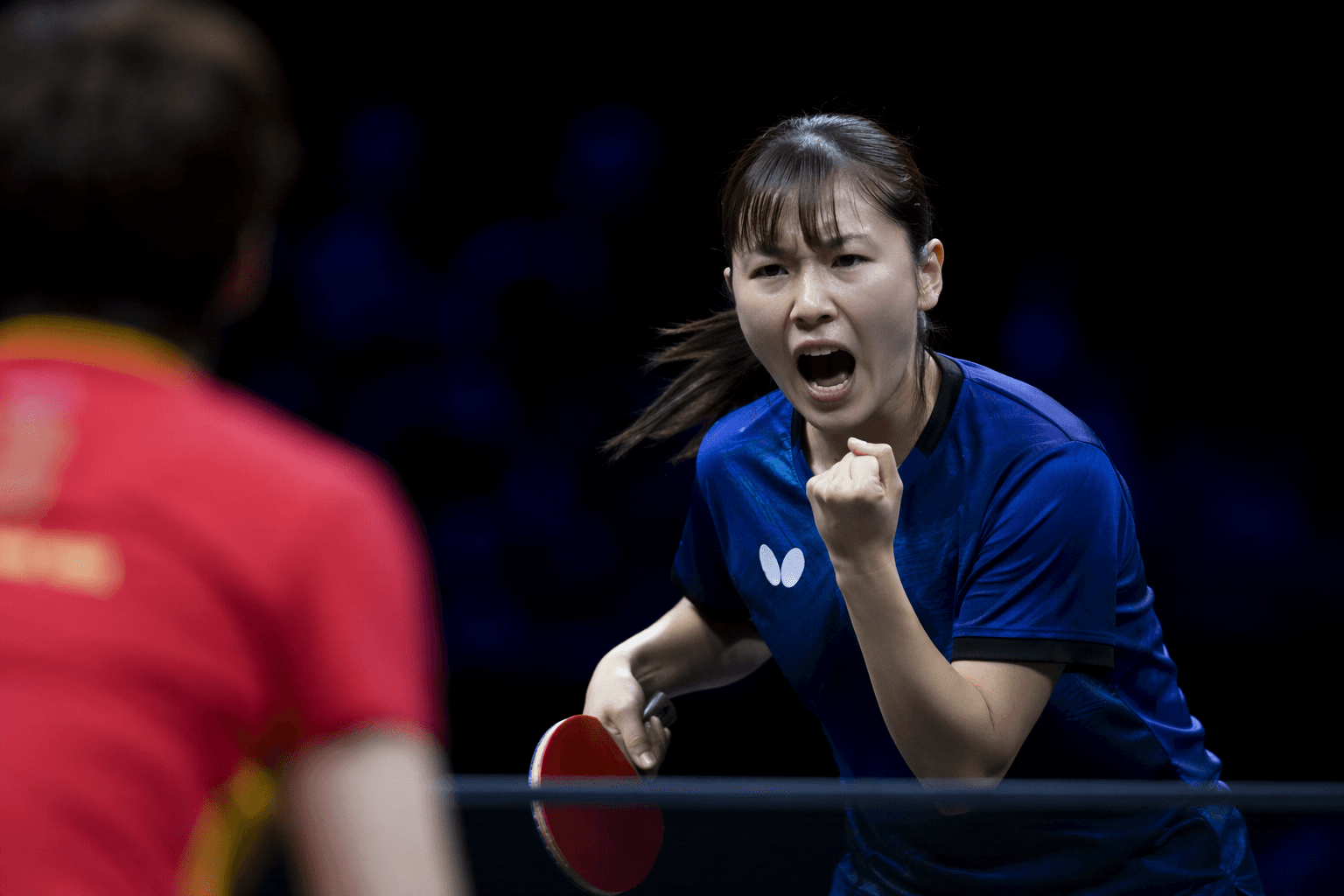
How ping pong’s standard equipment and scoring rules work
Equipment standards and scoring rules are the sport’s hidden engine: they shrink the game into a precision test, tame the serve, and reward placement over chaos.

The official setup is fixed to a 9-foot-by-5-foot table, a net 6 inches high, a 40mm+ plastic ball, and a racket with one black side and one other approved color, which means elite matches unfold in the same tight physical corridor from club gyms to the Olympic stage. The ITTF’s current rulebook lives in the 2025 Statutes, with a 2026 release also posted, and the federation now counts 227 member associations worldwide.
The box the game lives in
A 9-by-5 table leaves almost no dead space, so depth, angle, and recovery footwork matter on every exchange, while the 6-inch net keeps the margin for error brutally small. Because the ball is standardized and the racket face must show contrasting colors, the sport stays legally customizable but visually and physically consistent, which is why the best players can transfer their game across events without a different bounce, a different court, or a different kind of contact.
A racket must have one black side and one other approved color, preserving readability while allowing players to build equipment around forehand and backhand identities, rubber choices, and spin preferences.
Scoring is built for pressure, not marathon survival
Games go to 11 points, players serve two serves each, and at 10-10 the serve flips every point while a player still has to win by two. That structure compresses momentum, so a bad three-point stretch can tilt a game before a player has time to settle into rhythm, and it makes every serve sequence matter far more than the old-school casual image of endless back-and-forth padding. In competition, matches are commonly best of 5 or best of 7, so the scoring system forces repeated bursts of pressure instead of one long, grinding test.
With only two serves before the turn changes, elite players are always balancing risk and control, because a missed opening pattern is not just a lost point, it is a lost window. The result is a game that rewards fast problem-solving, serve return quality, and the ability to swing a game inside a handful of points rather than after a long, slow accumulation.
The serve is where the sport drew the line
Service rules are the clearest example of table tennis choosing visibility over trickery. The ball must be tossed at least 16 cm, nearly straight up, from a flat palm, the contact must happen behind the table surface, the server cannot hide the ball with the body, and if the ball clips the net and lands correctly it is a let and the point is replayed. Those details force the opponent to actually see the ball, which is why the modern serve is less about concealment and more about disguise through spin, angle, and contact quality.
That was not always the case. Finger spin was universally banned in 1937 after experts reached the point where the serve became nearly untakable, and the ITTF’s 2001 rule changes made hidden serves illegal while switching the game to 11-point scoring.
Why elite ping pong looks so different from rec play
Top-level table tennis is not defined by raw chaos, it is defined by controlled trajectory. The real toolkit is changing speed, direction, spin, pace, and using drop shots when an opponent is out of position, and the current rule set makes those choices more valuable because the ball cannot be hidden and the scoring system punishes hesitation. The game becomes a contest of who can read the first half-second of flight, then answer with a better line, a better spin load, or a better recovery step.
Table tennis made its full Olympic debut in Seoul in 1988, and the official Olympic results archive preserves that first medal-era footprint; the ITTF’s own statutes place the sport inside a global structure that governs major championships across the calendar.
This article was produced by Prism’s automated news system from verified source data, official records, and press releases, then run through automated quality and moderation checks before publishing. The system is built and supervised by the people who set the standards it runs under. Read our full AI policy.
Did this article answer your question?