How the Swaythling and Corbillon Cups shaped table tennis glory
China’s sweep in London 2026 showed why the Swaythling and Corbillon Cups still define table tennis legitimacy, not just history.
The Swaythling and Corbillon Cups are more than silverware. In table tennis, they are the trophies that decide which nation owns team glory, which program sets the standard, and which dynasty becomes part of the sport’s memory. That is why the ITTF calls the World Team Table Tennis Championships Finals the sport’s premier team event, and why London 2026 felt bigger than another title defense.
Why these trophies still carry real weight
The power of these cups is that they are not personal prizes. The Swaythling Cup and Corbillon Cup are held by the winning association and returned for the next championships, so every victory becomes a temporary possession and a public claim to legitimacy. That makes the team event different from singles, where medals stay with the player and the result lives mostly in the rankings and the record books.
That structure gives the championships a clear cultural charge. One nation does not just beat another in a final, it takes custody of a symbol that links the next generation to the last. In modern table tennis, that is what turns a final into more than a match: it is an argument over heritage, authority, and who gets to define the era.
The Swaythling Cup and the men’s team game
The Swaythling Cup begins with Lady Baroness Swaythling, who donated the trophy in 1926. Her son, Ivor Montagu, became the first president of the International Table Tennis Federation, and the cup was first presented at the inaugural World Table Tennis Championships in London that same year. Hungary became the first winner, and it later built a remarkable record with 11 titles.
From there, the men’s team story shifted across continents. China now leads the all-time men’s team table with 22 victories, a figure that captures the sport’s movement from its European roots to modern Asian dominance. The ITTF says the Swaythling Cup has been lifted by every men’s team champion since the first tournament, and only eight teams have ever held it, which makes every new champion part of an unusually exclusive club.
That rarity matters because the trophy is not simply a marker of one successful week. It is a line of succession stretching back to 1926, with each champion inheriting the burden of the next challenge. In a sport where depth of squad and pressure management decide so much, the Swaythling Cup has become the most visible proof that a men’s national program can sustain excellence across generations.
The Corbillon Cup and the women’s team legacy
The Corbillon Cup carries a similar prestige, but its backstory adds another layer. Marcel Corbillon, then president of the French Table Tennis Association, donated the trophy in 1933, and it was first awarded in 1934 when the women’s team event was added to the World Team Championships. Germany was the first recipient, giving the women’s competition an immediate place alongside the men’s title race.

The cup’s physical history is as striking as its competitive one. The original trophy was lost during the Second World War, and the German Table Tennis Federation commissioned an exact replacement in 1949. That replica has been awarded ever since, which means the object lifted today is not the original artifact, but it still carries the same competitive meaning and the same chain of champions.
China now leads the women’s team list with 22 titles, while Japan sits second with eight. Those numbers do more than summarize dominance, they show how the women’s team event has become one of the clearest measures of program strength in the sport. The Corbillon Cup is not a side story to the men’s trophy; it is the women’s equivalent lens for reading international table tennis power.
Why team table tennis creates a different kind of pressure
The reason these cups endure is that they measure something singles titles cannot. National teams must combine individual quality, tactical flexibility, and emotional control under the pressure of representing an association rather than a single athlete. When the final is tight, every matchup becomes a statement about roster depth, coaching decisions, and the health of a country’s development pipeline.
That is also why the cups resonate so strongly with fans who follow the sport closely. They do not just reward a star player in a single breakout run, they expose the strength of a national system. A team that can repeatedly win the Swaythling or Corbillon Cup is not just producing talent, it is building continuity, and continuity is what table tennis has always rewarded at the top.
London 2026 turned heritage into a live storyline
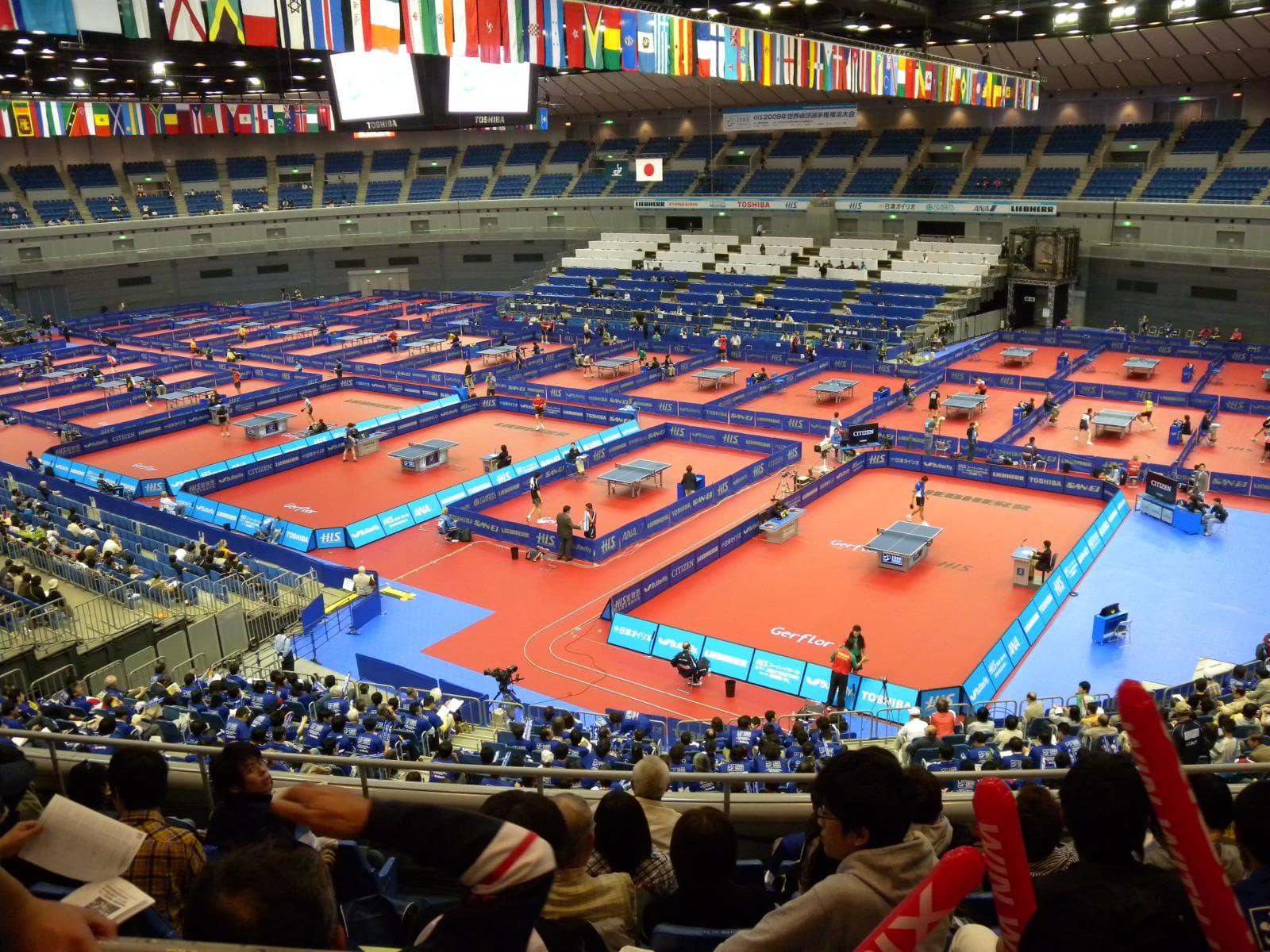
London 2026 gave both trophies the setting that best explained their meaning. The ITTF framed the event as the centenary edition, staged in London one hundred years after the city hosted the first World Championships in 1926. Petra Sörling captured that return neatly: “From London to London, we have come full circle,” she said, noting that England had hosted the World Championships on seven occasions before this return.
The competitive stakes were just as sharp. China entered London 2026 as reigning champion on both the men’s and women’s sides, while teams from Europe and Asia tried to end that reign. On the final day, the trophies were presented by IOC President Kirsty Coventry, and China won both the Swaythling Cup and Corbillon Cup again, extending the modern dominance that already defined the draws.
That sweep mattered because it tied the sport’s past to its present in one place. The same city that staged the first World Championships also witnessed a contemporary power reaffirming its grip on the game’s two most coveted team prizes. In table tennis, that is what legitimacy looks like now: a century-old trophy, a returning champion, and a title race that still carries the force of national identity.
This article was produced by Prism’s automated news system from verified source data, official records, and press releases, then run through automated quality and moderation checks before publishing. The system is built and supervised by the people who set the standards it runs under. Read our full AI policy.
Did this article answer your question?