ITTF spotlights football’s enduring love affair with table tennis
Football keeps giving table tennis a bigger stage, and the ITTF is using that overlap to show why the sport travels so well across dressing rooms, clubs and social feeds.
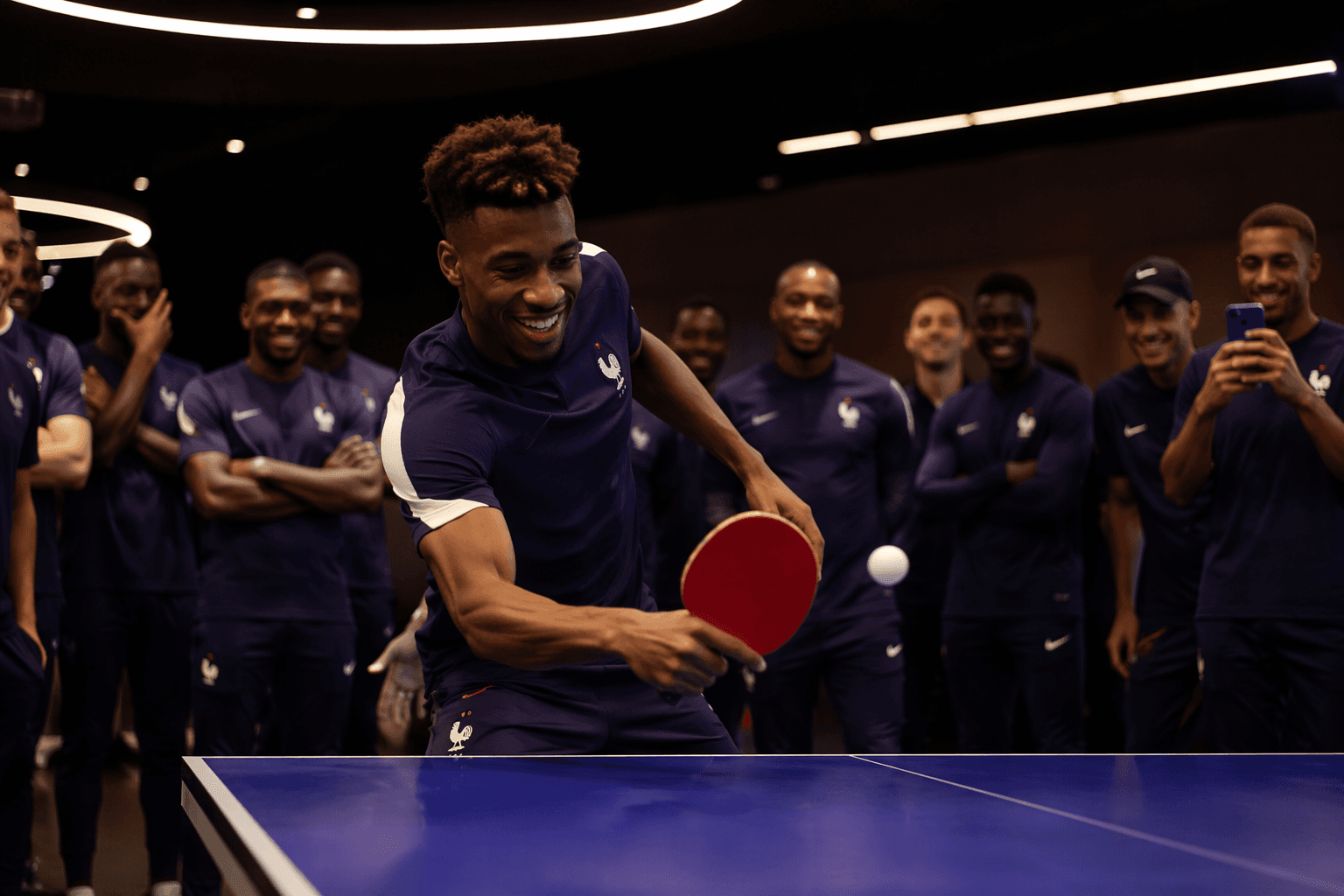
With football’s global spotlight shining at full strength, the ITTF has leaned into one of table tennis’s most reliable crossover stories: the smaller ball has always had a home in the football world. The federation framed it as a centenary-year reminder that few sporting relationships have been as natural, or as enduring, as the bond between table tennis and football.
Why the crossover keeps coming back
The image that sets the tone is a familiar one for anyone who follows both sports: Fan Zhendong and Zinédine Zidane sharing a rally in China. It works because it captures the entire appeal in a single frame, two elite competitors from different worlds meeting on equal ground, with skill, touch and timing doing the talking instead of size or reputation.
That visual helps explain why this connection never feels forced. Football has long produced players who pick up a racket for fun, recovery or competition, and the ITTF’s list of crossover names tells its own story. Diego Maradona, Eusébio, George Best and Abedi Pelé all belong to a long tradition of football stars who were drawn to the table.
The modern version is just as useful for the sport’s reach. Lamine Yamal and Nico Williams bring the story into the present, and Yamal in particular gives the ITTF a timely bridge to the current football cycle. FIFA says he is still only 18 and will turn 19 on July 13, 2026, which keeps him firmly in the conversation as one of Spain’s biggest hopes for the 2026 World Cup.
Why footballers and table tennis fit so well
The crossover is not just celebrity garnish. Table Tennis England says the sport can sharpen reflexes, speed, strategic thinking and active recovery for footballers, which explains why it keeps resurfacing in training environments and club culture. Those are exactly the qualities football coaches and players value when they look for low-cost, high-skill ways to stay sharp.
A 2020 systematic review in the medical literature reinforces that logic by describing table tennis as a reaction sport with substantial speed and biomechanical demands. In practice, that means the game asks athletes to process information quickly, react under pressure and repeat explosive movements, all while staying balanced and precise.
That overlap matters because it gives table tennis more than novelty value. When footballers are seen at the table, the sport is no longer just a side attraction or a locker-room diversion. It becomes proof that table tennis can serve as both a training tool and a test of competitive instincts.
Bayern Munich shows what institutional buy-in looks like
The strongest club example is FC Bayern Munich, which treats table tennis as part of the club’s sporting identity rather than an afterthought. Its table tennis section, FCBTT, was founded in 1946 and now has about 100 active players, with the club saying it has consistently been represented in the highest non-professional leagues.
That is a serious structure, not a ceremonial one. FC Bayern also maintains a children-and-youth table tennis academy, which gives the sport a pathway inside one of Europe’s most visible football brands. In other words, table tennis is not merely tolerated around the club, it is cultivated.
This is where the football-table tennis relationship becomes more than a social-media clip. Bayern’s setup shows how a major football institution can use table tennis to widen participation, deepen community ties and keep a second sport embedded in its own brand ecosystem. The result is a crossover that feels organic because it is built into the club’s daily life.
The exhibition model still has value
The ITTF’s feature also points back to moments when the crossover turned into live theater. A 2015 exhibition in Beijing brought together Thomas Müller and Philipp Lahm against Wang Hao and Ding Ning, a pairing that made the point instantly clear: football names can draw attention, but the table tennis stars still bring the level.
Those events matter because they create a shared spectacle that both fan bases can read. Football supporters see their stars in unfamiliar territory, while table tennis followers get a reminder that their game can generate the same kind of star power and attention as any major sport.
That balance is part of what makes the crossover so durable. It is not about football swallowing table tennis. It is about the two sports amplifying each other, with each side lending credibility, visibility and a different kind of audience energy.
Clubs are turning the connection into identity
Borussia Dortmund has taken that idea and turned it into branding. On August 10, 2025, the club announced that Timo Boll became a BVB brand ambassador, describing him as one of the greatest table-tennis players of all time and a lifelong Dortmund supporter. At 44, Boll brings both sporting stature and fan credibility, which is exactly the kind of combination clubs like to attach to their identity.
Dortmund followed that with another move on December 10, 2025, when it said Marco Reus would become a BVB ambassador. The club called him a Dortmund icon and club legend, and the appointment gave it another figure who connects football culture, local identity and broader sporting recognition.
Taken together, those choices show how football clubs increasingly use table tennis-linked personalities to broaden their storytelling. The appeal is not only that these names are recognizable. It is that they help clubs project continuity, community and a sense that their brand lives comfortably across more than one sport.
What the ITTF is really trying to do
The deeper message of the ITTF feature is that football’s visibility can help table tennis reach beyond its core audience without losing what makes the sport distinct. Inference: the federation is using football’s huge cultural footprint to reinforce table tennis’s relevance at a moment when broad, shareable storytelling matters as much as competition results.
That approach fits the rest of the ITTF’s 2026 calendar, which includes the Men’s and Women’s World Cup in Macao from March 30 to April 5, 2026. With a packed event year ahead, the federation has every reason to foreground narratives that travel easily across sports, countries and platforms.
Table tennis has always had more in common with football than casual observers may assume. The rhythm, reflexes and competitive instinct are different expressions of the same athletic language, and that is why the relationship keeps resurfacing. For the ITTF, that is not a novelty story. It is one of the sport’s most useful growth engines.
This article was produced by Prism’s automated news system from verified source data, official records, and press releases, then run through automated quality and moderation checks before publishing. The system is built and supervised by the people who set the standards it runs under. Read our full AI policy.
Know something we missed? Have a correction or additional information?
Submit a Tip