Ping pong rules explained, from table size to serve rotation
A 2.74-meter table and an 11-point race make every serve a pressure point, with the 16-centimeter toss often deciding the set.
Table tennis is won in margins so small they live inside the equipment sheet. A legal match is built around a 2.74-meter table, a 15.25-centimeter net, an 11-point game, and a serve that has to clear the laws before it can become a weapon. That is why elite coverage keeps circling back to spin, serve quality, and the first two shots after contact.
The table and gear that define the sport
The official table is 2.74 metres long, 1.525 metres wide, and 0.76 metres high, with a uniformly dark surface and white boundary lines. Those dimensions create a compact, high-speed battlefield where the difference between a safe rally ball and a point-ending angle can be a few centimetres, not a full swing of the arm.
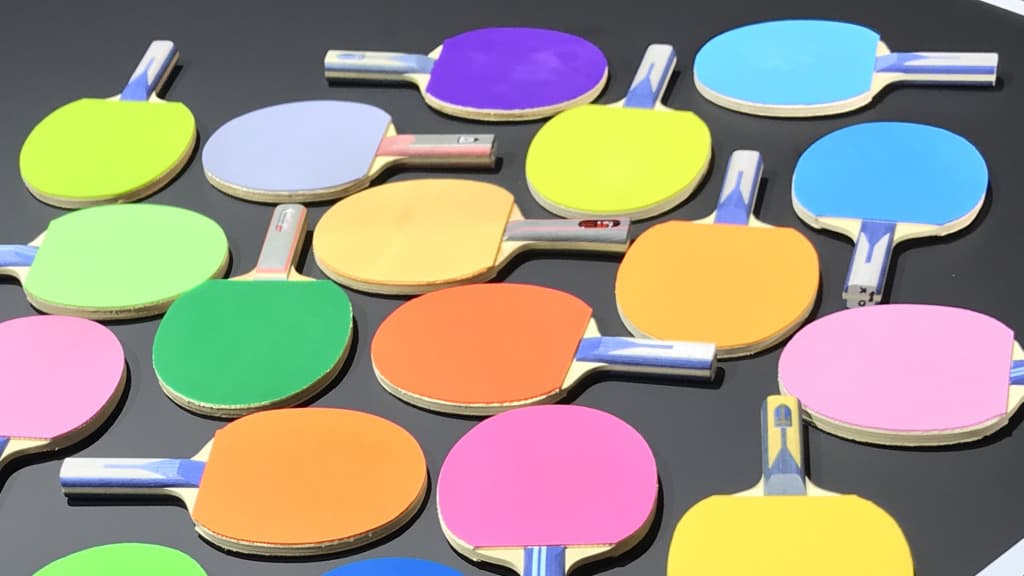
The ball is just 40 millimetres in diameter and about 2.7 grams, which makes it light enough to react sharply to spin but still heavy enough to reward clean contact. The plastic ball replaced the old celluloid ball on 1 July 2014, a shift that helped define the modern era of the sport. The racket usually measures about 17 by 15 centimetres, and the law requires one red side and one black side, a simple detail that matters because opponents and umpires need to know exactly what surface produced the spin.
That equipment control is not cosmetic. In official competition, a player’s racket can be tested randomly before each match, and opponents have the right to inspect each other’s rackets. In 2019, the ITTF listed more than 1,600 authorized rubber coverings, which tells you how much of elite table tennis lives in blade choice, rubber texture, and fine-tuned spin generation.
Why the scoring system creates constant momentum swings
Official games are played to 11 points and must be won by two, which is why table tennis rarely drifts. Most matches are best-of-5 or best-of-7 games, so a short run of points can turn a set, then a set can turn a match before a crowd has time to settle in.
Service alternates every two points in standard play, then every point once the score reaches 10-10. That change is huge in a sport where the serve is already the most controlled shot on the table. At deuce, no one gets a cushion, and every missed return or overcooked spin attempt can swing a game that has already gone edge-tight.
This is what makes tournament coverage so tense in the late stages. At 8-8 or 10-10, the score does not just measure progress, it shapes tactics, because players start protecting their preferred serve patterns, hunting a weaker receive, and trying to win the next two contacts rather than the next rally.

The serve is the sport’s first contest
The sequence begins with the coin toss, then the serve itself has to follow a strict chain of legality. The ball must be held on an open palm, tossed nearly vertically at least 16 centimetres, struck so it bounces first on the server’s side, then clears the net and lands on the receiver’s side. The server also cannot hide the contact from the receiver or the umpire, which is why body position and follow-through are so tightly watched.
In doubles, the serve adds another layer of precision: it must travel from the server’s right half-court to the receiver’s right half-court. That diagonal rule changes everything about placement, because the first bounce is no longer just about accuracy, it is about opening the correct lane for the third ball and preventing an immediate counterattack.
Those rules shape the tactical identity of the sport. Short serves, heavy spin, disguised contact, and third-ball attacks all come from the same premise: win the initiative on the first touch after the toss. The laws exist to keep that battle fair and visible, while still leaving room for the chess match between server and receiver.
From a 1926 federation to the Olympic stage
The organized era of table tennis starts in 1926, when the International Table Tennis Federation was founded. It now counts 227 member associations, a reminder that the sport has moved far beyond its early parlor-game image and into a fully standardized global structure.
The current rulebook lives in the 2025 ITTF Statutes, with 2026 versions also published on the statutes page. That matters because table tennis is one of the few sports where small equipment and service details can decide whole matches, so the official text is not background reading, it is part of the competition itself.
The international tournament framework also shows how established the sport has become. Table tennis made its Olympic debut at Seoul 1988, and the IOC’s history materials note that the program began with two men’s and two women’s events, a count that has remained unchanged. From London, where the first World Table Tennis Championships were staged, to Seoul’s Olympic arrival, the game’s rule set has stayed small enough to fit on a page and sharp enough to separate the best in the world.
This article was produced by Prism’s automated news system from verified source data, official records, and press releases, then run through automated quality and moderation checks before publishing. The system is built and supervised by the people who set the standards it runs under. Read our full AI policy.
Did this article answer your question?