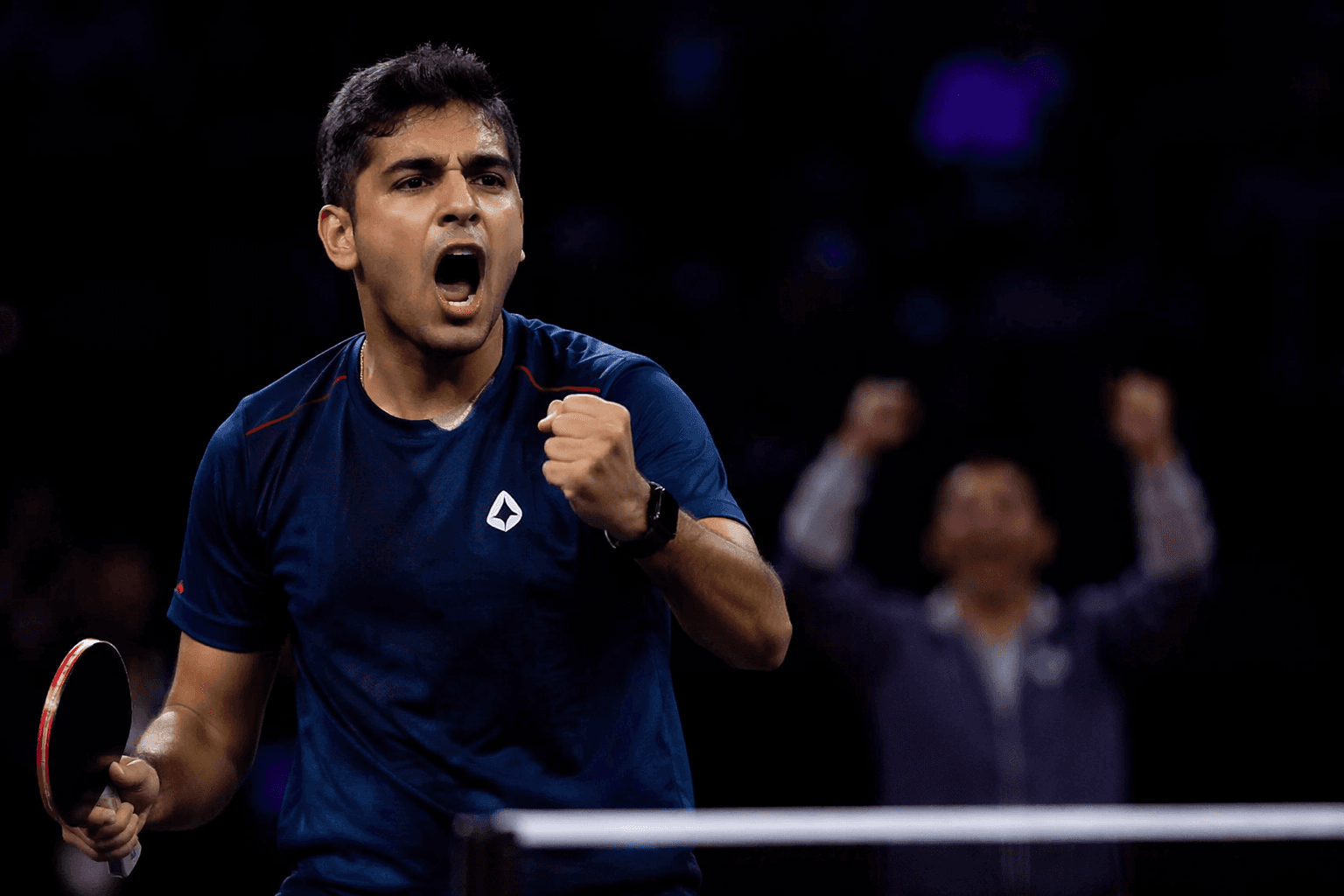
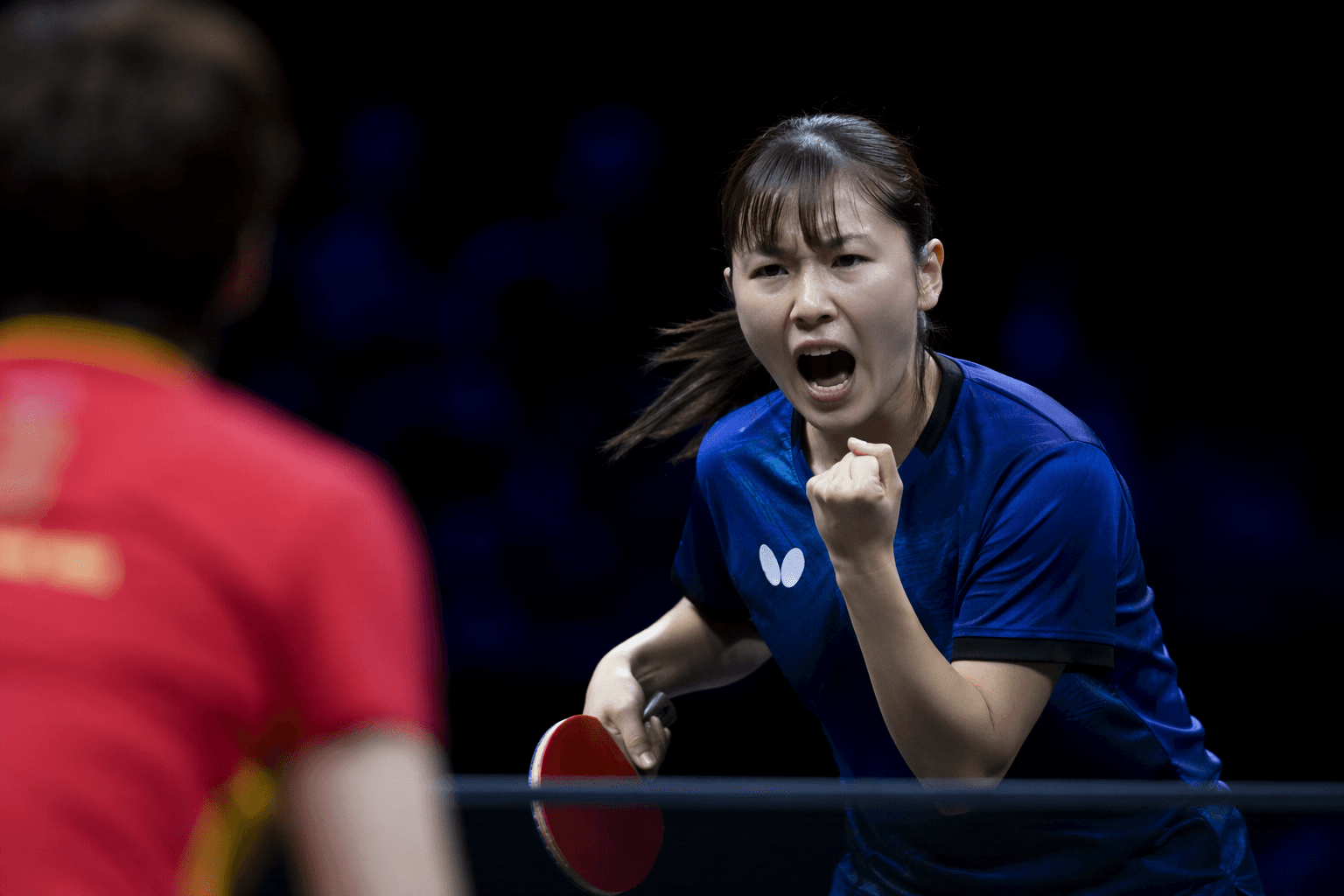
USA players featured across seven U.S. Smash matches on June 29
Seven American entries turned June 29 into a real pressure test, with Kanak Jha, Lily Zhang and the Naresh brothers carrying the clearest proof-of-progress stakes at the home Smash.

The seven U.S.-involved matches on June 29 made the home Smash feel less like a calendar stop and more like a referendum. With Americans spread across singles, mixed doubles and men’s doubles, the day asked one blunt question: can U.S. table tennis do more than show up on a Grand Smash stage and actually shape it?
A home Grand Smash built for bigger stakes
The event itself already carried unusual weight. The 2026 WTT U.S. Smash opened June 26 at the Ontario Convention Center in Southern California, one of only four WTT Smash events on the international calendar, with singles champions playing for 2,000 ITTF world ranking points and a total prize fund of USD 1,550,000. USA Table Tennis said 18 Americans were entered, which is enough to create real domestic visibility without turning the bracket into a local exhibition.
That is why June 29 mattered so much. The main draw had begun on June 28, so by the time this American-heavy card arrived, the event had already moved from anticipation to accountability. WTT’s coverage had already put Lily Zhang and Sally Moyland in the main-draw opener spotlight, a sign that the home contingent was not peripheral but woven into the central story of the tournament.
The singles tests that define U.S. credibility
Kanak Jha’s evening matchup against Japan’s 14th seed Shunsuke Togami is the most important American singles marker on the board. USA Table Tennis identified Jha as the country’s top-ranked men’s singles player at world No. 25, which makes every one of his matches a measurement of whether the United States can consistently place a man inside the game’s global second tier. If Jha can pressure a seeded Japanese opponent in a Grand Smash setting, it tells a wider audience that American men’s table tennis is no longer only chasing respectability.
Jishan Liang’s wildcard run against world No. 2 Tomokazu Harimoto sits in a different lane but carries the same national significance. Liang entered the event as one of the U.S. men’s singles wild cards, and the draw against one of the sport’s defining names is a brutal but revealing assignment. Even in defeat, a competitive showing against Harimoto would signal that the U.S. pipeline can produce players capable of surviving the speed and precision that define the WTT elite level.
Lily Zhang’s singles meeting with France’s Jia Nan Yuan matters for a similar reason on the women’s side. Zhang is one of the most recognizable American table tennis names, and she was also tied to the day’s doubles story, which makes her a pressure point for both visibility and performance. If the United States is trying to build a home audience around this event, Zhang is the kind of player who can connect the bracket to the crowd, because her matches feel like they belong on the biggest stage rather than being tucked into the margins.
Doubles chemistry is the real stress test
The day’s doubles slate may have been even more revealing than the singles, because it exposed how much of the American project is still built on pairings that are new or still forming. USA Table Tennis had already noted U.S. men’s doubles combinations such as Kanak Jha with Fei Xue, Nandan Naresh with Sid Naresh, and Jishan Liang with Bosman Botha, while the women’s side featured Sally Moyland with Lily Zhang and Jessica Reyes Lai with Amy Wang. In mixed doubles, Liang paired with Moyland and Nandan Naresh paired with Reyes Lai, a sign that the U.S. staff is trying multiple combinations rather than relying on a fixed core.
That matters because doubles on the WTT stage is as much about timing and trust as it is about pure shot quality. The Naresh brothers’ men’s doubles debut against Brazil’s Guilherme Teodoro and Leonardo Iizuka was a useful case study in whether sibling chemistry can become competitive structure. Their match against the Brazilian pair was not just another line in the schedule, it was a test of whether the United States can build homegrown partnerships that hold up under pressure against established international combinations.
Nandan Naresh’s mixed doubles meeting with Jessica Reyes Lai against Brazil’s second-seeded duo Hugo Calderano and Bruna Takahashi carried the same logic, only with a much higher ceiling on the opponent. Calderano and Takahashi are the kind of pair that can punish any hesitation in transition, which means the American side had to show real discipline in serve, receive and first-ball placement. For a U.S. pair still building chemistry, that is the exact kind of match that exposes whether the program is creating partnerships or simply assembling them.
What the early results already told us
The bracket had already started answering some of those questions before the June 29 card fully unfolded. WTT’s event pages showed that Sally Moyland and Lily Zhang had already fallen in women’s doubles Round of 32 to Jessica Reyes Lai and Amy Wang, while Nandan Naresh had lost his men’s singles Round of 64 match to Chen Yuanyu. Those results do not diminish the significance of the day, they sharpen it, because they show how thin the margin is between promising U.S. participation and real advancement at this level.
That is where the larger social and commercial meaning sits. A home Grand Smash only becomes a growth engine if the local players are visible enough to draw interest and strong enough to extend the event’s relevance beyond one-day novelty. Table 1 was available on ESPN+, while Tables 2 to 4 streamed on WTT’s YouTube channel, giving U.S. viewers multiple ways to follow the Americans as they tried to convert home soil into actual competitive leverage.
The wildcard picture added another layer of credibility. USA Table Tennis had already pointed out that Lilian Bardet, who reached the quarterfinals at Las Vegas Grand Smash 2025, returned for US Smash 2026, a reminder that this event is beginning to attract players with proven results in the U.S. market. Put together, the seven American matches on June 29 were not filler around the marquee names. They were the clearest evidence of whether the United States can turn a home Smash into a stage where its players belong, influence the draw and force the sport to take the country seriously.
This article was produced by Prism’s automated news system from verified source data, official records, and press releases, then run through automated quality and moderation checks before publishing. The system is built and supervised by the people who set the standards it runs under. Read our full AI policy.
Did this article answer your question?