British Roundnet sets clear path to Team GB for Paris World Championship
British Roundnet has mapped a direct route to Paris: a May 3 London selection event, named selectors and tight eligibility rules now define Team GB’s path.
British Roundnet has turned its 2026 Worlds selection into a proper performance pathway, not a loose invitation list. The April 10 document for men’s and women’s players seeking to represent Great Britain points to a London selection event on May 3 and names the committee that will shape the team, led by Elite Performance Manager Trevor Cook with Nicole Fatt, Sophie Cooke and Dave Rowlands.
A clear road from Britain to Paris
That matters because the destination is fixed and demanding: the 2026 World Championships run from September 2-6 at Parc du Tremblay in Champigny-sur-Marne, near Paris. British players are not just chasing a spot at a tournament, they are trying to earn one of the limited national places in a system that now has dates, decision-makers and eligibility rules attached to it.
For roundnet in Britain, that is a significant shift in tone. National identity has become part of the sport’s competitive fabric, and the selection paper gives the federation a public standard for who gets a jersey and why. In practice, it is designed to make the route to Team GB easier to follow, while also making it harder for anyone to argue that the process was improvised.
What the selection document changes for players
The strongest benefit of the new setup is clarity. Athletes now know the exact point at which the selection process is being tested, who is doing the assessing and which side of the calendar matters most, with Paris as the end point rather than the opening assumption. That helps ambitious players plan their season around a real target, instead of hoping form alone will be enough.
It also gives British Roundnet a defensible framework if there are arguments later over rankings, trial results or access to the room where decisions are made. The more formal the pathway becomes, the more the discussion shifts from informal reputation to evidence, performance and selection standards that can be explained in public. For the athletes who have been asking for a cleaner route into international contention, that is the value of the April 10 release.
British Roundnet’s wider governance language reinforces that same direction of travel. The organization describes itself as the national governing body for roundnet in Britain, and its about page says it governs the sport across England, Wales and Scotland. It also says its purpose is to champion the sport and increase engagement regardless of age or ability, while its development strategy runs through the end of 2026.
That structure is important because the selection process is not happening in a vacuum. British Roundnet is a registered charity, number 1207089, which underlines that this is more than a team announcement. It is part of a formal national-sport setup built to support participation, credibility and a clearer route from club level to international duty.
How the world stage shapes Britain’s choices
The international frame is just as important as the domestic one. The International Roundnet Federation has placed Worlds 2026 at Parc du Tremblay, a venue package that includes four synthetic turfs, one grass field, a spectator village and athlete facilities. That is a meaningful staging point for a sport still sharpening its elite identity, because the venue, schedule and format all signal that the tournament is now built like a serious multi-team championship.
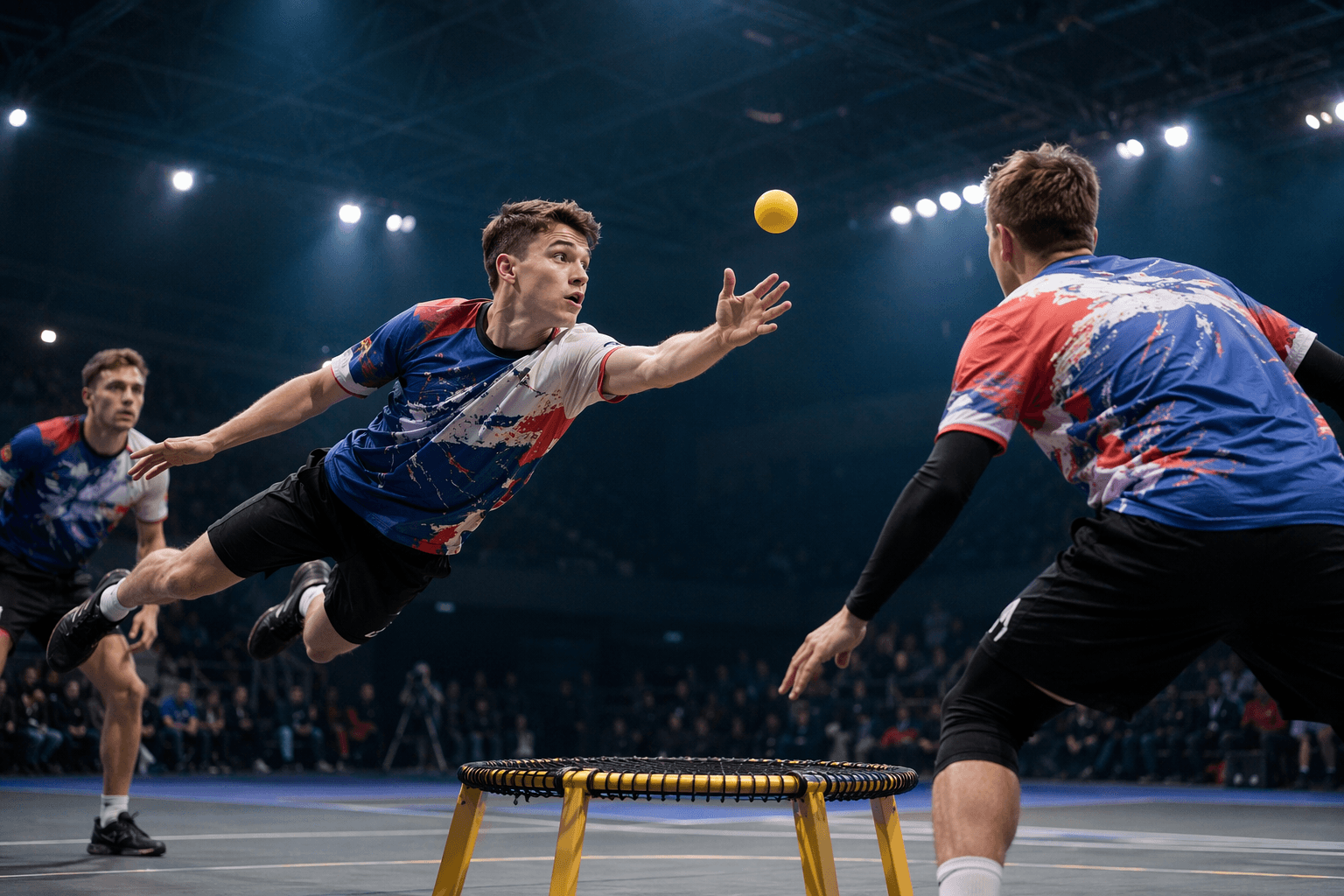
The field limits make every national selection choice more expensive. In the individual championships, each country may enter up to three men’s teams, three women’s teams and one mixed team. In the squad championship, the ceiling rises to six teams, with pool play and bracket stages in both formats.
Those limits matter because they narrow the margin for error. When a country can only send a handful of teams, selection is not just about naming the best-known players, it is about choosing the combinations most likely to survive the pool stage and convert that into bracket success. For Britain, that creates a premium on clarity: if the pathway is public and the standards are consistent, the federation can justify its choices before the tournament even begins.
Eligibility rules add another layer of pressure
The IRF’s eligibility rules make the national selection picture even more specific. Athletes must meet at least one nationality or residency requirement to compete for a national team at Worlds, and anyone who has represented another country at an international event within the last 36 months cannot switch nations for the championship. That means Britain’s selection is not only about form and trial performance, but about who is legally and structurally available to wear the shirt.
For players, that has immediate consequences. The cleanest route to contention is not just to turn up on the day in London, but to stay inside the rules that the world body has already set and to be eligible when the final team picture comes into focus. If the process is going to be judged on merit, then eligibility becomes part of merit because it decides who can even enter the final conversation.
The result is a system that feels more transparent, but not entirely free of debate. A committee-led selection can clarify standards, yet questions can still surface around how rankings are weighed, how trial performances are compared and whether a single London event gives the same practical access to athletes across England, Wales and Scotland. That tension is part of the story now: a national pathway can be clearer than before and still leave room for argument over how fairly opportunity is distributed.
What ambitious British players need to read into this cycle
The message from British Roundnet is straightforward enough. The pathway is open, the committee is named and the calendar is fixed, with the May 3 London event sitting inside a wider run-up to the September 2-6 Worlds in France. Players chasing Paris now have to treat selection as a process, not a hope.
That is the real stake of the 2026 document. It gives Britain’s best roundnet athletes a transparent route into Team GB, but it also puts pressure on the federation to make sure the route stays credible, consistent and accessible across the sport’s home nations. If British Roundnet can keep that balance, the Paris cycle will look like the moment the national program moved from ambition to structure.
This article was produced by Prism’s automated news system from verified source data, official records, and press releases, then run through automated quality and moderation checks before publishing. The system is built and supervised by the people who set the standards it runs under. Read our full AI policy.
Did this article answer your question?