How to watch roundnet, from serve to finishing spike
Roundnet looks chaotic until you track the serve, first contact and finishing spike. The three-touch rhythm is where control, spacing and momentum swing a rally.
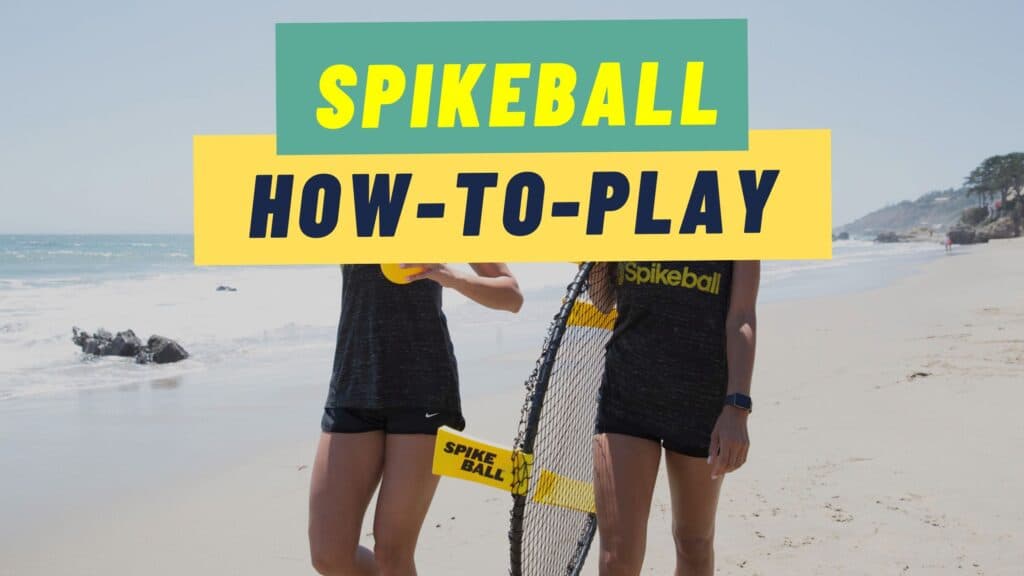
The point begins with the serve, but the real story is the race to organize the next two touches into a clean finish. If you can read the first contact, the set and the spike, you can read the whole rally.
Start with the serve
The serve is not just a way to put the ball in play. It sets the angle, pace and stress level for everything that follows, because the receiving team has only up to three alternating hits to send it back. In roundnet, that means the opening touch is an immediate test of control, and a sharp serve can turn the whole rally into a defensive recovery.
In roundnet, two teams of two players are positioned around a round net in the center. That setup matters because there is no fixed side-to-side court split to hide behind. The serve starts a compact, 360-degree problem, and the receiving team has to solve it fast.
Watch the first touch, not the scramble
If you only track one moment in a rally, make it the first defensive contact. A clean first touch gives the receiving side a chance to build offense; a shanked one usually hands control straight back to the serving team. That is why high-level roundnet often feels decided before the third hit is even available.
That touch carries extra weight for a reason. Roundnet is played in alternating contacts, so the first receive is not just a save. It is the opening decision in a three-touch sequence, and it often determines whether a team can slow the ball down enough to attack with structure.
Look for pass, set, spike
Once the first contact is stable, the rally should start to resemble a volleyball pattern: pass, set, spike. That sequence is the easiest way to separate organized play from emergency swings. A good pass gives the setter time to shape the ball, and a good set creates a hittable window for the finisher.
The third touch is where the point usually breaks open. A clean finishing spike is the payoff for the first two touches, but it only works if the team has used its touches to control the rebound and the angle. When the sequence is messy, you will see improvised pokes and rushed swings. When it is sharp, the attack looks deliberate, even at full speed.
The circle changes the geometry
Roundnet is not played across a fixed net line, and that changes how every point unfolds. Because the players move around a circular target rather than a court divided in half, positioning is fluid and the angles keep shifting. One good touch can open the entire circle for an attacker, while one bad touch can force a team into a chase.
That circular setup makes the sport fast-paced and turns space into a shared problem. Defenders are not just reacting to the ball, they are reacting to where the next angle might appear. For a viewer, the key is to watch the spacing after each touch. If a team has time and balance, the rally looks planned. If the spacing collapses, the point turns into survival mode.
Why the game feels faster than volleyball
Roundnet can look like volleyball compressed into a smaller, more chaotic package, and that is not far off. The ball can rebound unpredictably off the small circular net, so there is less margin for error and less time to reset. Still, the logic is the same: a team that handles the first contact well can build toward a clean attack.
You do not need to know every defensive trick or offensive wrinkle to enjoy it. You only need to see whether the receiving side keeps its three-hit structure intact and whether the attacking side can finish before the point breaks down.
From 1989 invention to organized competition
Roundnet.world dates the game’s invention to 1989. Chris Ruder founded Spikeball Inc. in 2008, and by 2014 the company had launched a competitive season.
By 2018, ESPN treated Spikeball as mainstream and pointed to SummerSpike at Coney Island as evidence of how far the sport had traveled from its casual roots. The International Roundnet Federation now sits alongside USA Roundnet and the Spikeball Roundnet Association as part of the sport’s governing and promotional structure.
Follow the structure, not the noise
USA Roundnet’s North American Tour Series and college roundnet pages reflect how much of the sport’s identity now lives in repeated competition, rankings and team development. The 2025 Baltimore event listing for the US Roundnet National Championship centered the national series on community and competition.
This article was produced by Prism’s automated news system from verified source data, official records, and press releases, then run through automated quality and moderation checks before publishing. The system is built and supervised by the people who set the standards it runs under. Read our full AI policy.
Did this article answer your question?