IRF seeding committee to shape fair Worlds bracket draw
The IRF picked its Worlds seeding committee and set a June 9-25 review window, putting bracket fairness at the center of the title chase.
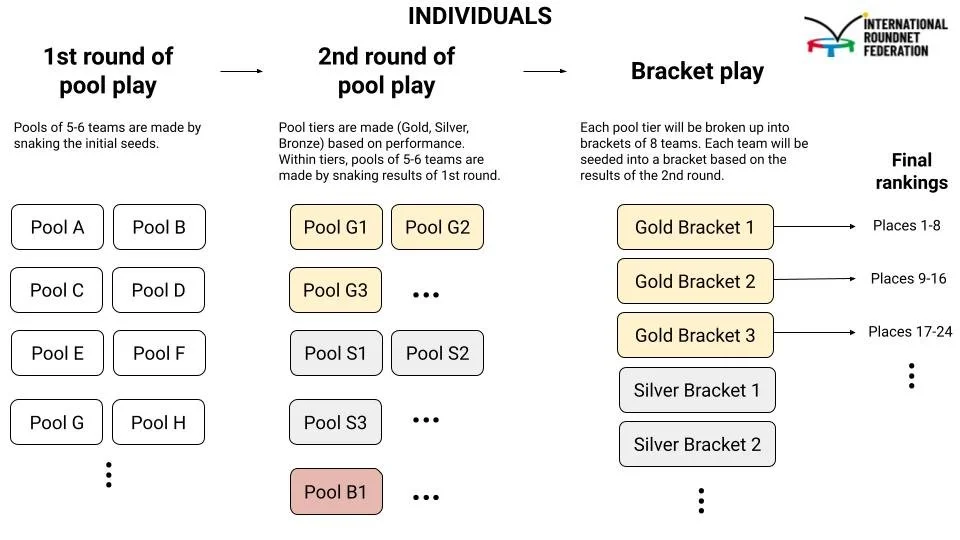
The International Roundnet Federation has selected its World Championship seeding committee and opened a June 9-25, 2026 review period, putting bracket placement under a formal process before Worlds. The federation said the group was meant to "establish and apply seeding rules to create a fair tournament for all participants."
That matters in a sport where the draw can redraw the title race before a team serves a single point. At the 2024 IRF Roundnet World Championships Powered by Spikeball, 34 countries gathered in Guildford, UK. British Roundnet later described 32 countries at Surrey Sports Park in Guildford for the second ever World Championships. With fields that large, seeding does more than sort names on a bracket sheet: it decides which contenders meet early, which teams get space to build momentum, and whether a strong nation is forced into a knockout path before the late rounds.

The IRF has already shown that Worlds planning is being handled as a full event structure, not just a date on the calendar. Alongside the seeding work, the federation published Worlds format and timeline updates, signaling that bracket design, schedule and competitive balance were being adjusted together. That is the right order of operations. In roundnet, where national programs enter Worlds through different domestic schedules and qualifying paths, the committee has to compare results across uneven systems and make the draw hold up under scrutiny.
The federation first broadened the picture when it said committee applications were open and that it hoped to launch five committees in the same year. That push frames seeding as part of a wider governance buildout. It is also an acknowledgment that Worlds needs more than a polished finals weekend. It needs a process that can explain why one team is placed opposite another, why a top seed lands where it does, and why the bracket should feel earned rather than assigned by convenience.
The review window gives the process an added layer of visibility. By announcing that the World Championship seeding committee had been selected and then building in a defined June 9-25 period for review, the IRF created a public checkpoint around one of the most sensitive decisions in the sport. For established contenders, that offers a clearer test of whether their results are being valued properly. For emerging nations, it offers a route to challenge placement that could otherwise look arbitrary.
This article was produced by Prism’s automated news system from verified source data, official records, and press releases, then run through automated quality and moderation checks before publishing. The system is built and supervised by the people who set the standards it runs under. Read our full AI policy.
Did this article answer your question?