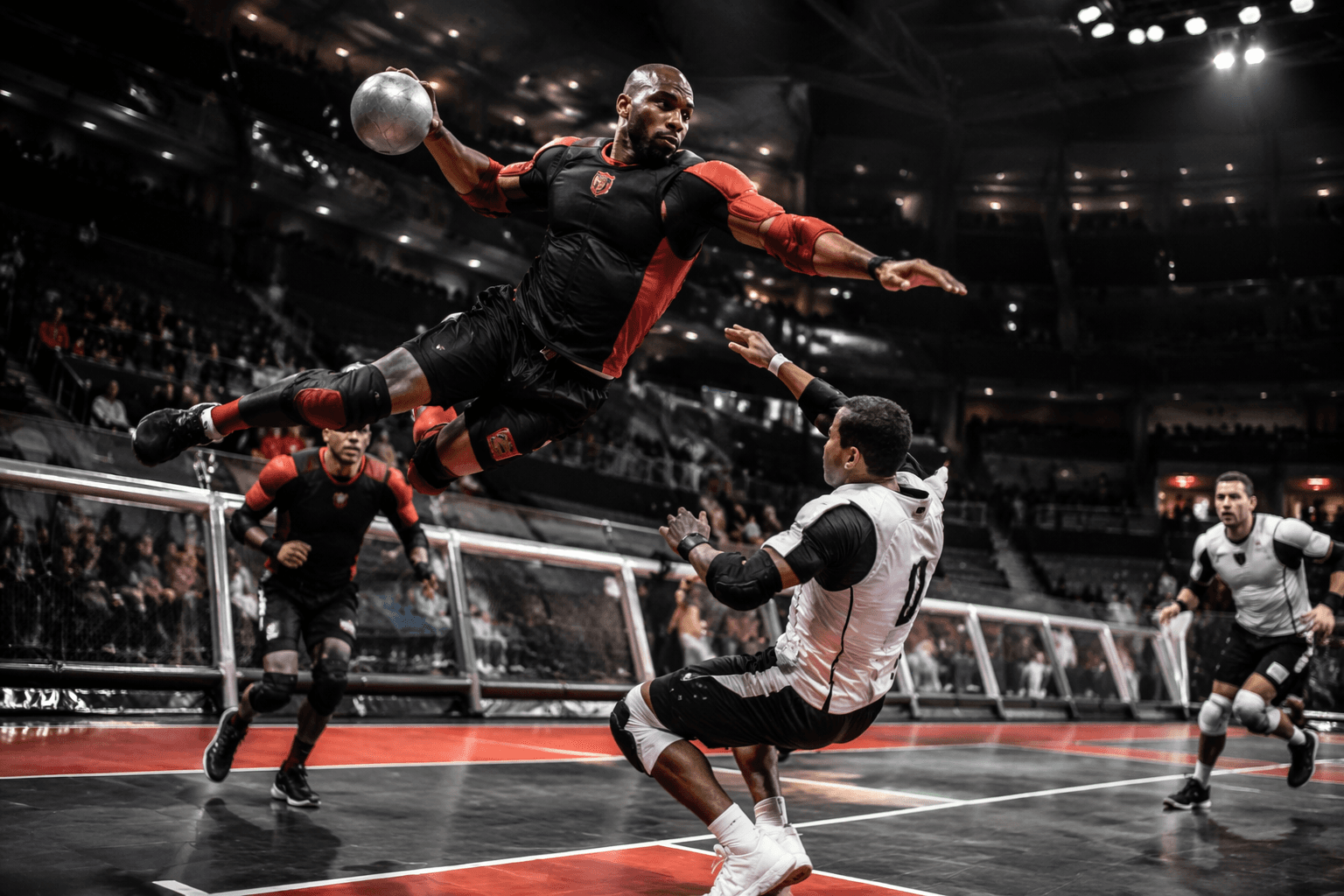
Gage Smith finds his place in SlamBall after college basketball switch
Gage Smith’s SlamBall rise shows why the hybrid game suits his fearlessness better than basketball, and why the Mob made him a star.
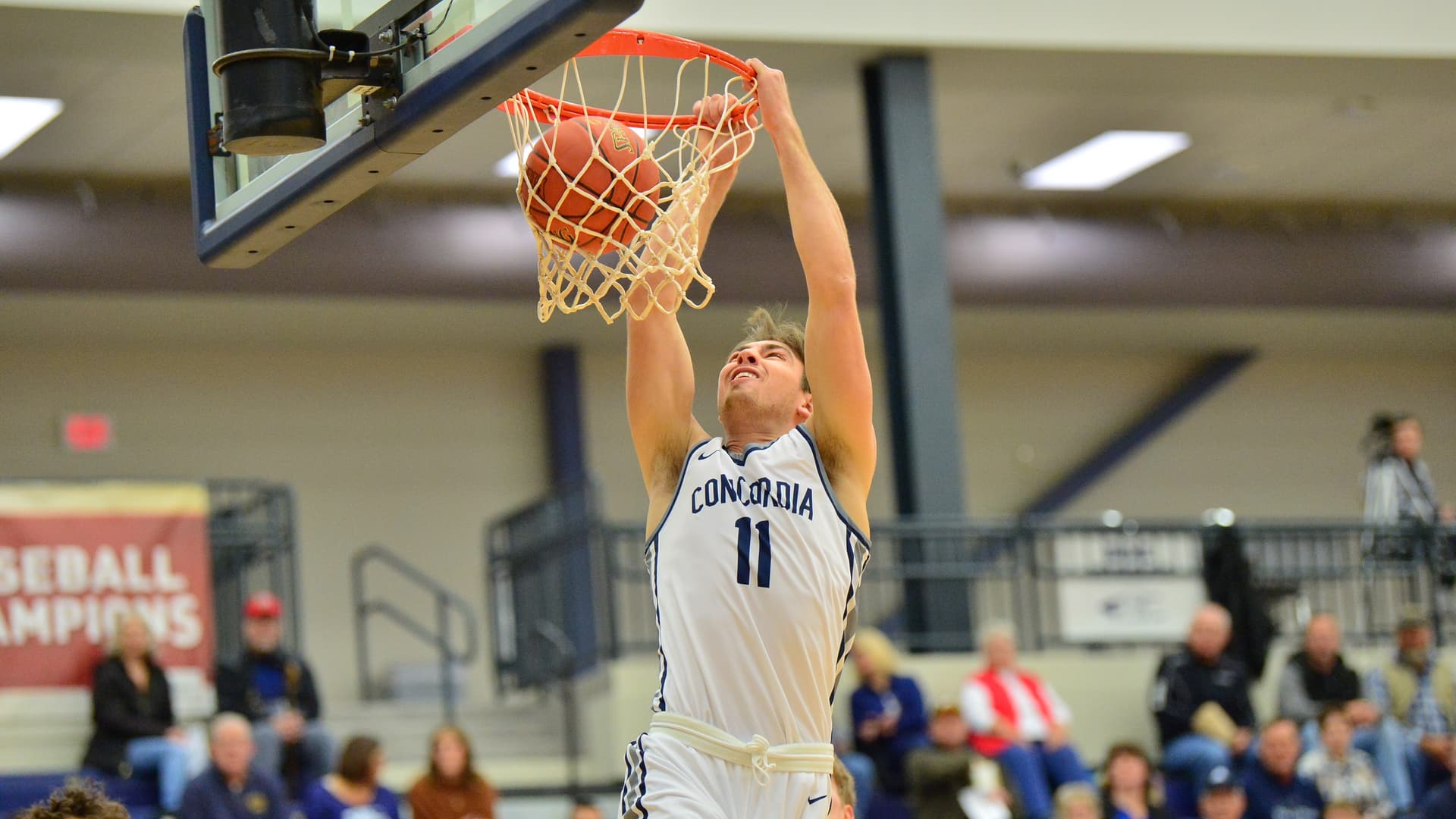
Gage Smith showed up to SlamBall with a black eye and the kind of grin that says collision is part of the appeal. Less than two weeks from his first ESPN appearance, the former Concordia guard was already calling the league “my sport,” and the phrase fits because his game changed shape the moment the floor turned into a trampoline court.
Why SlamBall fits Smith better than basketball
Smith’s basketball background still matters. It gave him touch at the rim, timing on finishes and the instincts to read space, but SlamBall asks for more than a clean jumper or a tidy pick-and-roll game. It rewards body control, fearlessness and the ability to keep producing after impact, and Smith’s style turns those traits into advantages instead of liabilities.
That is the central reason his transition works. In college basketball, a player like Smith can be valued for consistency. In SlamBall, the same player can become electric because the game is built around airborne decisions, contact at the rim and the split-second control needed to finish through chaos. Smith did not arrive as a novelty act. He arrived as the kind of combination athlete SlamBall was built to find.
What the league asked of him from day one
Smith said his first day in camp felt overwhelming because the league’s player pool was unlike anything else in U.S. sports. He was sharing the floor with former XFL players, G League veterans, overseas pros and even professional trampoline dunkers, a mix that forced him to learn the rhythm of the sport fast or get left behind. At first, the idea of jumping and trying to dunk on somebody was terrifying. Then the fear turned into fascination once he realized he could figure it out.
That is the hook for watching him in SlamBall: the confidence comes from adaptation, not comfort. He was never simply trying to survive the game. He was learning how to use his own athletic background as a weapon in a league where basketball and football cultures collide.
What to watch in his ESPN debut
Smith’s ESPN debut was more than a showcase. It was a test of whether a player with a conventional college path could translate into the chaos of a sport still defining itself. Fans should watch for three things:
- How he handles first contact at the rim, where timing matters as much as lift.
- Whether he creates space with body control, not just speed.
- How quickly he turns defensive possessions into transition chances, which is where SlamBall swings fast.
The setting mattered too. SlamBall formally returned in 2023 after more than 20 years off U.S. television, and ESPN made the relaunch feel like a real sports property by setting Opening Night for Friday, July 21 at 7 p.m. ET and the championship for Thursday, August 17 on ESPN2. The network said the season would include more than 60 hours of coverage, which gave players like Smith a chance to become more than one-night curiosities.
Why this relaunch was built for players like Smith
The money behind the reboot showed the league was not treating this as a stunt. SlamBall’s return was backed by an $11 million Series A round led by Roger Ehrenberg’s IA Sports Ventures and Eberg Capital, with investors including David Blitzer, Michael Rubin, Gary Vaynerchuk, David Adelman and Blake Griffin. That roster of backers gave the relaunch credibility in the sports-business sense and helped frame the league as a serious property, not a nostalgia play in disguise.
The structure of the league also sharpened the argument. SlamBall played on a 96-foot by 64-foot court with four springbeds, with four players on the floor at one time, seven-player rosters and four 5-minute quarters. Eight teams came back for the 2023 season: Mob, Rumble, Slashers, Buzzsaw, Gryphons, Lava, Ozone and Wrath. The design forced players to be versatile, and the draft reflected that, with 56 players selected and a pool that was 68 percent basketball backgrounds, 16 percent football, 9 percent track and field and 7 percent multi-sport.
That is why Mason Gordon’s description of the league lands so well. He said the players represented “high level basketball talent and high caliber football talent coming together,” and Smith fits that idea almost perfectly. He is what the league wants to sell: someone with one foot in the old basketball pipeline and another in a sport that asks for something stranger and more explosive.
How Smith became the Mob’s best bet
Smith’s play in camp earned him a third-round selection by the Mob, and the fit was obvious once the season began. He was not just another roster piece on a seven-man team. He was a player whose rim instincts, fearlessness and control translated into the kind of high-wire style that makes SlamBall memorable on television and harder to guard in person.
The daily routine also helped build that identity. Under Mob coach Brendan Kirsch, Smith’s schedule ran through meetings, workouts, practices and film sessions that made the whole operation feel like a college program without school. That kind of structure matters in a league where the games are short, the possessions are precious and every mistake can turn into a highlight for the other team.
From Concordia to a title run
Smith’s story got a much bigger payoff than a promising debut. By August 17, 2023, he had helped the Mob finish unbeaten and win the championship, beating the Slashers 61-32 in the title game. MaxPreps reported that he was named league MVP and defensive player of the year, which is the kind of double honor that turns a good fit into a breakout.
The longer arc explains why his story resonates. MaxPreps also described him as a four-sport athlete at Elizabeth in Colorado, and he played basketball for five years at Concordia University Nebraska. That background makes “This is my sport” sound less like a slogan and more like recognition. In a league built on collisions, bounce and reinvention, Smith found a place where his mixed-athlete past became the point, and the Mob gave him the platform to turn it into a face of SlamBall’s return.
This article was produced by Prism’s automated news system from verified source data, official records, and press releases, then run through automated quality and moderation checks before publishing. The system is built and supervised by the people who set the standards it runs under. Read our full AI policy.
Did this article answer your question?