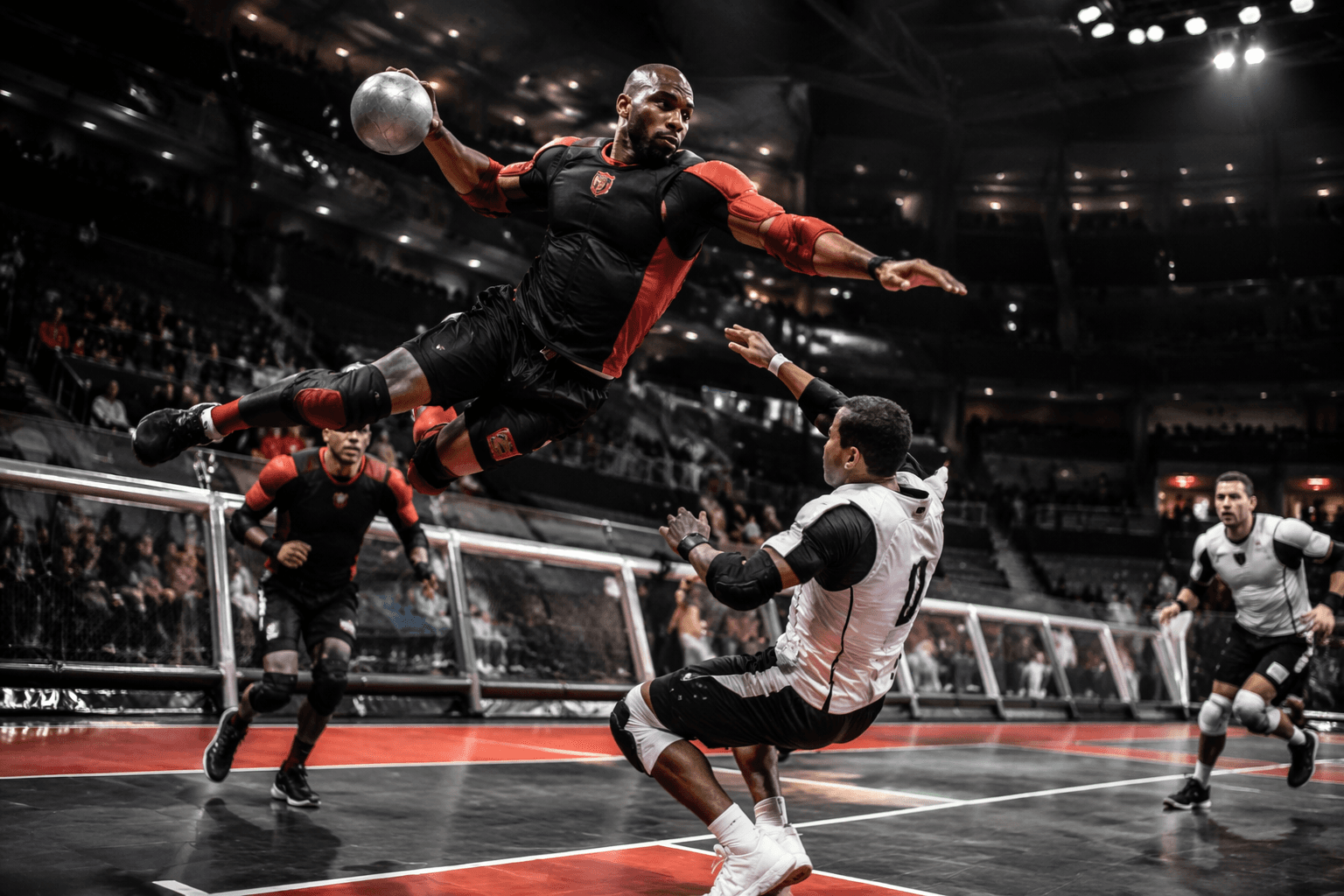
Gryphons build balanced SlamBall roster around roles, not positions
The Gryphons are built like a live-action chessboard: handlers, gunners and stoppers rotate by task, not by old-school positions. That fits a sport where the clock never stops.
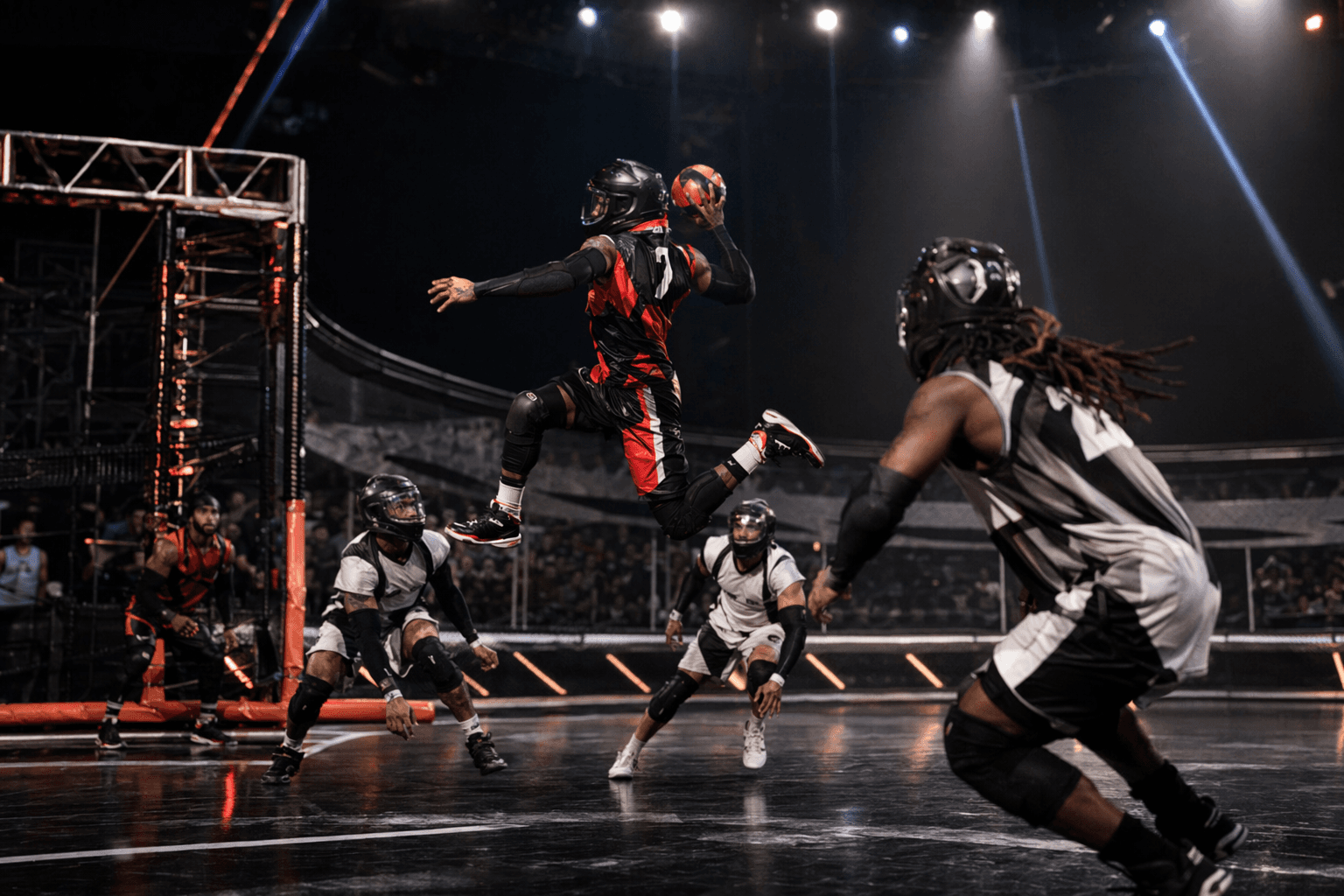
A roster built for motion
Adam Stanford, Deshawn Kelly, Jordan Grant and Justin Holmes give the Gryphons a roster shape that makes more sense in SlamBall than in standard basketball. The group is not arranged around fixed lanes on a score sheet. It is organized around live jobs: handlers to start and steer possessions, gunners to attack space and the rim, and stoppers to absorb contact and protect the lane.
That matters because SlamBall rewards teams that can keep decisions flowing while bodies are flying. A handler-heavy group gives the Gryphons more than ball security. It gives them multiple players who can initiate offense, relieve pressure, and reset a possession before the defense can fully load up. In a sport where one live sequence can turn from a controlled setup into a collision in a split second, that kind of structure is a competitive advantage.
Why roles matter more than labels
The Gryphons’ squad page makes the league’s logic easy to see. Adam Stanford, Deshawn Kelly and Jordan Grant are listed as handlers, while Kyshawn Jones, Jace Bass and Justin Holmes appear as gunners. Connor Hollenbeck and Matthew Wilkerson are the stoppers, the bigger bodies whose job is to hold the paint together when the action turns physical.
Justin Holmes is the clearest sign that this is a role system, not a rigid position chart. He is listed as both a handler and a gunner, which suggests the Gryphons want him to bridge creation and finishing depending on the matchup. That kind of overlap is exactly what a SlamBall roster needs, because the sport is built around changing responsibilities rather than a five-man flow that stays the same from possession to possession.
The result is a layered identity. Multiple players can start the action, multiple players can finish it, and the stoppers are there to keep the floor from opening up when the other side tries to force the issue. The roster is balanced not because every player does the same thing, but because several players can solve different problems on the same possession.
What the starters say about the Gryphons’ plan
The Day 6 game recap against the Slashers makes the same point even more clearly. The listed starters were 13 handler Adam Stanford, 3 gunner Kyshawn Jones, 00 gunner Justin Holmes and 18 stopper Connor Hollenbeck. That mix shows a club that is not simply filling out a lineup card; it is assigning functions for the opening stretch of the game.
Stanford gives the Gryphons a handler to organize the first touch. Jones and Holmes bring immediate rim pressure and finishing threat. Hollenbeck gives the group a stopper who can take contact and guard the lane when the game becomes more physical. It is a compact four-player snapshot of the sport itself: setup, burst, collision, recovery.
That kind of build also helps explain why certain archetypes carry extra value in SlamBall. A pure scorer is not enough if he cannot survive the transition between possession states. A defender is not enough if he cannot move with the pace of the game. The best roster pieces are the ones that can survive substitution pressure, the lane battle and the constant threat of a sudden change in direction.
How SlamBall’s rules shape the roster
SlamBall’s substitution system is a big reason the Gryphons’ construction looks so intentional. The league uses hockey-like substitutions during play without stopping the clock, and the player leaving the floor must get within 5 feet of the team box before a new player can enter. Teams can also make changes during dead-ball situations.
That creates a different kind of roster engineering than traditional hoops. Depth is not just about surviving foul trouble or injury. It is about having the right live specialist ready for the next shift, because the clock keeps moving and the game can swing while the change is happening. In that environment, handlers, gunners and stoppers are not cosmetic labels. They are the basic units of competitive design.
SlamBall describes itself as a hybrid of basketball, football, hockey and trampolines, and the Gryphons’ roster shows how that hybrid works in practice. The handlers are there to control possession the way a quarterback or point guard might, but under much harsher conditions. The gunners provide the attacking burst. The stoppers offer the collision resistance and lane protection that keep the whole operation from breaking apart.
Why the relaunch context still matters
The Gryphons also sit inside a larger league story. SlamBall returned to the United States in 2023 after 15 years of dormancy there, and the relaunch season was its sixth season, staged at Cox Pavilion in Las Vegas as a four-week dash to the playoffs. That compressed setting magnifies roster value, because every live role has to matter immediately.
Mason Gordon’s long push to keep the sport visible internationally gave the comeback a business and cultural edge that went beyond novelty. SlamBall was not sold simply as a spectacle. It was presented as a playable system, with live substitutions, specialized roles and a TV-ready structure that could survive contact, gravity and pace. That is the broader significance of the Gryphons’ roster: it reflects a league built to reward decision-making under pressure, not familiar basketball habits.
The Gryphons are most interesting when read as a blueprint. Stanford, Kelly, Grant and Holmes give them handling options. Jones, Bass and Holmes bring attack. Hollenbeck and Wilkerson supply the stopping power. Put together, the roster shows exactly why SlamBall is not just basketball with extra bounce. It is a sport that measures who can think, absorb and strike fast enough to keep possession alive.
This article was produced by Prism’s automated news system from verified source data, official records, and press releases, then run through automated quality and moderation checks before publishing. The system is built and supervised by the people who set the standards it runs under. Read our full AI policy.
Did this article answer your question?