iHeart Explainer Shows How SlamBall Turned Video-Game Fantasy Real
SlamBall looks like chaos, but the rules make it repeatable. The iHeart explainer shows how Mason Gordon turned a napkin sketch into a real league with its own logic.

Why SlamBall makes sense once you know the rules
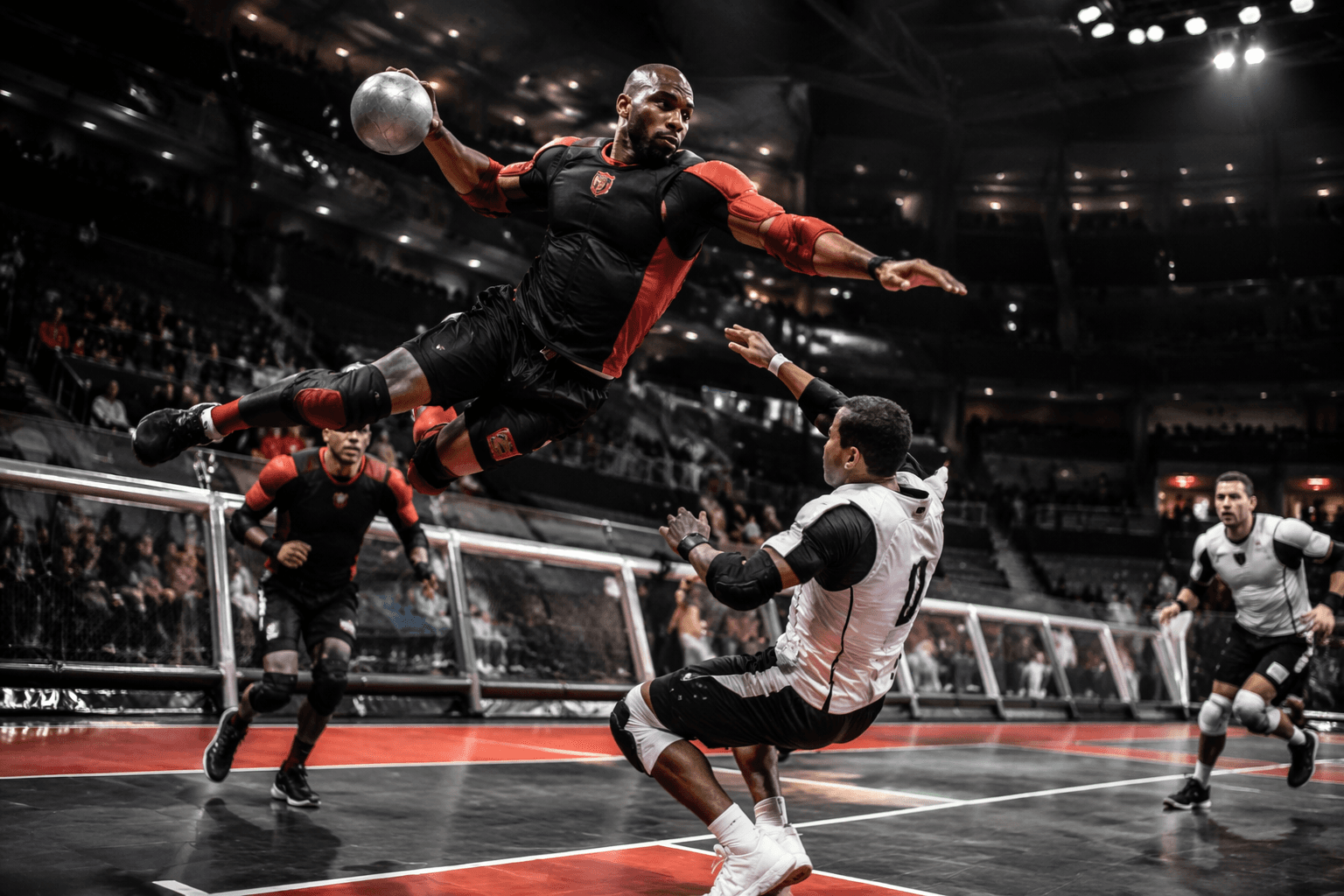
SlamBall works because the chaos is engineered, not accidental. The iHeart explainer frames the sport as a collision of basketball, trampolines, and bone-crushing tackles, but the real hook is that every wild-looking moment comes from a fixed set of rules, a fixed court, and a fixed idea: build a game around controlled violence and vertical space.
That is what Mason Gordon set out to do when he sketched SlamBall on a napkin in 1999 and later described it as a “real-life human video game.” The phrase sounds like a pitch until you watch how neatly the sport turns that fantasy into something legible. Plexiglass walls, springbeds, four-point shooting, and the infamous popcorn foul are not gimmicks bolted onto basketball. They are the language of a sport that was designed to make contact, speed, and scoring pressure happen over and over again.
How a possession turns chaos into repeatable drama
A typical SlamBall possession has a rhythm that casual viewers miss at first glance. The court is 96 feet long and 64 feet wide, and each end includes four springbeds, including a larger scoring bed, so the offense is never just trying to get to the rim. It is trying to create the right angle, the right launch, and the right amount of space before the defense closes the lane.
That is why the rules matter so much. A shot from beyond the 20-foot, 9-inch arc is worth four points, a dunk is worth three, and jump shots or layups off the trampoline are worth two. One possession can swing from a clean perimeter look to a high-rise finish in a matter of seconds, and the scoring values reward the exact kind of decision-making that makes highlight plays feel inevitable rather than random.
Here is the sequence that explains the appeal: the ball swings to the wing, the defense shifts, a shooter rises from deep for four points, and if the shot misses, the rebound does not kill the action. It becomes a live collision point, with the springbeds letting players attack the next phase at speed. That is the difference between a one-off stunt and a sport. SlamBall is built so the next danger starts the moment the last one ends.
The league did not survive on spectacle alone
SlamBall has always had to prove it was more than a clip factory. ESPN’s coverage says the game first reached television in 2002, which matters because the sport has spent more than two decades fighting the assumption that it is just an edited highlight reel waiting to happen. The recent iHeart explainer works because it does something the old clip packages could not: it explains the structure of the sport in plain language.
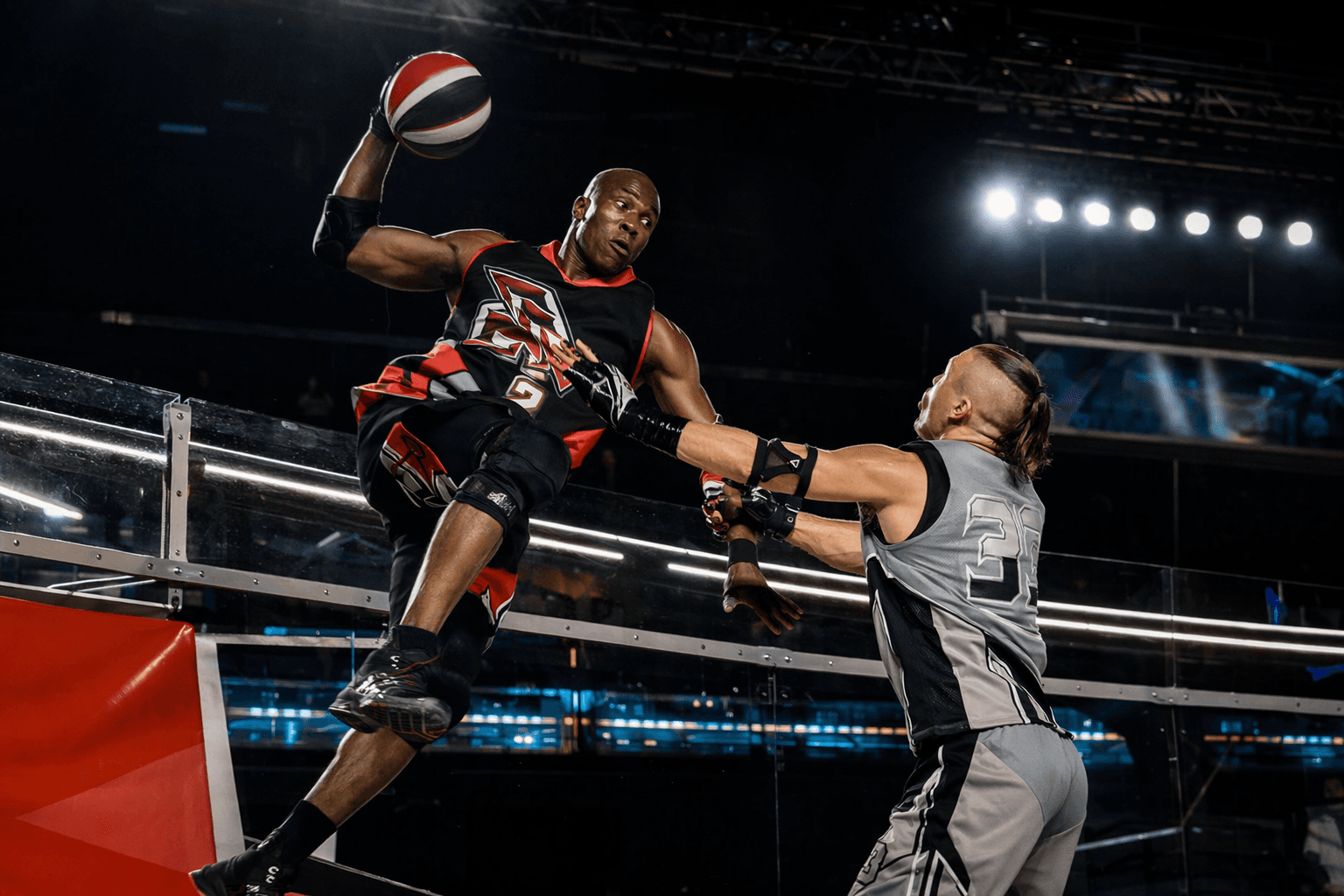
That explanation matters for the league’s identity. The sport is not basketball with a few extra tricks. It is a deliberately engineered extreme court sport with its own rules, its own vocabulary, and its own visual identity. The plexiglass, the springbeds, the scoring math, and the contact all work together to create a game where aggression is not a bug. It is the point.
The 2023 return gave the sport a cleaner test
SlamBall’s modern return also showed how much the league has changed in presentation. The relaunched 2023 season began July 21, ran for five weekends, and every game was staged at Cox Pavilion in Las Vegas. ESPN said more than 30 hours of live SlamBall programming aired across ESPN, ESPN2, and ESPN+, giving the league a bigger national platform than the sport had ever enjoyed during its original run.
The setup was built for credibility, not just nostalgia. Eight teams competed in the 2023 league, and the field mixed legacy names with newer franchises, which gave the season a sense of continuity without pretending the sport had been frozen in time. That structure mattered because it let fans see SlamBall as a real competition with standings, playoff stakes, and team identities, not just a reunion tour for old footage.
MOB made that point loudest of all. The team finished the regular season 16-0, and that kind of unbeaten run is exactly why SlamBall is easier to sell when people see the numbers behind the spectacle. The action is flashy, but the results still matter. A perfect season is a perfect season, whether it happens on hardwood or on a court with trampolines built into both ends.
Why the explainer format fits SlamBall better than hype ever could
The value of the iHeart audio explainer is that it helps newcomers understand why the sport keeps pulling people back in. It is not asking anyone to trust the visuals first. It starts with the invention itself: Gordon’s napkin sketch, Mike Tollin’s involvement through Tollin/Robbins Productions, and the long grind of turning a wild concept into a league that could survive the scrutiny of actual competition.
That is also why SlamBall still gets attention every time it returns. The sport has a built-in contradiction that never gets old: it looks like mayhem, but it only works because the structure is so precise. The court dimensions are exact. The springbeds are fixed. The scoring values are fixed. Even the “chaos” has rules.
That is the real story behind SlamBall’s appeal. It does not succeed by pretending to be basketball and it does not survive by leaning only on spectacle. It succeeds when the viewer realizes the violence, speed, and aerial risk all serve a repeatable competitive logic. Once that clicks, SlamBall stops looking like a joke and starts looking like a sport that knew exactly what it was doing from the start.
This article was produced by Prism’s automated news system from verified source data, official records, and press releases, then run through automated quality and moderation checks before publishing. The system is built and supervised by the people who set the standards it runs under. Read our full AI policy.
Did this article answer your question?