Mason Gordon oral history reveals SlamBall's origins and design vision
Mason Gordon's oral history pins SlamBall to East Los Angeles, not myth. It also shows the league was designed as a hybrid sport from the start, with trampolines as the engine.

Mason Gordon’s oral history puts a hard date and a human voice on a sport that has spent years collecting lore. The interview, conducted on September 4, 2024 by Claytee D. White and Stefani Evans for UNLV’s Game On! The Oral History of Las Vegas Sports project, captures the founder’s own memory instead of the usual secondhand retelling. That matters for SlamBall because its origin story has always lived in the space between invention, spectacle and sports business.
Why Gordon’s account matters
UNLV’s interview description says Gordon reflects on his childhood and early years in California playing basketball, which is the kind of detail that explains why SlamBall felt different from the start. This was not a league that drifted out of a conventional front-office plan. It came from someone thinking like a player, and then designing a game around verticality, speed and contact that could be controlled rather than chaotic.
The archive context matters too. UNLV says the Game On! project documents the history of sports in Las Vegas, and the Oral History Research Center was founded in 2003. The collection itself is described as a 2024-2026 project, so Gordon’s interview is part of a fresh historical record, not an after-the-fact cleanup of old legend. That gives his recollections extra weight in a sport that has already lived through a rise, a hiatus and a revival.
The warehouse story, now with a date and a place
SlamBall’s own history page says the sport started in an L.A. warehouse and later found the spotlight on national television. Gordon sharpened that origin in a 2012 SlamBall video, where he said, “I created Slamball in a little warehouse in East LA in December of 2000.” That one line does a lot of work: it confirms the warehouse myth, adds East Los Angeles, and fixes the creation moment to December 2000.
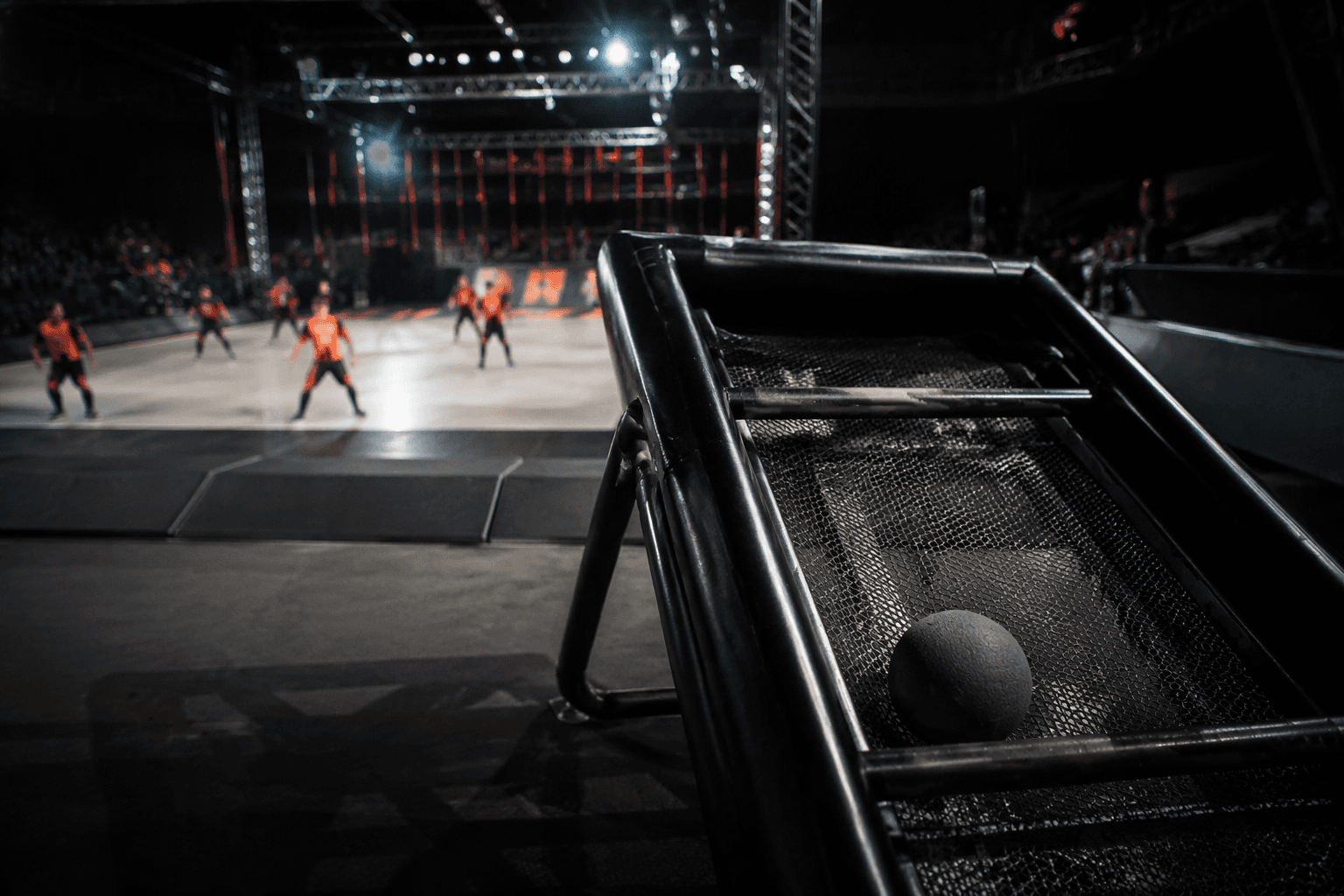
That detail changes the story from a vague startup fable into a documented prototype. The warehouse was not just a colorful backdrop, it was the place where the sport’s first playable version took shape before it became a broadcast property. The official history page’s mention of national television, plus the league’s later debut on Spike TV, shows the next phase clearly: SlamBall moved from improvised experiment to something packaged for a national audience.
What Gordon designed, and why it looked the way it did
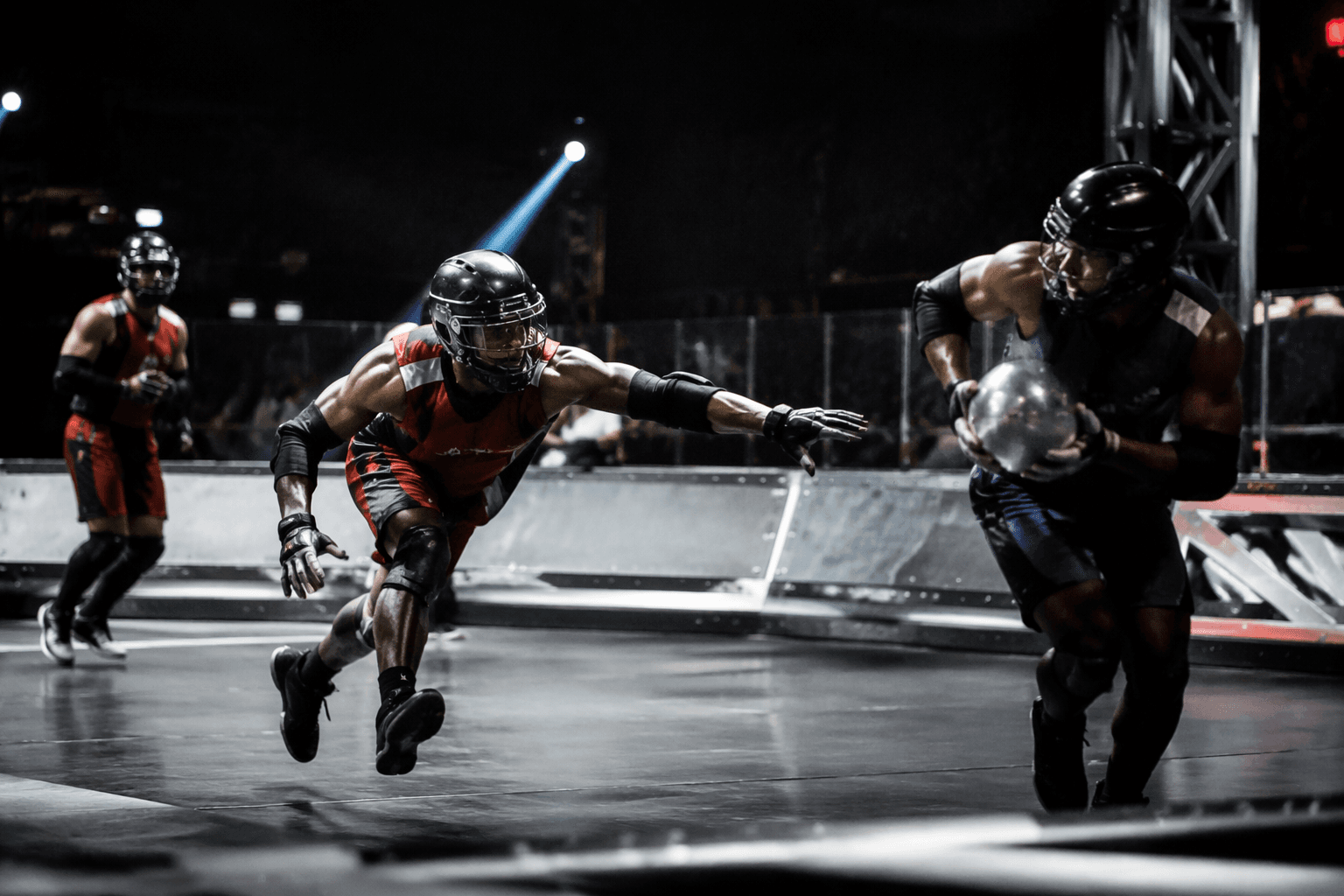
Gordon’s SlamBall bio says he is the Creator and Co-Founder of the league, and that he envisioned a hybrid sport combining basketball, football and hockey with “olympic caliber trampolines” driving the action. That is the core design statement, and it tells you exactly why SlamBall is not just basketball with a gimmick tacked on. The trampolines are not decoration. They are the engine.
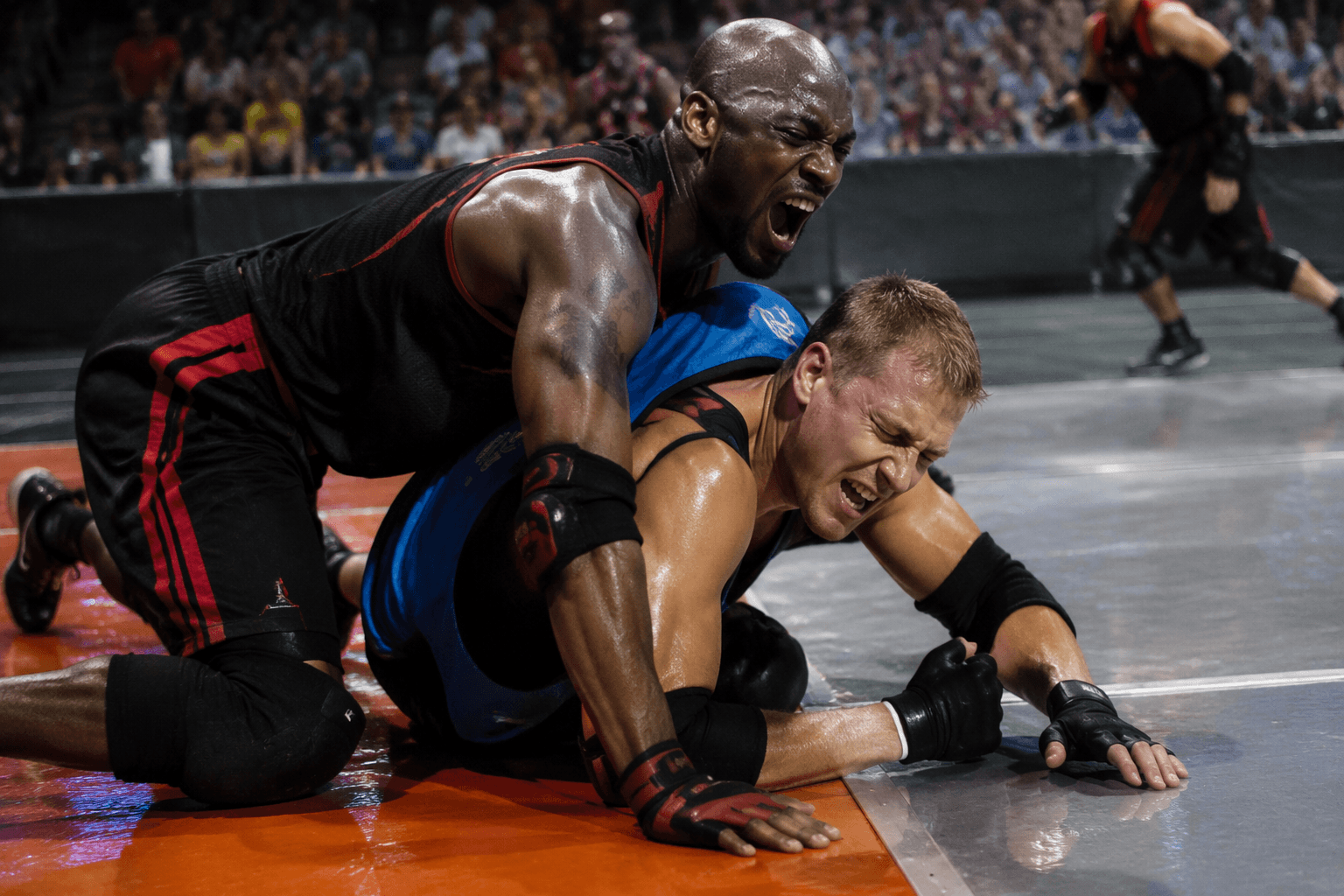
Seen through that lens, the game’s identity is more deliberate than improvised. Basketball supplies scoring and air time, football contributes collision and field position logic, and hockey adds pace and board-to-board physicality. The trampoline court then amplifies all three, turning ordinary athletic movement into something bigger, faster and more vertical than any one sport could produce on its own.
From East L.A. to ESPN
The league’s modern return also lines up with the old origin story in a way that is hard to ignore. ESPN announced an exclusive two-year broadcast partnership with SlamBall for the 2023 and 2024 seasons, with more than 30 hours of live action in 2023 and opening night set for July 21, 2023 on ESPN. ESPN described the comeback as happening after a 20-year hiatus, which makes the leap from warehouse experiment to national broadcast comeback even starker.
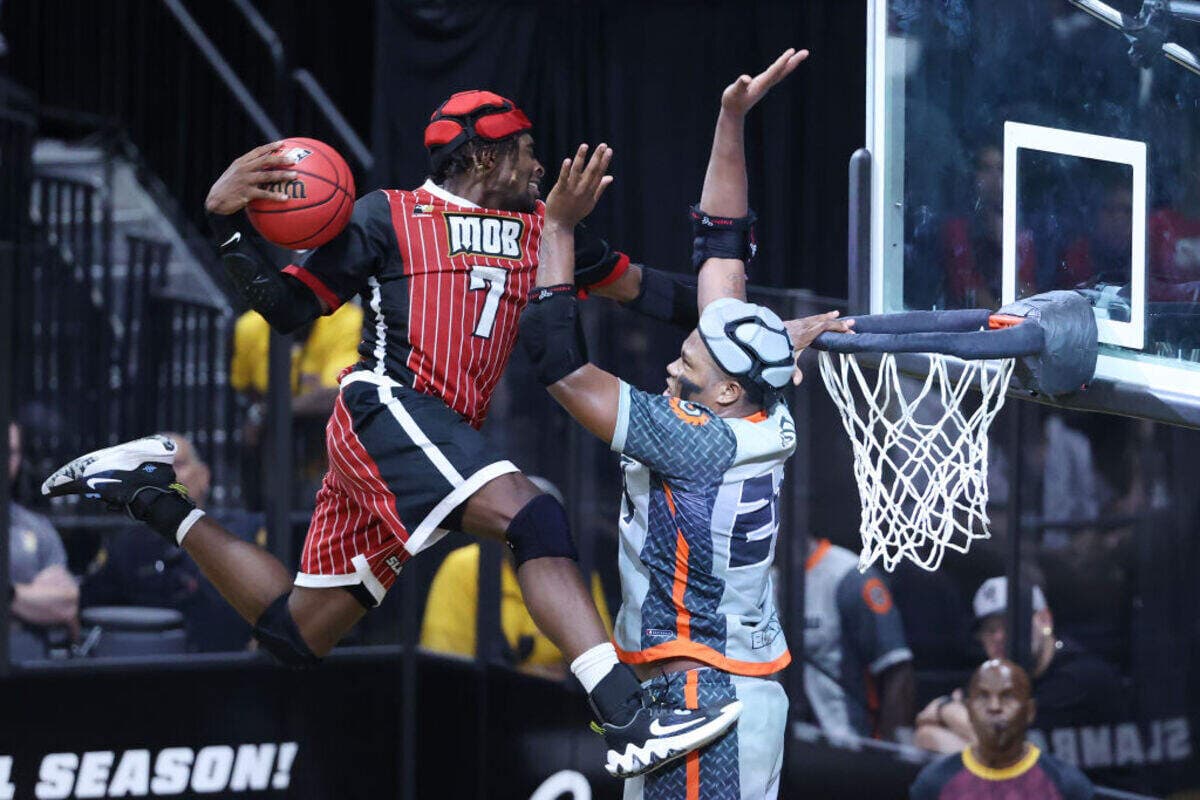
SlamBall’s 2023 relaunch season was staged in Las Vegas and featured eight teams, a month-long season and playoffs, according to the league’s June 27, 2023 media release. That was not a nostalgia tour. It was a full competitive format, built to function as both live event and TV product. The season ended with the Mob winning the championship and becoming the first team in league history to go undefeated in both the regular season and postseason.
What the oral history clarifies
Gordon’s interview does more than repeat the familiar warehouse line. It connects the sport’s creation to his basketball background in California, which makes the league’s shape feel less like a viral stunt and more like a player’s answer to a design problem. It also places the story inside Las Vegas’s archival record, through a project meant to document the city’s sports history, which matters because SlamBall’s rebirth now lives there as much as it does in Los Angeles.
The best thing about the oral history is that it cuts through the myth without flattening it. SlamBall still began in a warehouse, still ran on a high-concept hybrid model and still took years to return to the national stage. But Gordon’s own account locks those pieces together with a real timeline, a real place and a clear design vision, and that is enough to separate the legend from the record.
This article was produced by Prism’s automated news system from verified source data, official records, and press releases, then run through automated quality and moderation checks before publishing. The system is built and supervised by the people who set the standards it runs under. Read our full AI policy.
Did this article answer your question?