Slamball rules define legal contact, keep chaos controlled
SlamBall’s real edge is not dunks but legal violence. Waist-to-neck hits are fair game, while wraps and low blows turn the play into a foul.
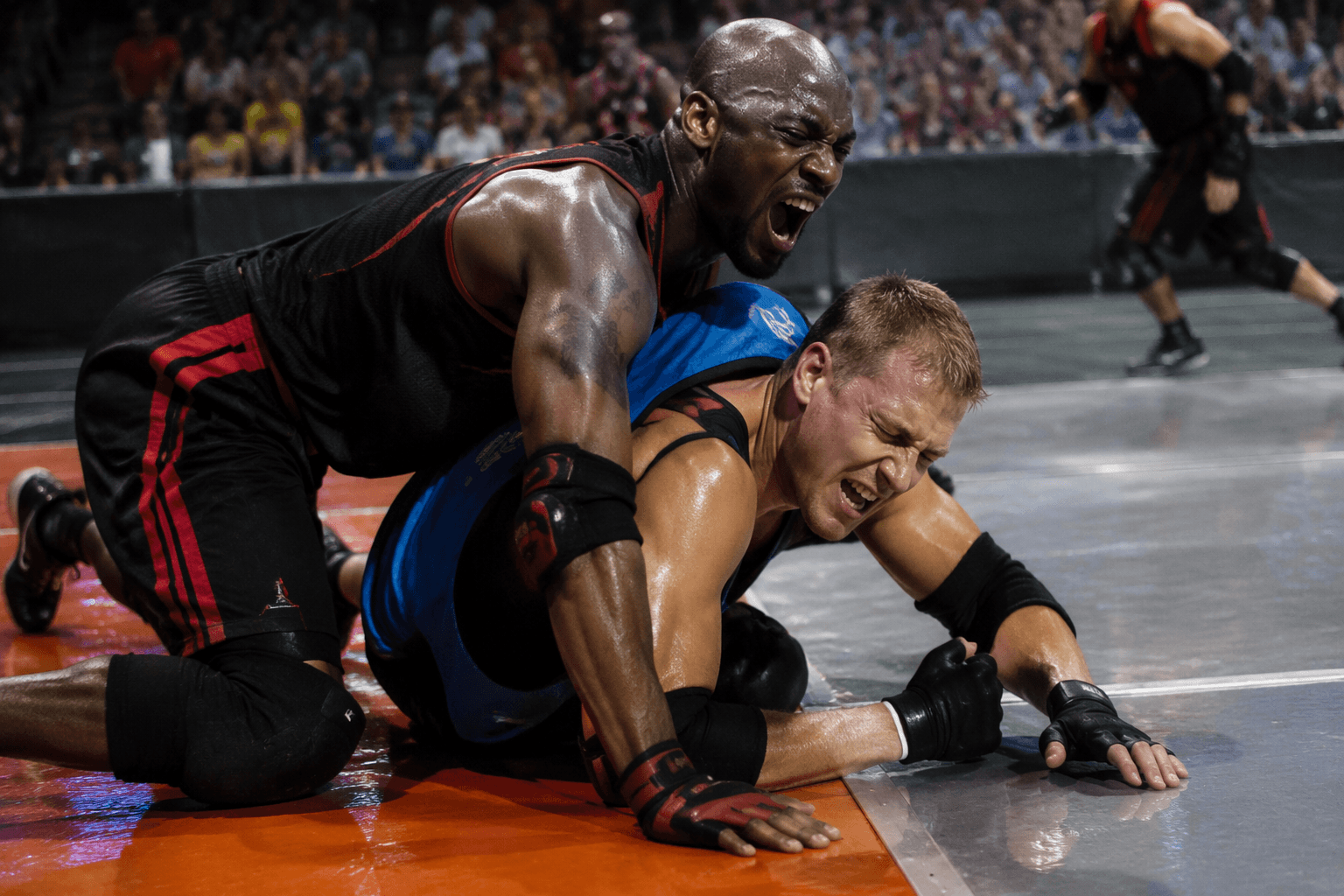
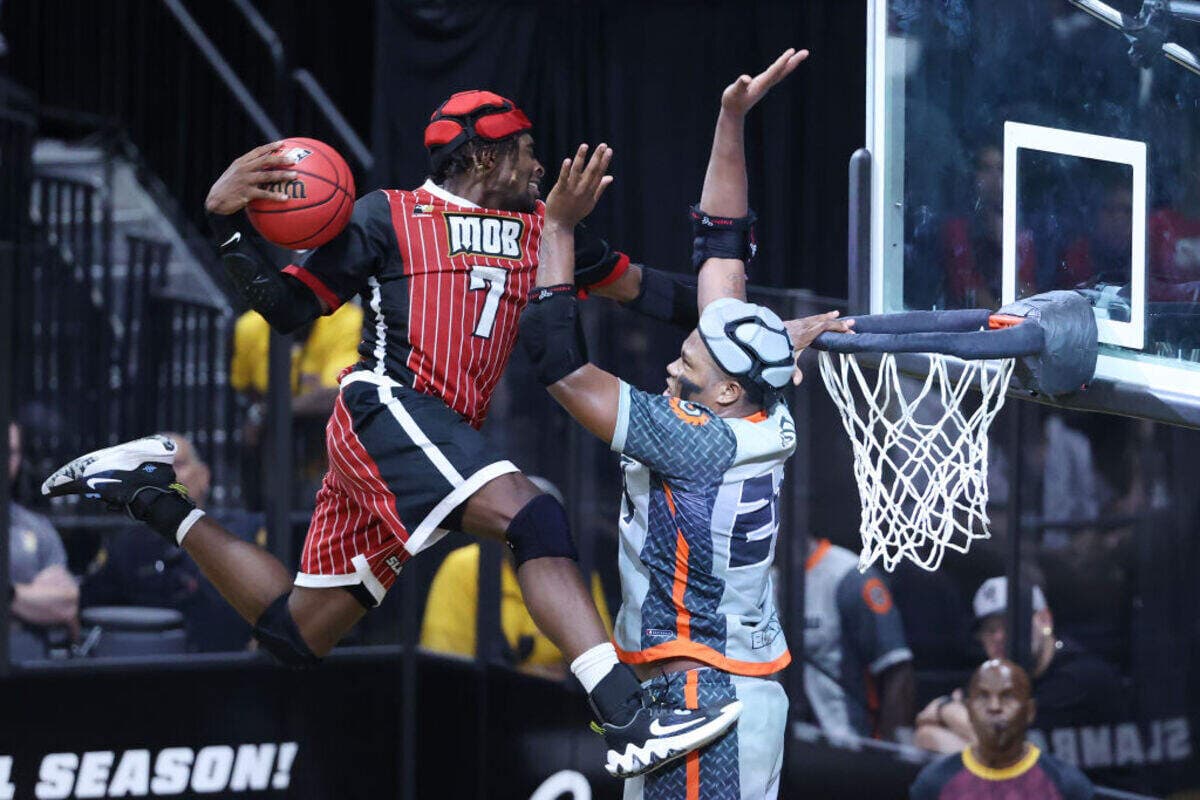
Legal contact in SlamBall runs from the waist to the neck and in front of the shoulders. The sport only works because the hits are regulated with unusual precision. The rulebook makes contact a tactical weapon, not a free-for-all, which is why the game can feel like basketball with football-level force without collapsing into chaos.
Legal contact is the sport’s hidden language
The simplest way to read SlamBall is to treat contact as part of the offense and defense package. Within that legal lane, the clean hit is not a bonus in the game, it is one of the main ways a defender can change a possession. Big hits are allowed, but tackling or wrapping up is not, and hits below the waist are fouls.
That boundary gives defenders a narrow lane for aggression. In basketball, most collisions are incidental and the whistle is often about verticality or displacement. In football, the whole playbook is built around blocks, tackles and wrap-ups. SlamBall sits between those worlds. Players can strike hard, but they have to do it in a way the officials can read instantly.
A legal hit in this sport is not just about violence, it is about control. The defender who lands a shoulder-to-torso collision in front of the shoulders can interrupt a drive, knock a shooter off line or force a bad finish at the springbed. The defender who dips low or grabs instead of striking cleanly turns a possible stop into a foul and gives up the advantage.
Three hit types that decide possessions
The easiest way to understand SlamBall is to watch for three moments.
- A defender meets a ballhandler high, square in front of the shoulders. That is legal contact, and it can stop momentum without ending the play. It is the kind of hit that can force a pass, disrupt a takeoff and change who controls the next bounce.
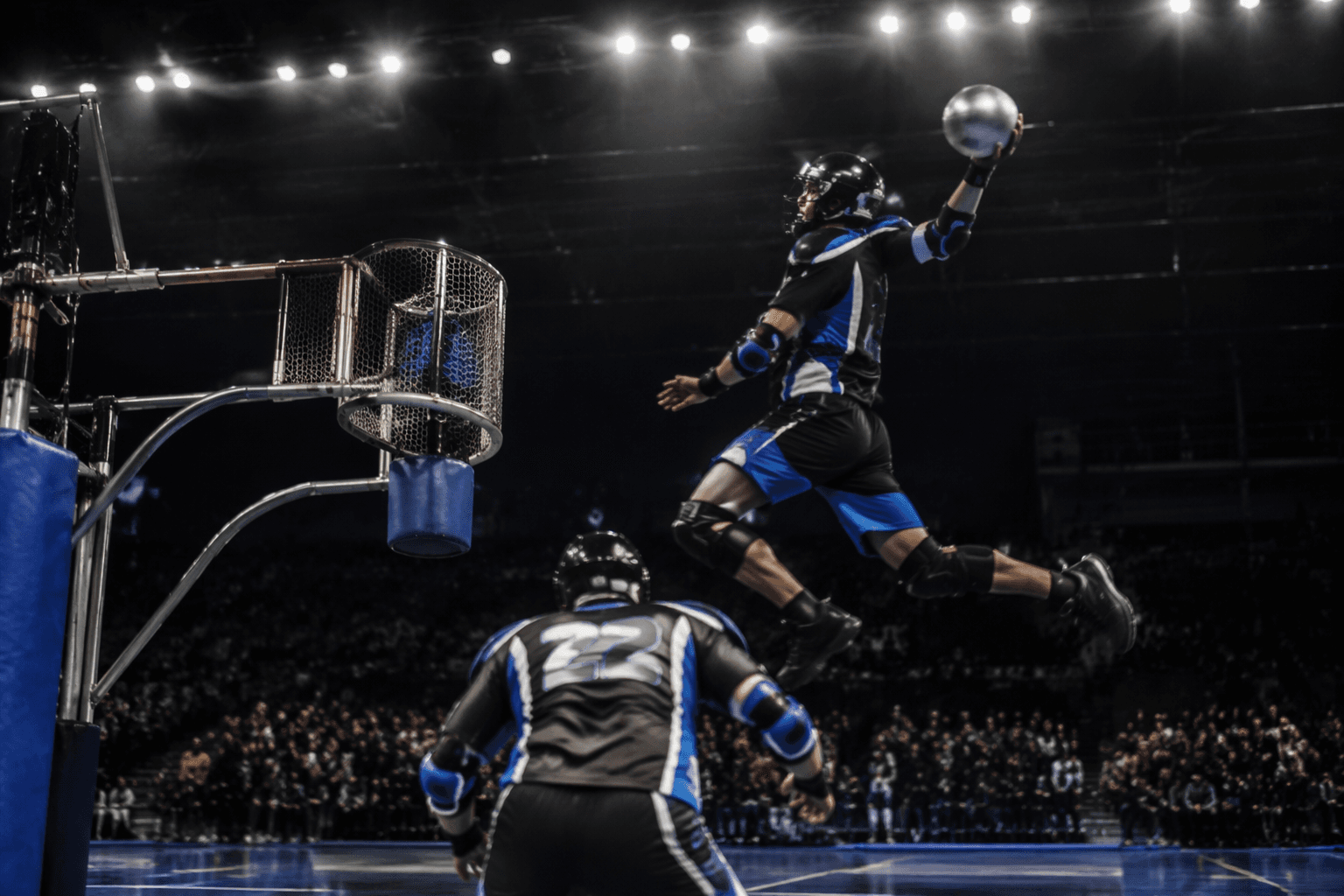
- A defender wraps up a leaper on the way to the bed. That is illegal because tackling and wrapping up are off limits. Instead of a statement stop, the play becomes a whistle, and the offensive player keeps the edge that came from reaching the springbed first.
- A defender chops a runner below the waist. That is a foul. A low hit may look like a football tackle, but in SlamBall it crosses the line and hands the officials a clear violation.
They define who the best defenders are, because the best defenders do not just hit hard, they hit legally. They also shape scoring chances, because a scorer attacking the bed knows the defense will be waiting with contact that is allowed only inside a tight lane.
The court is built to make contact visible
SlamBall’s official rules page, last modified July 12, 2023, lists a 96-foot-by-64-foot court, three identical springbeds at each end, and an 8-foot-tall plexiglass wall around the playing area except at the team-box and sideline areas. That design compresses the action and makes every collision easier to see, which is part of why the contact rules have to be so specific.
The springbeds change how players attack space. A finisher heading toward the bed is not just planning a dunk, but planning for contact at speed in a small area where the wall, the bounce and the defender all matter at once. The plexiglass wall keeps the action contained and gives the game a hard-edged, arena feel that basketball does not have and football only approximates.
That setting is also why the league needs a clean legal-contact definition. When the court is this tight and the surfaces are this specialized, there is no room for ambiguity. A big hit can be part of the play, but only if it stays inside the waist-to-neck lane and avoids the wrap-up that would be routine in another sport.
From a warehouse idea to a broadcast property
SlamBall launched in 1999 by Mason Gordon and Mike Tollin, and Gordon later described creating the sport in a little warehouse in East L.A. in December 2000. The modern version returned for its sixth season in summer 2023 in Las Vegas, with ESPN signing an exclusive two-year broadcast partnership for the 2023 and 2024 seasons.
The 2023 season included more than 30 hours of live action, and Opening Night was scheduled for July 21 from 7 to 9 p.m. EDT on ESPN. The sport is a fast-paced, gravity-defying mix of basketball, football, hockey and trampolines, and Gordon drew inspiration from NBA Jam and NFL Blitz, two games built on over-the-top contact and impossible finishes.
SlamBall even markets that identity directly with the line, “Come for the physicality, stay for the slams.”
This article was produced by Prism’s automated news system from verified source data, official records, and press releases, then run through automated quality and moderation checks before publishing. The system is built and supervised by the people who set the standards it runs under. Read our full AI policy.
Did this article answer your question?