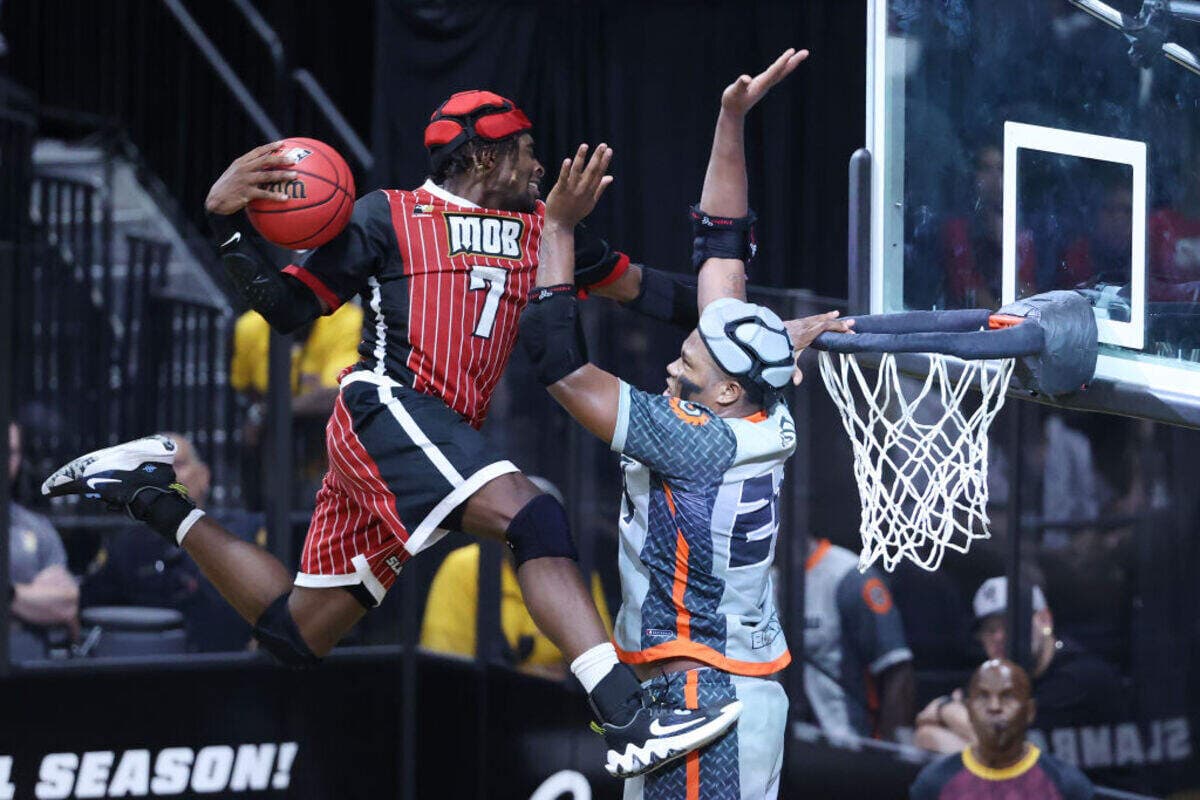
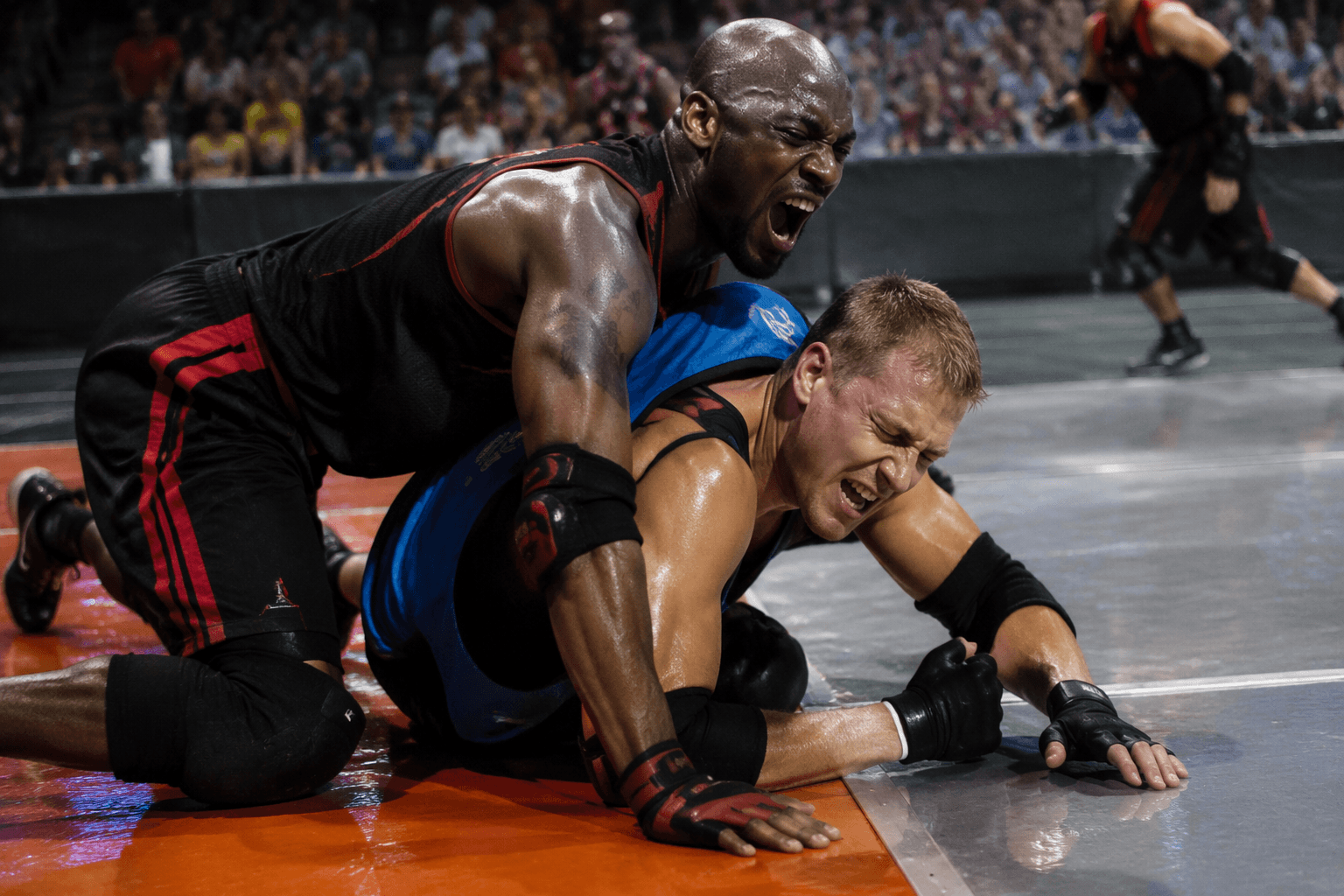
SlamBall roster page reveals handlers and gunners across the league
Adam Stanford and Justin Holmes are the clearest roster cues yet: one handler, one gunner, both built for a sport that rewards size, lift and contact.
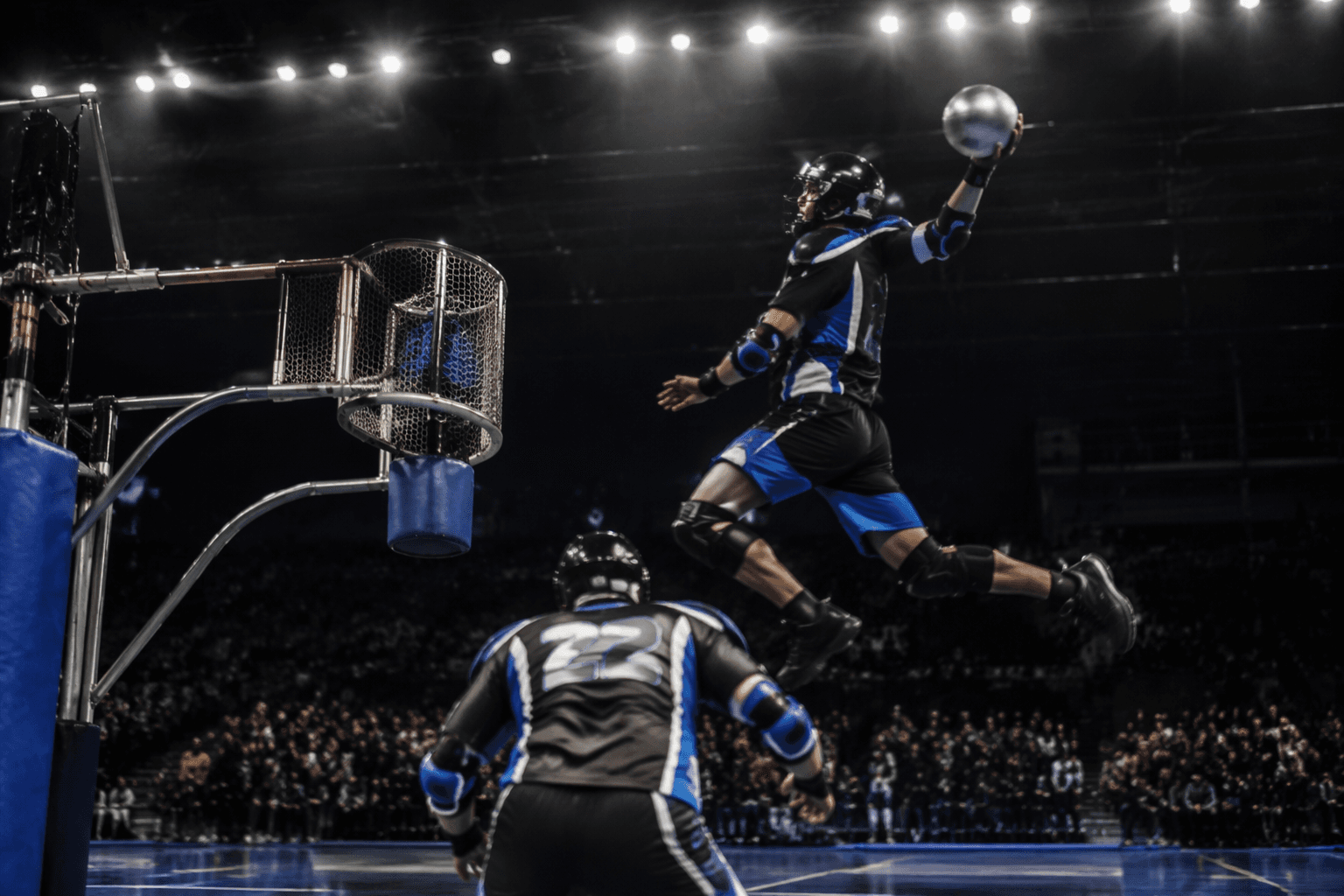
SlamBall’s roster page gives fans a fast read on the league’s new identity: who handles the ball, who attacks the rim, and what kind of bodies survive on a court built for collision and airtime. The visible names do more than fill space. Adam Stanford and Justin Holmes show how the league wants its players decoded, with jersey number, position, size, birthdate and hometown all working together like a scouting card.
The first faces to know
Adam Stanford stands out immediately because the roster says exactly what kind of player he is meant to be. He wears No. 13, is listed as a handler, and measures 6-foot-4, 200 pounds. Born February 15, 1995, and from Fontana, California, Stanford fits the mold of a playmaking piece who can see over traffic and move the ball before the defense can reset.
Justin Holmes gives the other half of the picture. He wears No. 00, is listed as a gunner, and comes in at 6-foot-3, 235 pounds. Born June 12, 1996, and from Roseville, California, Holmes looks built for the bruising end of the sport, the kind of player who can absorb contact and still finish around the springbeds. If Stanford reads like the organizer, Holmes reads like the finisher.
Those two names are the most useful entry point for casual readers because they show SlamBall’s core tension in one glance. One player is there to run the floor and set things up. The other is there to attack it. That split is the league’s simplest way of telling you who does what, and it makes the roster page feel less like a directory and more like a tactical decoder.
What handler and gunner really mean
SlamBall creator Mason Gordon has already spelled out the sport’s basic positional language. “When I created slam ball, I thought about three positions. The first is the handler, the guy who handles the ball and sets up all the other athletes. Handlers are like the quarterbacks in slam ball.” That comparison matters because it tells you the handler is not just a guard in the basketball sense. He is the traffic cop in a sport where possessions move fast and space disappears even faster.
The gunner label carries a different kind of weight. It suggests a player built for scoring aggression, downhill speed and contact near the rim, the kind of athlete who can finish through bodies rather than around them. SlamBall’s traditional positional framework also includes stopper, which completes a system that is closer to a hybrid field-sport roster than a standard hoop chart. In other words, the names on the page are already telling you the league thinks in terms of roles, not just positions.
That vocabulary is part of what makes SlamBall easier to watch once you know it. A handler is not just a ballhandler. A gunner is not just a scorer. The sport has its own internal logic, and the roster page gives it away before the opening tip.
Why the body types matter in this sport
The listed measurements on the roster page are not decorative. Stanford’s 6-foot-4, 200-pound frame suggests a versatile perimeter or hybrid playmaker, while Holmes at 6-foot-3 and 235 pounds looks like a sturdier collision player. Those differences matter because SlamBall is built around speed, jumping, and the ability to take punishment without losing control of the play.
The league’s rules page says the game is played on a 96-foot by 64-foot court with three identical springbeds built into each end. That layout explains why the roster leans so hard on athletic profile. Players have to launch, land, absorb contact and make decisions at speed, all in a space that mixes basketball’s spacing, football’s force, hockey’s physicality and the spring-loaded bounce of trampolines.
That is why the roster page feels useful even in a short excerpt. You can already separate the athletes who look like creators from the ones who look like finishers, and you can do it without seeing a single highlight. Stanford and Holmes are not just names and numbers. They are evidence of the kind of body control SlamBall asks for every possession.
A roster page that doubles as a scouting sheet
The page’s structure makes each player feel more human and more scouted at the same time. It lists name, jersey number, position, height, weight, birthdate, hometown and a social field. That mix matters because it frames the league’s athletes the way teams, fans and broadcasters would: as people with identities, origins and measurable traits that translate to this particular sport.
The hometowns also give the roster a wider geographic footprint. Fontana and Roseville place both players in California, but they come from different corners of the state, which hints at how SlamBall pulls from a broad athlete pool rather than one pipeline. When a league can point to birthdates, hometowns and physical profiles in the same breath, it becomes easier to follow players as individuals instead of just viewing them as bodies in motion.
That is the quiet value of the page. It does not just list who is on a team. It gives readers the first clue about how to sort the league’s talent, which names to remember, and why a given player fits a sport that rewards violence, lift and timing in equal measure.
Why the 2023 relaunch made these names matter again
The roster page sits inside a bigger reset for SlamBall. The league returned in 2023 after nearly a 20-year hiatus, and ESPN announced an exclusive two-year broadcast partnership for the 2023 and 2024 seasons. ESPN’s plan called for more than 30 hours of live action in 2023, starting July 21 from Las Vegas, and the relaunched league featured eight teams playing a month-long season and playoffs.
That structure gave the return some real weight. The league was not just back on the calendar; it was back with inventory, a broadcast window and a playoff format that could give each roster entry some actual stakes. ESPN’s finals coverage later said the Mob won the championship and became the first team in SlamBall history to go undefeated through both the regular season and postseason.
That is the larger reason the roster page matters. A league only gets one chance to reintroduce itself after a long absence, and SlamBall chose to do it through roles, measurements and recognizable athlete profiles. Stanford and Holmes are the kind of names that help new viewers get oriented fast. The handlers and gunners are the framework. The springbeds are the spectacle. Put them together, and SlamBall finally looks like a sport that knows exactly how it wants to be watched.
This article was produced by Prism’s automated news system from verified source data, official records, and press releases, then run through automated quality and moderation checks before publishing. The system is built and supervised by the people who set the standards it runs under. Read our full AI policy.
Did this article answer your question?