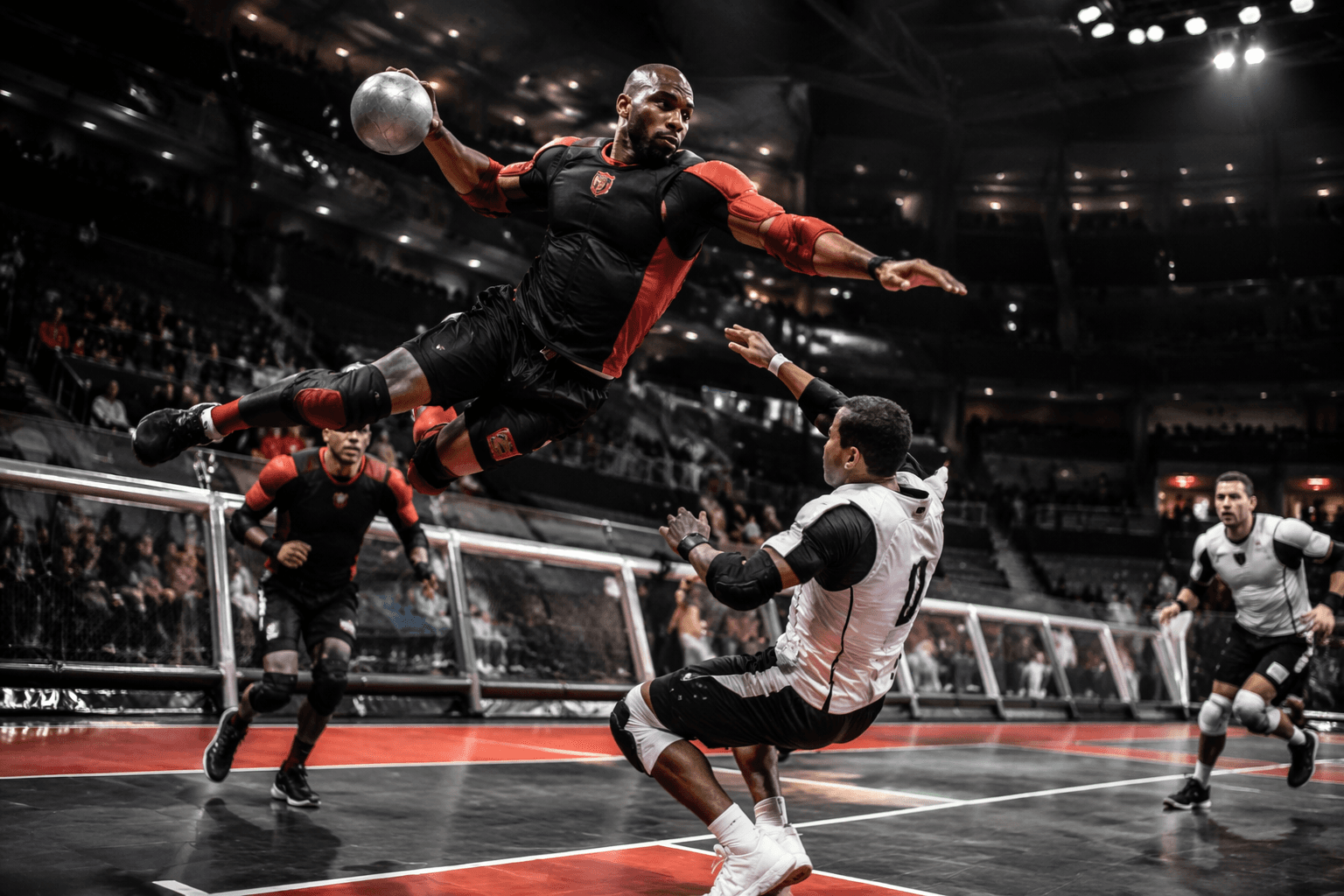
Mob roster built for speed, contact and above-the-rim scoring
Mob’s edge is not just jumping higher. Cam Hollins and Justin Holloway show how the team turns track speed and body control into real SlamBall scoring.
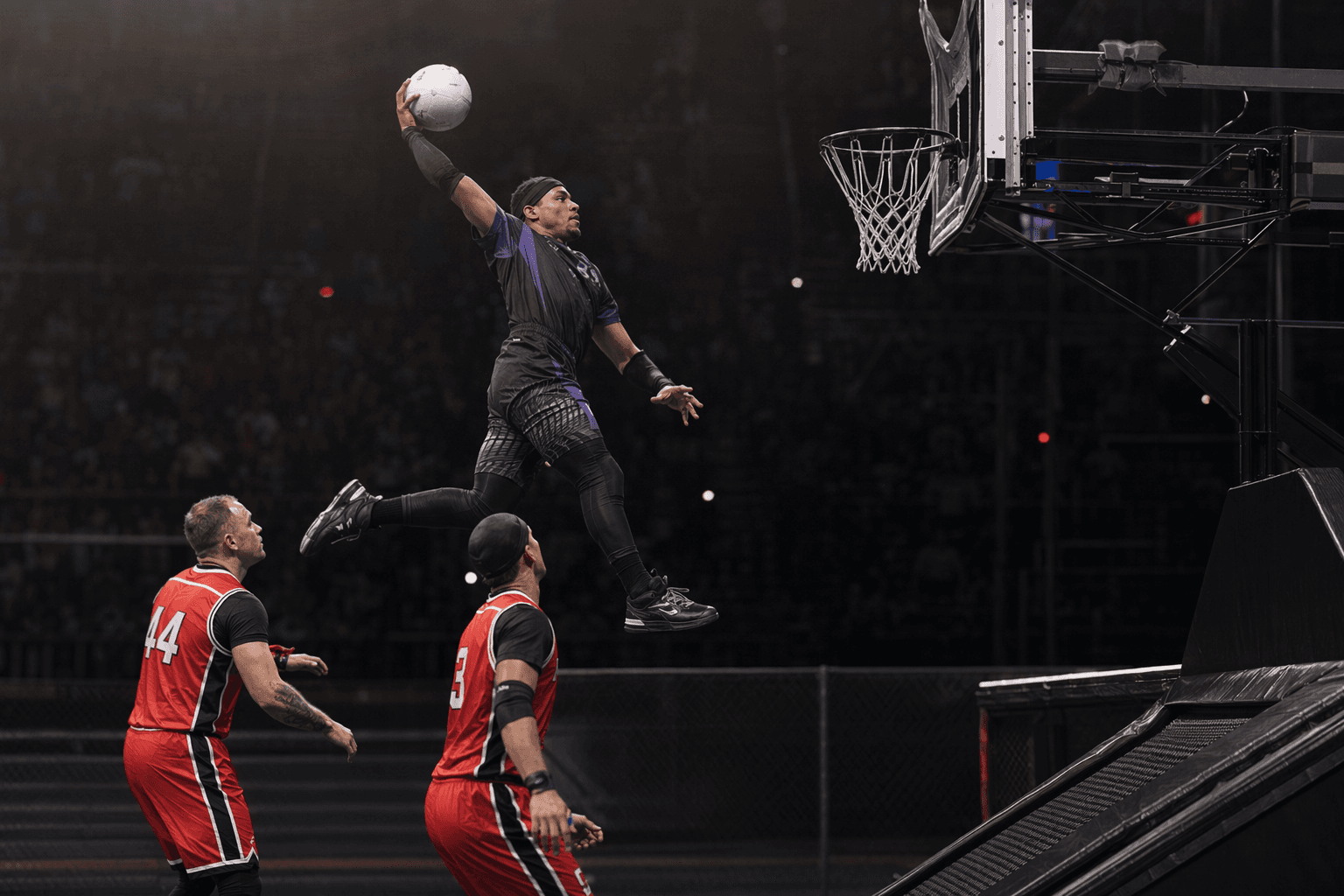
The Mob’s formula starts with the roster, not the highlight reel
Justin Holloway and Cam Hollins are the clearest proof that Mob is not hunting for raw curiosities. It is building finishers. The roster page puts Cameron Horton at handler, Darius Clark, Brandon Simpson, Justin Holloway, Cam Hollins and Jordan Jones at gunner, and Gage Smith and Dionte Byrd at stopper, a split that says Mob wants pressure from every angle instead of one ball-dominant creator.
That matters in SlamBall because gunners are the main scorers, handlers function like point guards, and stoppers anchor the defense. Mob’s mix is less about one star taking over and more about a system that keeps forcing the game into speed, contact and split-second finishing decisions.
Why this sport is made for converted athletes
SlamBall’s own rules explain why track-style athletes translate so well. The court is 96 feet long and 64 feet wide, with springbeds built into each end, which means a player is never just running in a straight line for a layup. He is accelerating into a live collision, absorbing contact, and trying to score in a space where the ground itself changes the math.
The rules also separate out the stopper box and the contact restrictions around it, which gives the game a structure that rewards timing as much as raw force. A good gunner does not simply outrun defenders. He reads the spring, gets to the right launch point, and finishes before the defense can reset. That is why Mob keeps leaning into athletes who already know how to move through space with purpose.
Holloway brings the basketball edge, plus a track family tree
Justin Holloway’s path is unusual, and that is exactly why it fits. He missed varsity sports in high school because of family obligations, then spent three seasons with the Lancaster Thunder in semi-pro basketball. By the time he got to SlamBall, he had already lived through a longer, less linear route than most prospects, and that can matter in a sport where toughness and composure are part of the skill package.
His family background adds another layer. His uncle is Mike Holloway, the longtime University of Florida track and field coach who also led the U.S. men’s track team at the 2020 Olympics. That is elite-speed-and-power territory, even if Justin came to the league through basketball rather than a runway track. Mob did not need him to be polished in the traditional sense. It needed a player who understood contact, movement and how to keep his balance when the play gets messy.
Hollins is the cleaner track conversion, and the numbers say so
Cam Hollins is the more obvious athletic conversion story, and Mob acted like it knew exactly what it was buying. At Avon High School in Indiana, he ran the 60-meter hurdles in 8.25 seconds and posted a career-high decathlon score of 963, then turned that explosion into dunk content and eventually a spot with the Indiana Pacers Power Pack.
That background screams utility for SlamBall. Hurdles reward rhythm, decathlon demands range, and dunk entertainment tests the kind of vertical timing that shows up in the league’s highest-leverage scoring chances. Mob also drafted Hollins in Round 1, which tells you the team did not treat him as a novelty act. It treated him like an early foundation piece.
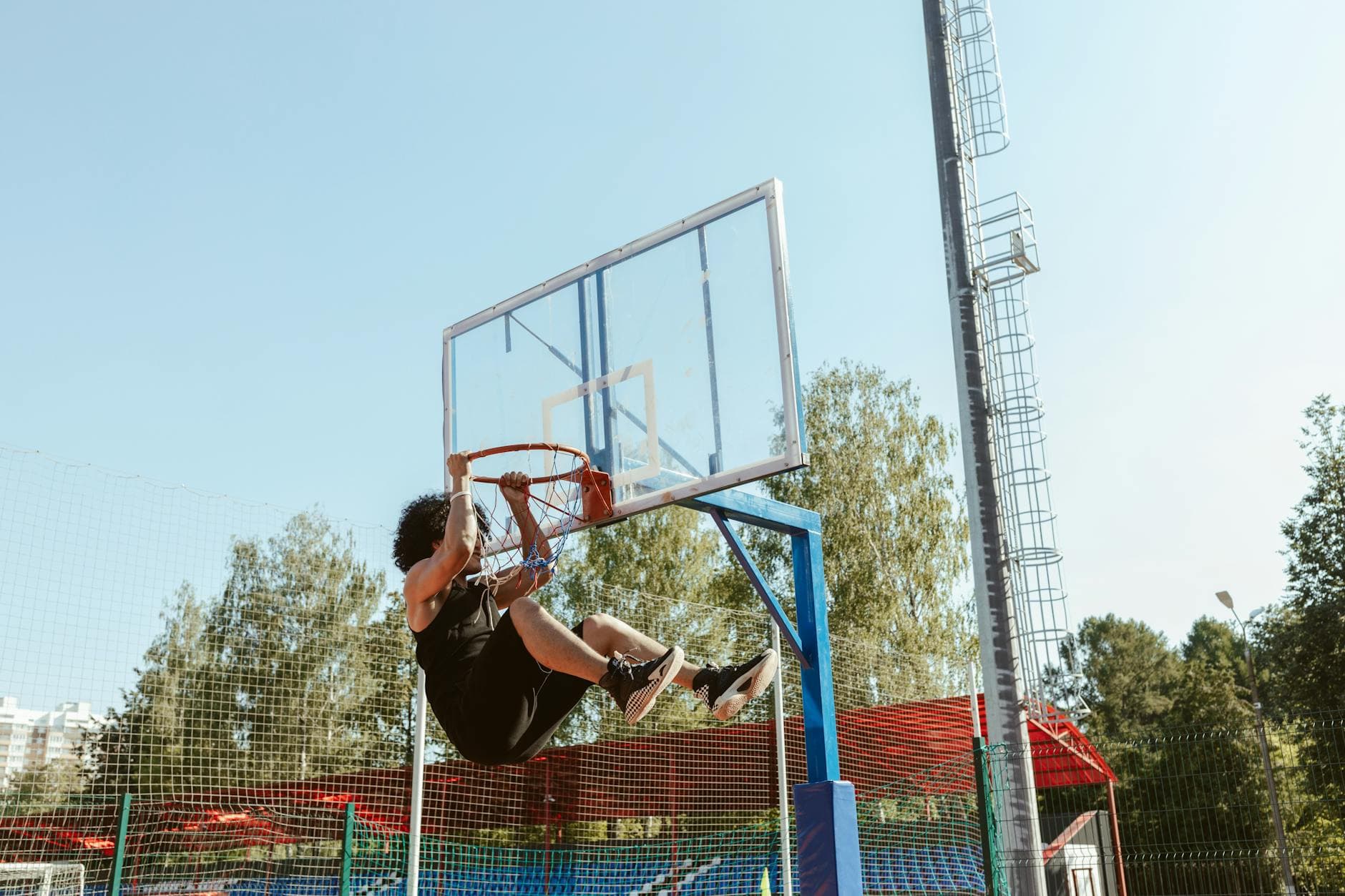
There is a broader pattern here too. The Mob page notes that fellow SlamBallers Nathaniel Harris and Marcus Gray were part of that same Power Pack group, which points to a pipeline of athletes who already understand how to turn a jump into a finish. Hollins is the best example of the idea, though. He is not just athletic. He is trained to arrive on time, off the ground, and in traffic.
The draft showed Mob knew what it wanted
The 2023 relaunch set the stage for all of this. SlamBall announced on June 27, 2023, that it was returning on ESPN in Las Vegas on July 21 with eight teams, a month-long season and playoffs. That structure compressed the talent evaluation window, which made roster clarity even more important.
Mob’s draft decisions were revealing. Hollins went in Round 1, while Holloway came in Round 6. That is the profile of a team that saw Hollins as an immediate athletic anchor and Holloway as a later-value scorer who could grow into the role. In a league built around short bursts and fast adjustments, that kind of roster construction is often smarter than chasing one clean-looking prospect with no collision tolerance.
The payoff was immediate, and it lasted all season
The best argument for Mob’s talent model is what happened on the floor. In Week 2 of the 2023 season, Hollins was named one of the league’s Players of the Week after helping extend the team’s season-opening winning streak to eight games. Across Mob’s four Week 2 wins, he averaged 20.3 points per game, made 25 dunks, and went 28-of-40 on rim attacks.
That is not empty flash. That is repeatable scoring volume in a sport where finishing is never simple. When Darius Clark was sidelined on Sunday, Hollins outscored the opposition 55-54 across two contests, a detail that says he was not just feeding off the system. He was driving it.
The awards stacked up for the whole roster. Hollins finished as 5th Man of the Year for Series 6, while Gage Smith won MVP and Defensive Player of the Year, and Brendan Kirsch took Coach of the Year. That combination matters because it shows Mob was not a one-dimensional dunk show. It had a defense, a structure, and enough role clarity to let the athletes do what they do best.
Mob’s ceiling came from structure, not chaos
The final record says the rest. Mob went 16-0 in the regular season and finished 18-0 after winning the championship at Cox Pavilion in Las Vegas on August 17, 2023. It beat the Lava 49-36 in the semifinals and then handled the Slashers 72-42 in the title game.
That run is the strongest evidence that Mob’s approach is more than a gimmick. The team found players like Holloway and Hollins, put them in the right roles, and let the sport’s geometry do the rest. In SlamBall, the best roster is the one that can survive gravity, absorb contact and still finish above the rim. Mob built exactly that.
This article was produced by Prism’s automated news system from verified source data, official records, and press releases, then run through automated quality and moderation checks before publishing. The system is built and supervised by the people who set the standards it runs under. Read our full AI policy.
Did this article answer your question?