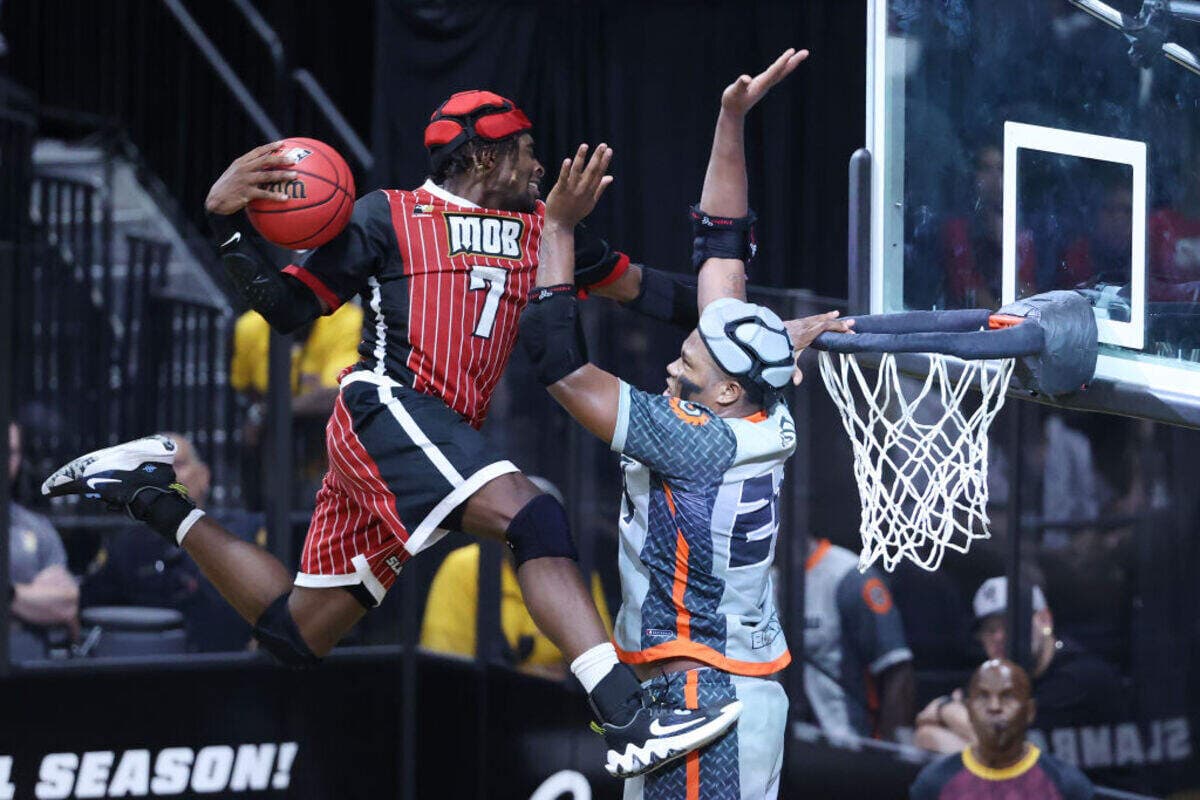
Rumble vs Mob sets the tone for SlamBall's 2023 comeback
Rumble vs Mob is the fastest entry point into SlamBall, then Mob vs Buzzsaw and the playoff games reveal the sport’s scoring swings, hits, and star finishes.

Rumble vs Mob is the quickest way to understand SlamBall because it throws the sport’s core ideas onto the floor immediately: an inverse tip-off, four players per side at a time, and possessions that can turn from scramble to dunk to stop in a few seconds. The 2023 comeback season, the league’s sixth, started with 24 players in camp on June 5 and ended on August 17 with the undefeated Mob lifting the Gordon/Tollin Trophy, so this opening-night game works as the cleanest first chapter in a season that built from chaos to a title run.
Start with opening night, because the rules make the action legible fast
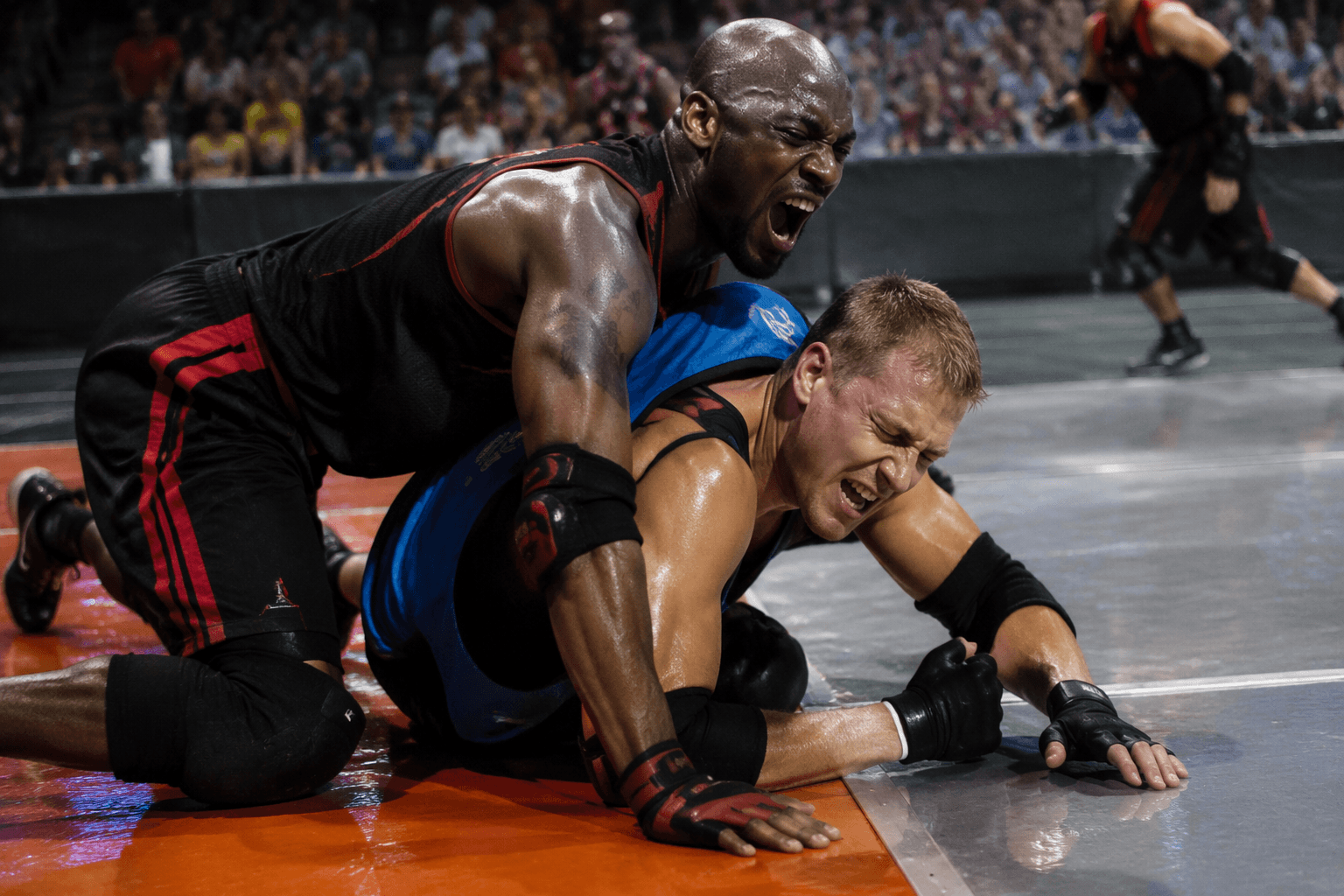
The league says SlamBall was invented in 1999 by Mason Gordon and first played in Los Angeles, but the 2023 relaunch in Las Vegas was built for viewers who needed the sport explained by motion, not by manifesto. ESPN’s summer schedule promised more than 60 hours of action, and the opening night setting matters because Rumble vs Mob is where the sport’s vocabulary becomes obvious: each half begins with a throw down, every roster carries seven active players, and the contact level is clear from the protective gear loadout, which can include padded helmets, elbow pads, kneepads, and custom padded undergarments.
What to watch for in that game is not just scoring, but the way space gets made and destroyed. SlamBall asks you to track line changes, rebounds off the trampolines, and the instant a defensive stop becomes a fast break, which is why one opening-night game can tell you more than a package of highlights. The sport’s appeal comes from seeing undersized athletes force advantages through timing and lift, and Rumble vs Mob gives a first look at how the league values speed, collision balance, and aerial finishing in one sequence.
Use Mob vs Buzzsaw to see how scoring swings are created and erased
If opening night teaches the rules, Mob vs Buzzsaw on August 5 teaches momentum. The Mob’s midseason run showed how quickly a team can separate itself in SlamBall, and the league’s weekend recap gives the clearest snapshot: the Mob beat the Slashers 72-51 and the Buzzsaw 50-31 to move to 4-0, while Darius Clark piled up 83 points over that weekend.
That is the game to watch if you want to understand why SlamBall is more than a dunk reel. Gage Smith led the league in stops, loose-ball recoveries, and steals, which shows how possessions in this sport are won with pressure as much as with points. The league’s best teams do not just score in bursts, they interrupt the other side’s rhythm, and Mob vs Buzzsaw makes that easy to see because the score can swing on one stop, one recovery, and one immediate finish at the rim.
Finish with the playoffs, where the sport’s best athletes become the story
The postseason games, especially Mob vs Lava in the semifinals and Slashers vs Mob in the championship, turn the league’s most athletic traits into signature moments. The official highlights archive groups the playoffs with top plays, best hits, and best stops, which is exactly how SlamBall should be read at full speed: not as isolated dunks, but as a game where a collision, a block, and a finish are all part of the same possession.
The title game on August 17 delivered the cleanest possible ending. The Mob beat the Slashers 72-42, jumped out to an 18-2 lead, and finished 18-0, a run that put a number on the league’s competitive ceiling and made the championship game feel like a statement about roster balance as much as brute force. Gage Smith won MVP and Defensive Player of the Year, Ty McGee took Offensive Player of the Year, Brendan Kirsch was Coach of the Year, and Cam Hollins was named 5th Man of the Year, a trophy list that maps neatly onto the sport itself: elite defense, explosive scoring, bench value, and coaching that keeps the whole machine moving.
Why the comeback worked beyond the court
The 2023 relaunch also landed because the audience was already primed to treat SlamBall as a shareable spectacle. The league says the #BringBackSlamBall push drew more than 200 million views, while founding support from Circa Sports and international broadcast distribution gave the comeback a reach that matched the sport’s visual scale. That combination mattered culturally because SlamBall sells something rare in modern sports media: a game that can still surprise viewers with a body type, a bounce, or a hit they have not seen in mainstream basketball.
Seen through these three games, the 2023 season tells the whole story in practical terms. Rumble vs Mob shows how to read the rules, Mob vs Buzzsaw shows how defense changes possessions, and the playoff run against Lava and the Slashers shows how star athletes turn that structure into a championship identity. By the time the Mob finished undefeated, SlamBall was no longer just back on the schedule, it had a season-long proof of concept built on pace, contact, and unforgettable finishes.
This article was produced by Prism’s automated news system from verified source data, official records, and press releases, then run through automated quality and moderation checks before publishing. The system is built and supervised by the people who set the standards it runs under. Read our full AI policy.
Did this article answer your question?