SlamBall builds its own dunk glossary to define aerial plays
SlamBall's dunk directory teaches fans how to read the sport, turning aerial highlights into a language that matches its springbed-built court.
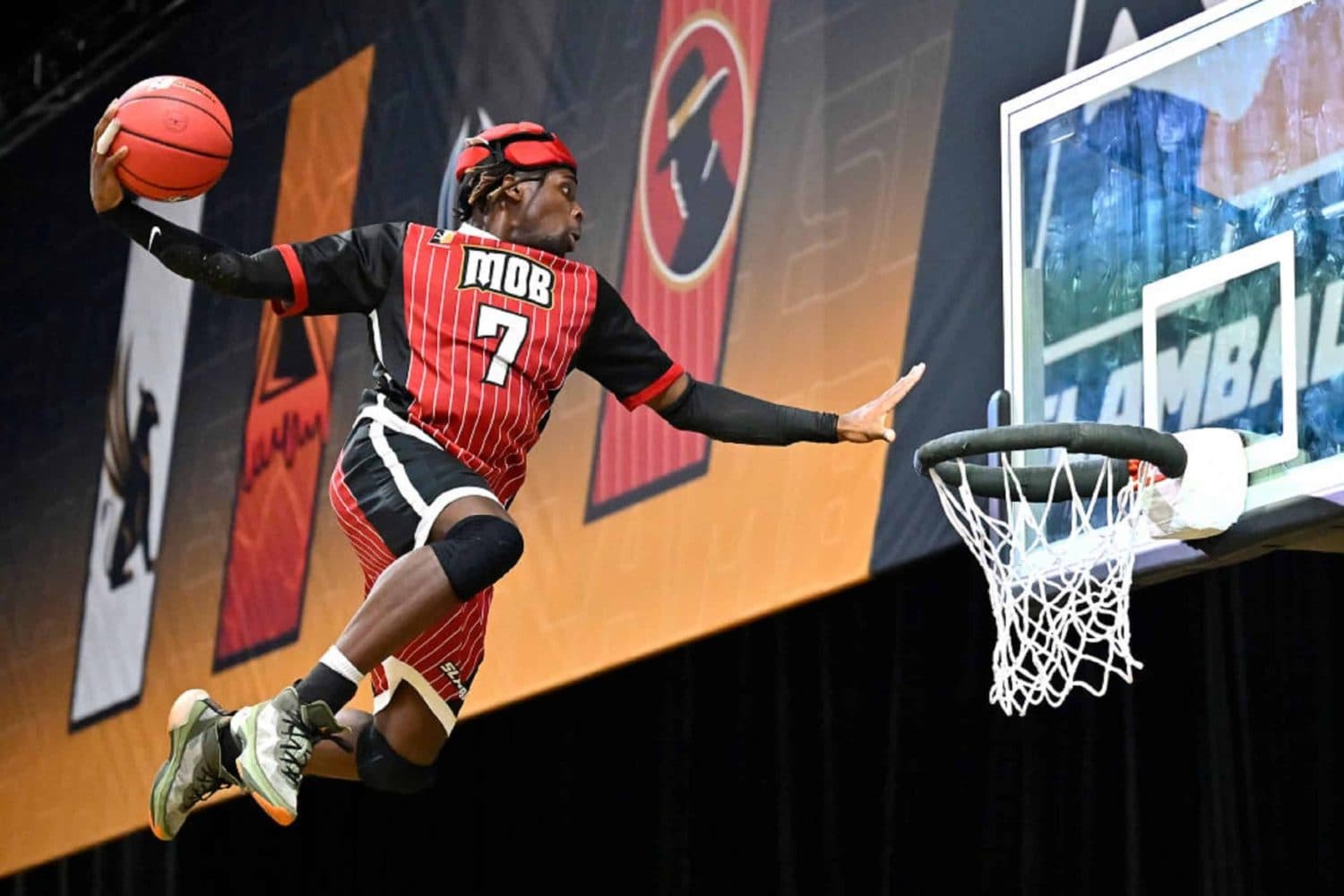
Alley-Oop. Aerial Position. Dunk Directory Terms. SlamBall is telling you exactly how it wants to be watched, and it starts by naming the moves that happen above the rim. The league’s in-house vocabulary is not a gimmick; it is a map for a sport built on springbeds, contact, and finishes that look closer to controlled flight than standard basketball.
The glossary is built into the sport, not bolted onto it
The official SlamBall site places Dunk Directory right in the main sport navigation, alongside Rules, The Court, SlamBall Slang, History, Legendary Teams, and SlamBall Legends. That is the tell. The league is not hiding its terminology in a side corner for the diehards; it is building a full language system around the game and putting it where anyone learning the sport has to see it.
That matters because the page is labeled “Dunk Directory Terms,” which makes its purpose blunt: define the aerial plays that give SlamBall its identity. The league’s slang page backs that up with entries like “Alley-Oop,” defined as catching the ball mid-air to score a basket in one motion before landing, and “Aerial Position,” described as a set of poses at altitude to develop aerial awareness. Those are not decorative labels. They are the words that teach a newcomer how to separate a routine finish from a play that only works because the game happens in the air.
Why SlamBall needs its own vocabulary
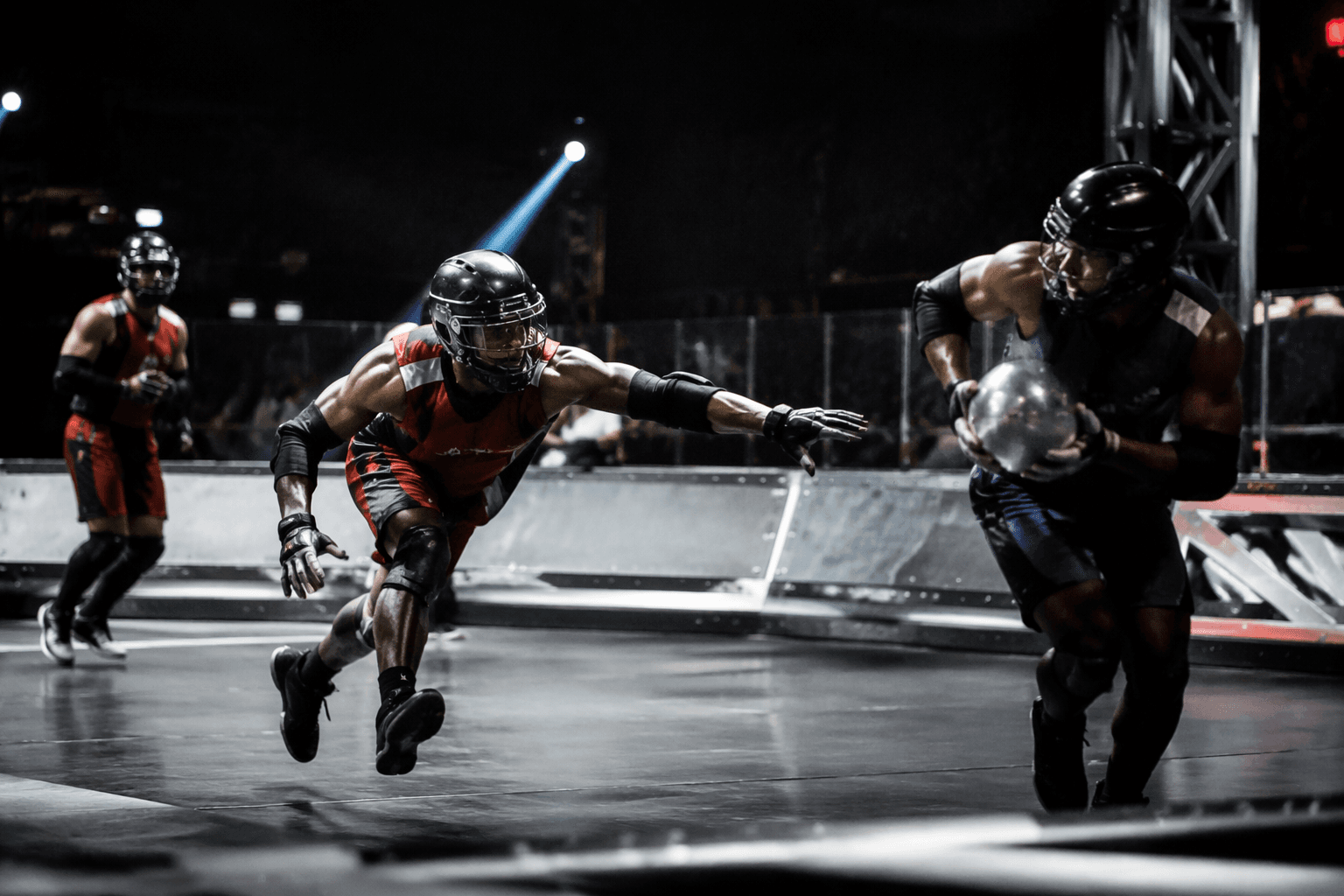
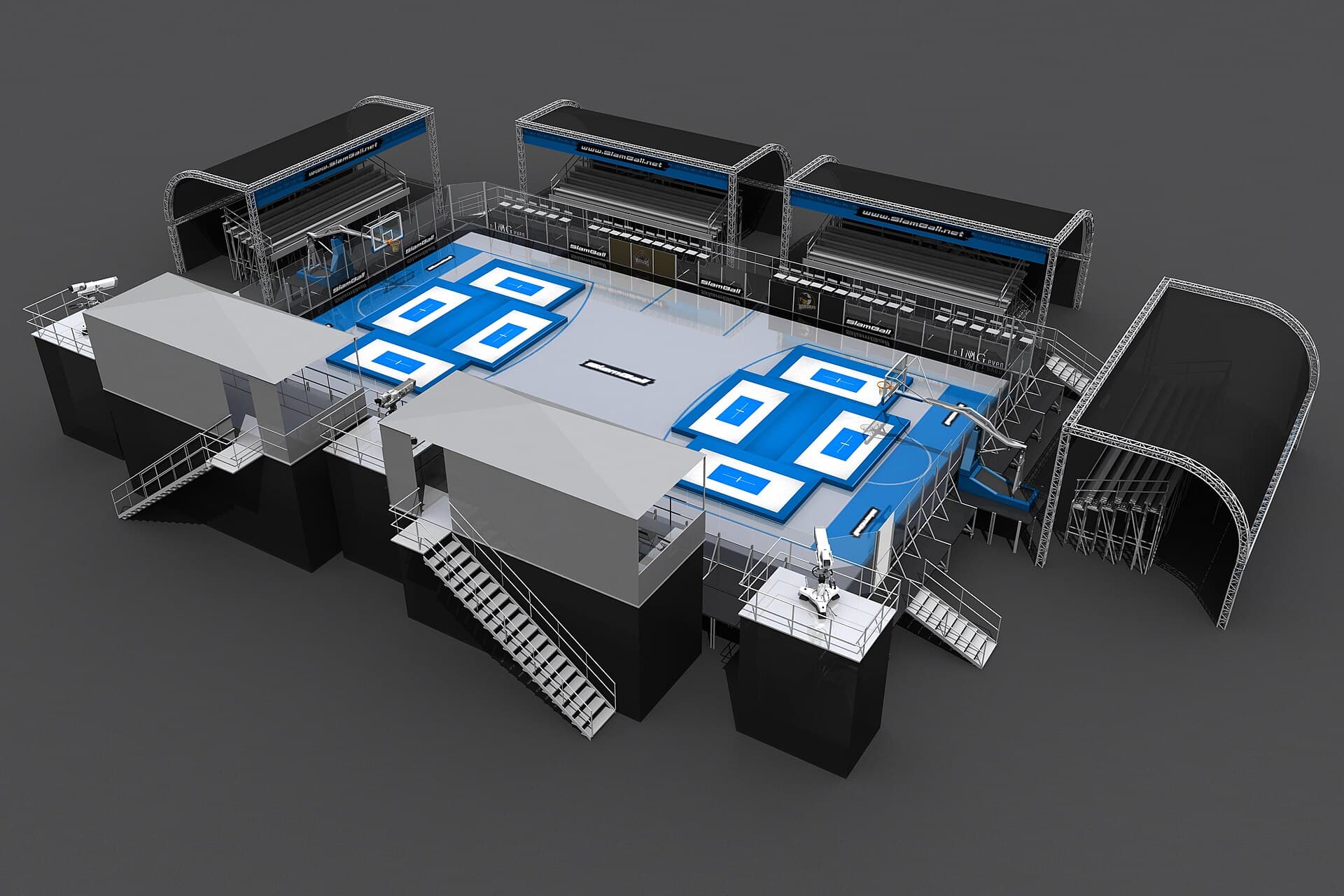
SlamBall’s rules make standard basketball language feel too small. The official rules page says the court is 96 feet long by 64 feet wide, with three identical springbeds at each end and a fourth scoring bed that is slightly larger, measuring 10 feet by 14 feet. Each springbed uses a string bed measuring 7 feet by 14 feet, and that design changes the geometry of every possession.
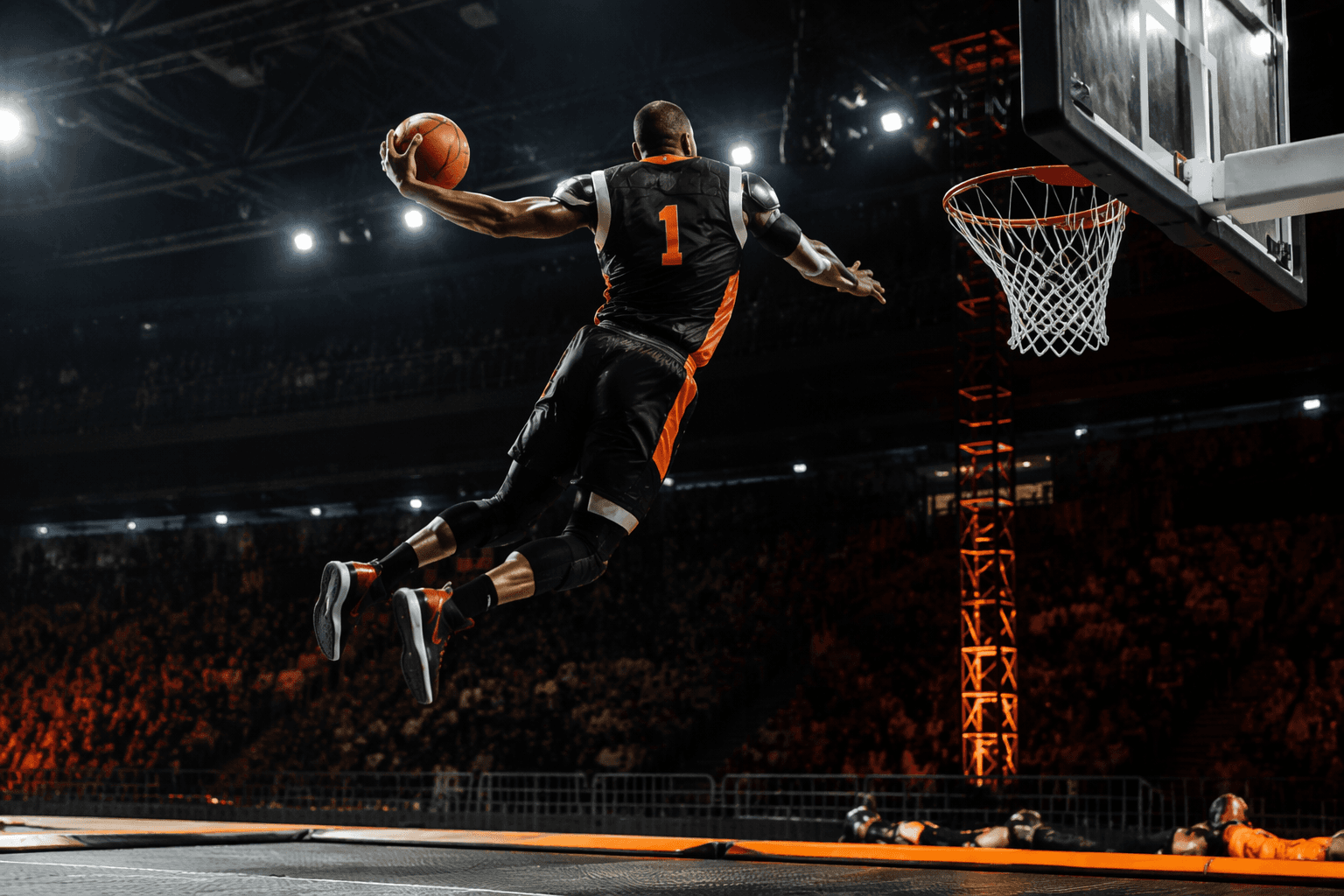
Once players are launching off springbeds, taking contact in midair, and attacking the rim from angles basketball does not usually produce, the language has to keep up. A dedicated dunk directory gives fans, broadcasters, and players a shared reference point for what just happened, instead of forcing every highlight into borrowed basketball terms that miss the point. That is especially important in a sport where the difference between a clean finish and a chaotic airborne sequence can be the whole show.
The glossary also does something subtler. It turns the spectacular into something legible. A casual viewer can see a body twisting above the rim and call it athletic; SlamBall wants that same viewer to understand the mechanics, the category, and the style. Once the play has a name, it becomes easier to recognize the pattern the next time it appears.
From an L.A. warehouse to a revived brand
The league’s history page says SlamBall started in an L.A. warehouse, which is a fitting origin for a sport that still sells itself on invention. What began in that rough, improvised setting has now been packaged with rules pages, history pages, team pages, and a structured glossary. That shift matters because it shows the league trying to become more than a one-off spectacle with a weird court.
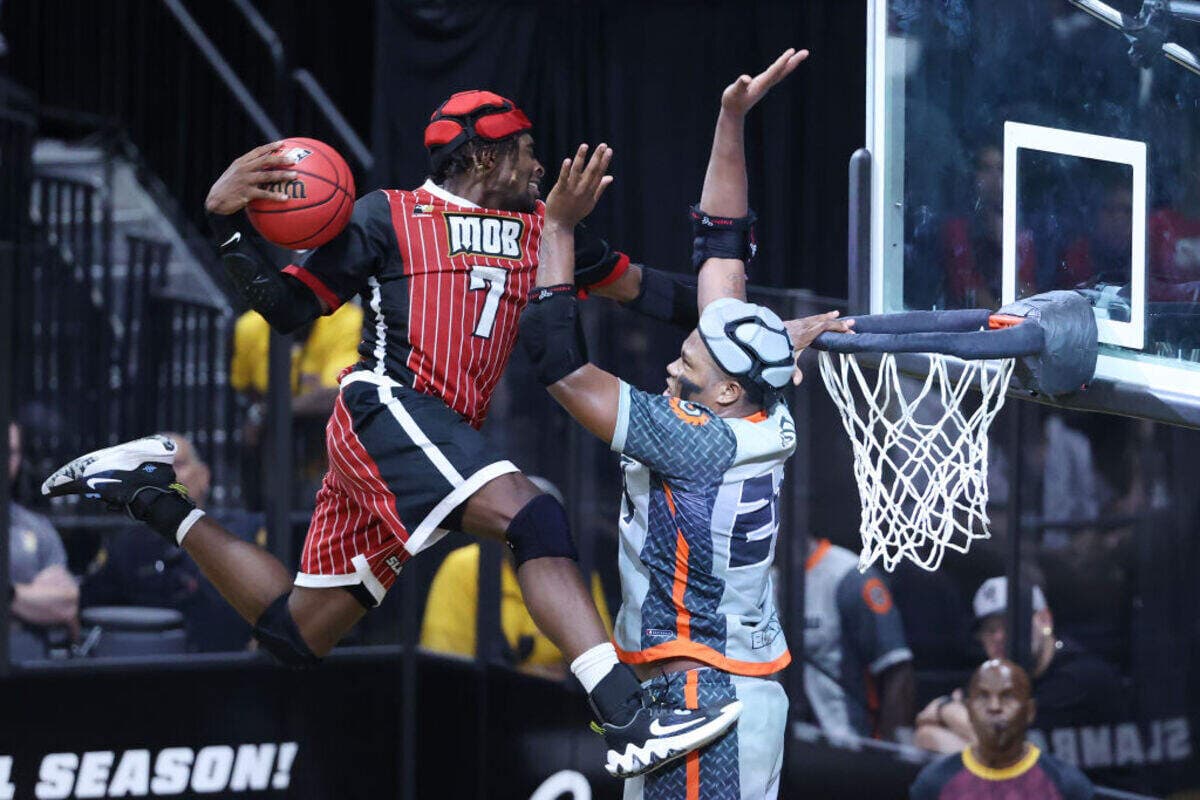
The comeback also came with a clear media push. NBC Los Angeles described SlamBall as returning after nearly a 20-year hiatus, while ESPN said it returned to action in late July 2023 after a 20-plus-year absence. ESPN also posted a SlamBall sequence on July 23, 2023, and its opening-weekend coverage highlighted the Mob vs. Slashers matchup, a reminder that the league is selling specific games and specific moments, not just the novelty of springbeds.
That framing fits the product. SlamBall is easiest to understand when it is presented as a live-action highlight machine, but the league has worked hard to make sure it is also understood as an organized sport with a stable set of terms. The glossary is part of that effort. It gives the comeback a vocabulary that can survive beyond the first viral clip.
Branding through language, not just dunks
The public-facing identity around the league says the same thing in different ways. The official SlamBall Instagram bio uses the phrases “Hard Hitting Hoops” and “SlamBall League returning,” which is concise branding with a clear promise: physical play, aerial action, and a league that is back. The site’s media-release section adds another layer, including an item announcing “SlamBall Wins League of the Year for Breakthrough Sport Award.” That kind of page is not just housekeeping. It is infrastructure for a property trying to look durable.
Seen together, the navigation, the slang page, the rules page, and the dunk directory form a small but deliberate ecosystem. Fans can learn the court, the language, and the identity of the league in one place, which is exactly how a young or revived sport builds stickiness. A highlight reel gets attention; a glossary teaches interpretation. SlamBall knows the difference, and it has built its official language around the plays that happen when the game leaves the floor.
This article was produced by Prism’s automated news system from verified source data, official records, and press releases, then run through automated quality and moderation checks before publishing. The system is built and supervised by the people who set the standards it runs under. Read our full AI policy.
Did this article answer your question?