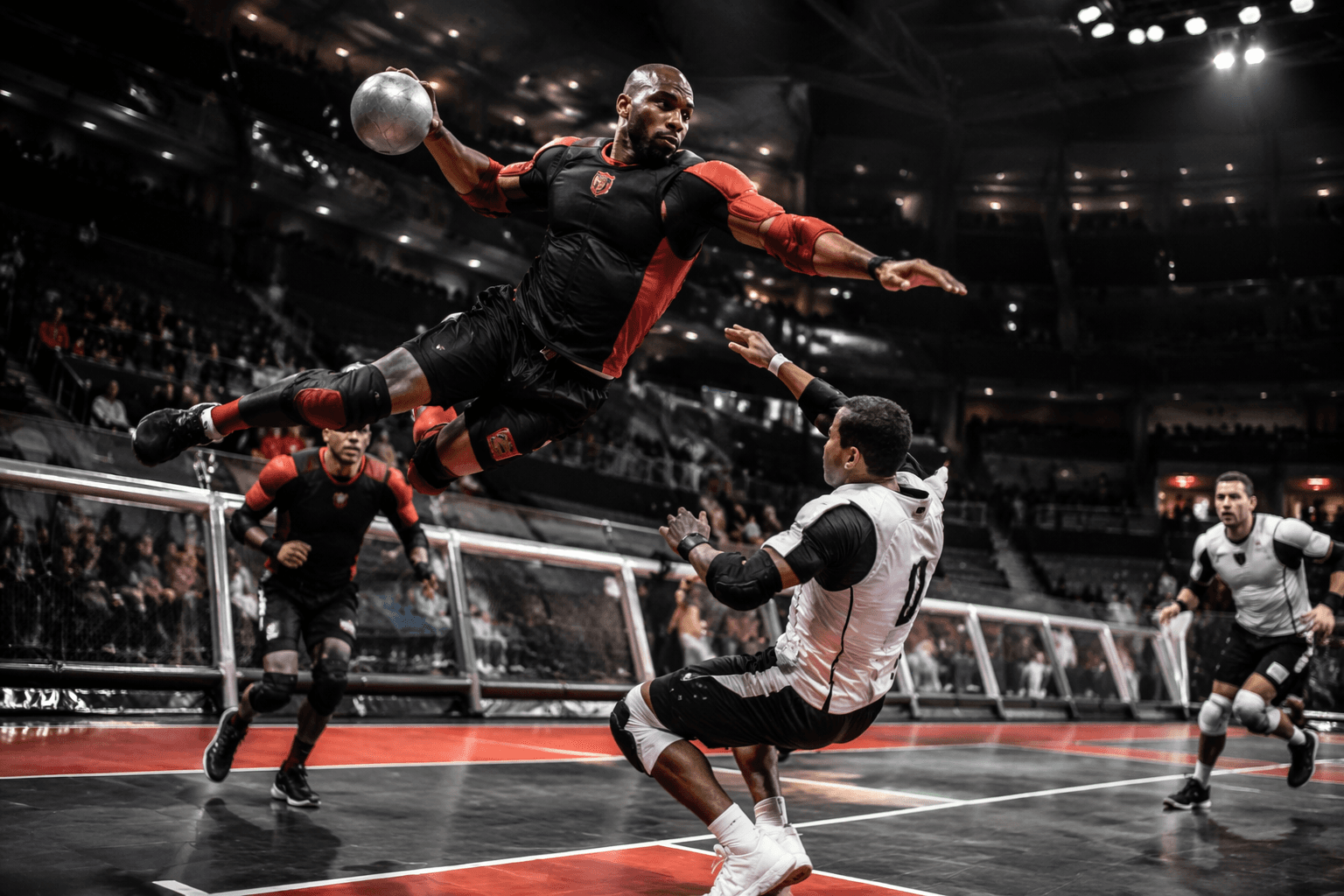
SlamBall Revival Adds Four-Point Arc to Trampoline-Powered High-Contact Game
SlamBall's revival added a four-point arc, boosting the value of long-range shots and changing strategy in the trampoline-driven, high-contact sport.

The revived SlamBall has inserted a four-point arc into its scoring map, a rule tweak that promises to reshape offense, defense, player recruitment, and the business case for one of the most visually arresting sports on the calendar. The arc, added during the 2023 revival, elevates long-range attempts above the sport's traditional dunk premium and forces teams to rethink how they space the court that contains four trampolines set into the surface in front of each basket.
SlamBall remains a hybrid sport that blends elements of basketball, American football, hockey and gymnastics. Games are 4-on-4, played across four five-minute quarters with a 20-second shot clock, and feature unlimited on-the-fly substitutions. Dunk-style scores historically counted for three points; the four-point arc now creates new value for perimeter-oriented plays and long-range acrobatics in addition to the slam dunks and collisions that define the spectacle.
The tactical implications are immediate. Teams such as Mob, Rumble, Slashers, Wrath, Lava, Ozone, Buzzsaw and Gryphons must balance aerial offensive sets with arc-zone coverage. Mob, the most successful franchise across SlamBall's various iterations, faces a strategic crossroads: double down on trampoline-driven dunk specialists or diversify toward players who can convert from distance while using trampolines for launch and positioning. Defensively, coaches must decide whether to guard the arc tightly at the expense of interior rim protection, and how to prevent transition four-point attempts when defenders are recovering from high-impact plays.

Athlete pipelines and training regimens are also changing. SlamBall recruits heavily from basketball, football and gymnastics; the addition of a four-point arc increases demand for players who combine perimeter shooting with aerial prowess. Training already emphasizes aerial awareness, plyometrics and impact management, and teams will likely add spot shooting drills that account for the trampolines' launch vectors and midair rotation. That combination of skill sets could widen SlamBall's appeal to athletes seeking a crossover professional pathway, but it may also intensify exposure to high-impact collisions, which amplifies the importance of impact management practices in training.
From an industry perspective, the four-point arc is an obvious commercial play. Higher-scoring outcomes and long-range highlight plays generate social video and sponsor-friendly moments, making SlamBall easier to package for broadcasters and digital platforms. The sport's history of television debuts, multiple revivals and international one-off tournaments, including events in China, suggests there is appetite for formats that maximize shareable content and scoreboard swings.
Culturally, SlamBall's evolution underscores its status as a collision-sport laboratory where disciplines meet. The rule change pulls the game further into the modern sports ecosystem that rewards perimeter shooting and spectacle, while preserving trampoline-fueled acrobatics and physicality. For fans, the arc promises flashier finishes and new strategic storylines. For teams and players, the next season will reveal whether three-point-era thinking or dunk-first identity wins out as SlamBall carves out its niche in the crowded sports market.
This article was produced by Prism’s automated news system from verified source data, official records, and press releases, then run through automated quality and moderation checks before publishing. The system is built and supervised by the people who set the standards it runs under. Read our full AI policy.
Did this article answer your question?