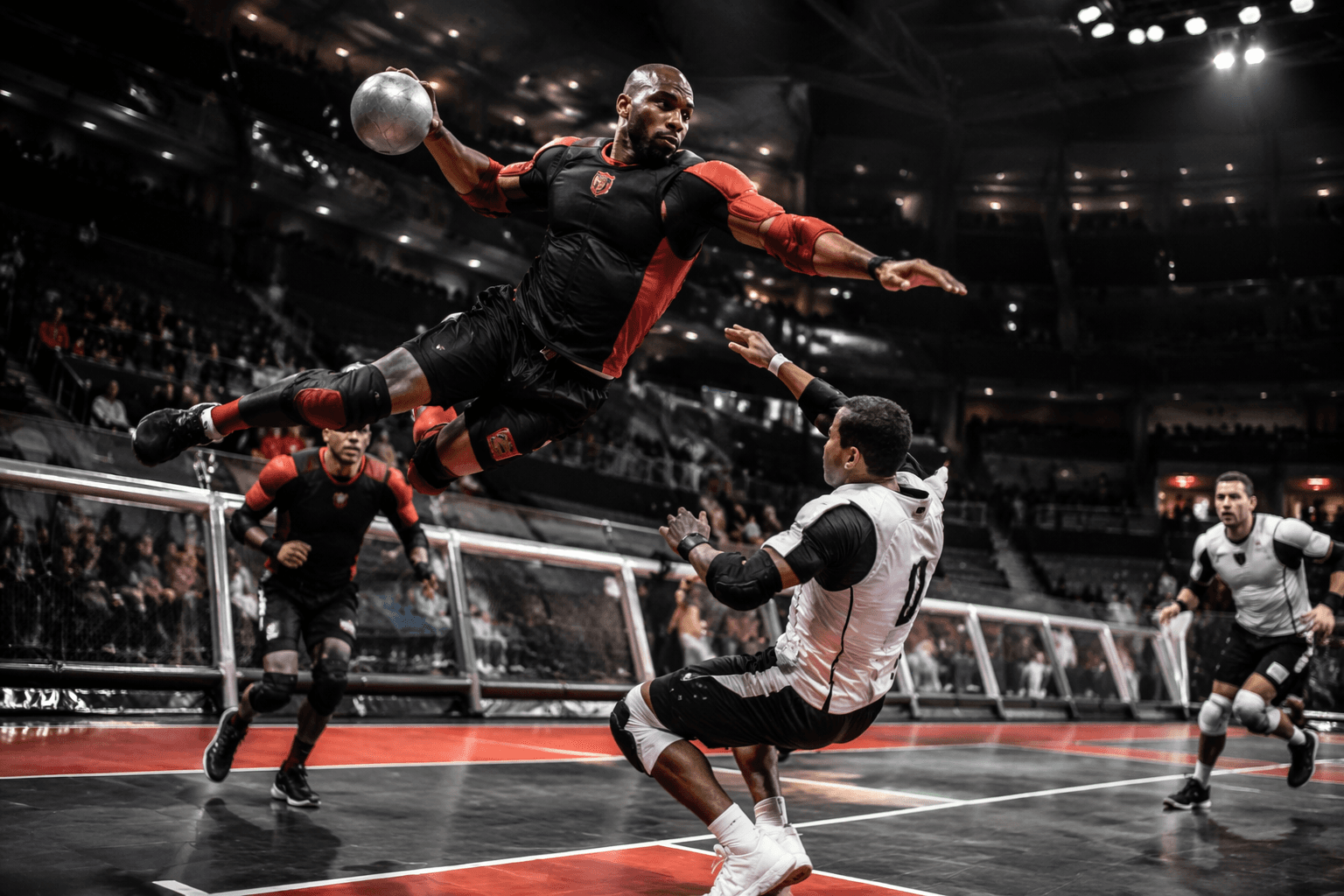
SlamBall's 2023 Relaunch Crowns Mob Champion Amid Dunk-Focused Rules
Mob won the 2023 SlamBall Series 6 relaunch in Las Vegas as the league leaned into dunk-heavy scoring, shifting tactics and spotlighting aerial athletes for fans and broadcasters.
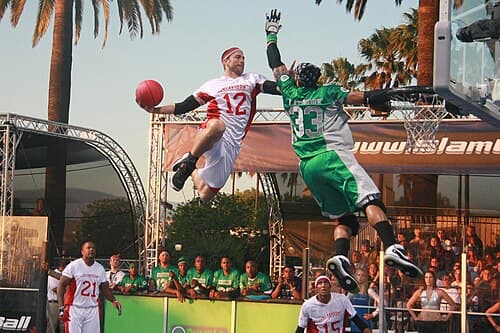
Mob emerged as the Series 6 champion in SlamBall's 2023 relaunch at Cox Pavilion in Las Vegas, a season that put dunking at the center of strategy by assigning higher point values to slam plays. The eight-team field - Mob, Slashers, Wrath, Lava, Buzzsaw, Gryphons, Ozone, and Rumble - competed under a modern ruleset engineered to reward rim-rattling finishes and create highlight-driven television moments.
The result put a premium on the aerial game. Mob’s championship run hinged on converting high-value dunks off the four trampolines located at each end of the court and exploiting playmaking opportunities against plexiglass walls that keep action flowing. With dunks carrying more weight in the scoring model, teams that prioritized vertical takeoff, timing through the bounce zones, and set pieces leading to contested slams advanced deeper. The Mob’s ability to cash in on those possessions separated them from rivals who were still adapting from traditional court basketball instincts to Slamball’s trampoline-centric tempo.
SlamBall’s equipment and safety profile were as prominent as the scoring tweaks. The court configuration retained four trampolines per end and plexiglass walls that encourage off-the-wall rebound sequences and improvised alley-oop attempts. Recent rules also mandated scrum-cap helmets, a visible concession to safety that frames the league’s attempt to balance spectacle with player protection. Those helmets affect playstyle by offering teams slightly more freedom on contested aerial contacts and easing insurance and venue negotiations.
From an industry perspective, the Las Vegas relaunch signals Slamball’s positioning as live entertainment as much as sport. Playing Series 6 in a compact, casino-adjacent venue reflects a strategy to court tourists and broadcast highlights rather than long-haul franchise markets. The dunk-heavy rule emphasis aligns with social media economics: plays that generate clips, shares, and viral reach boost sponsorship value and streaming rights potential. At the same time, the format funnels recruiting toward athletes with gymnastics, parkour, or dunk-contest pedigrees, shifting talent pipelines away from conventional basketball-only pathways.
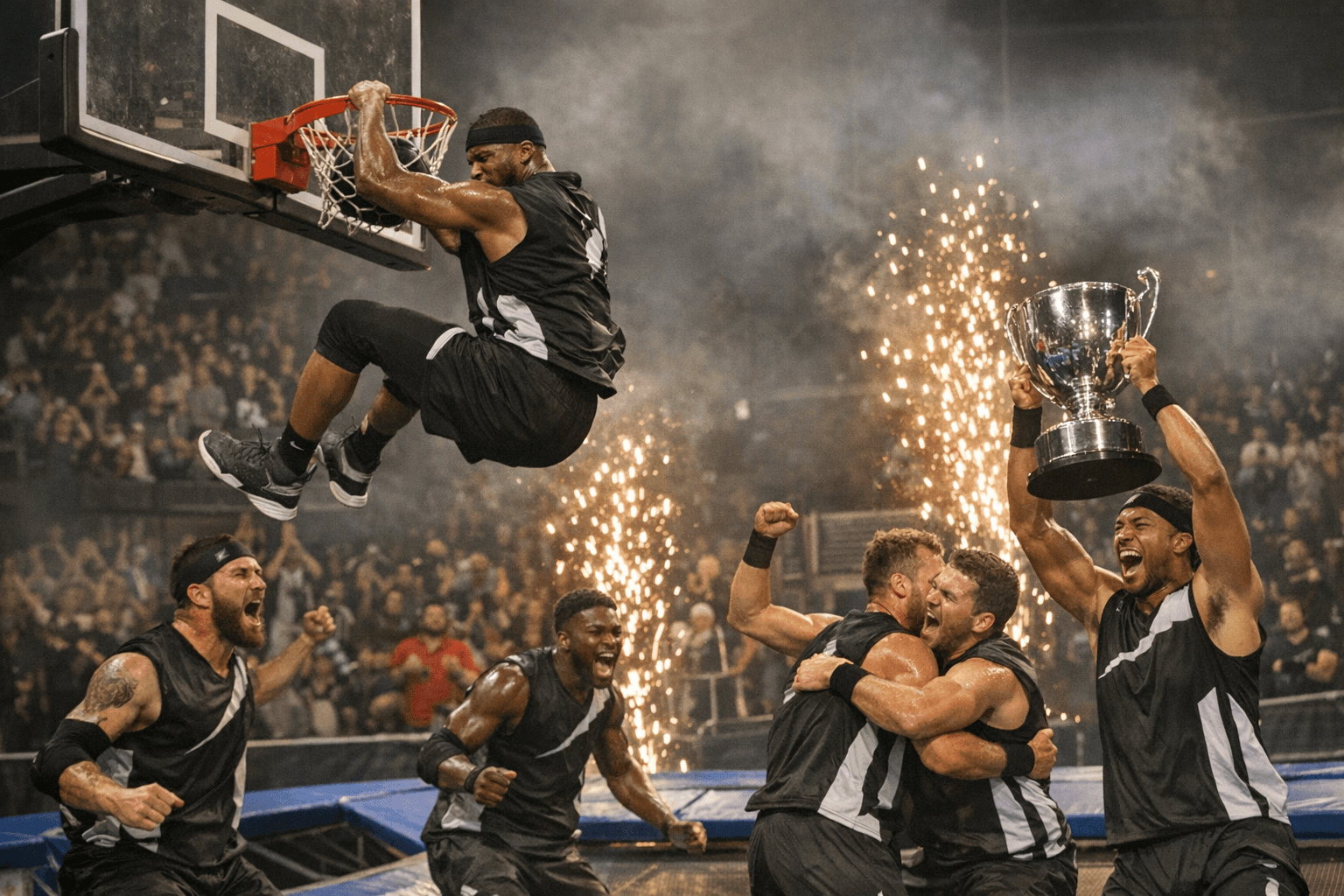
Culturally, Slamball continues to occupy a niche where contact sport, acrobatics, and crowd-pleasing theatrics meet. The league’s origin as a Mason Gordon invention in 1999 still informs its DNA as an urban extreme sport hybrid, but the 2023 relaunch shows a commercial maturity aimed at sustainable seasons and clearer safety standards. Socially, the need for specialized courts and training creates both opportunity and barrier: local programs that invest in trampolines can cultivate homegrown stars, while communities without access may be left out of the bounce game.
For fans and stakeholders, Mob’s title under dunk-focused rules is a test case. The league now faces choices about whether to keep amplifying high-point slams, expand to new markets, and deepen talent development pipelines. If Series 6 proved anything, it is that in Slamball the vertical dimension decides championships and the next chapter will depend on how owners, broadcasters, and communities embrace that airborne identity.
This article was produced by Prism’s automated news system from verified source data, official records, and press releases, then run through automated quality and moderation checks before publishing. The system is built and supervised by the people who set the standards it runs under. Read our full AI policy.
Did this article answer your question?